What Is Brake Blending Calibration? Pedal Feel, Torque Coordination and Safety
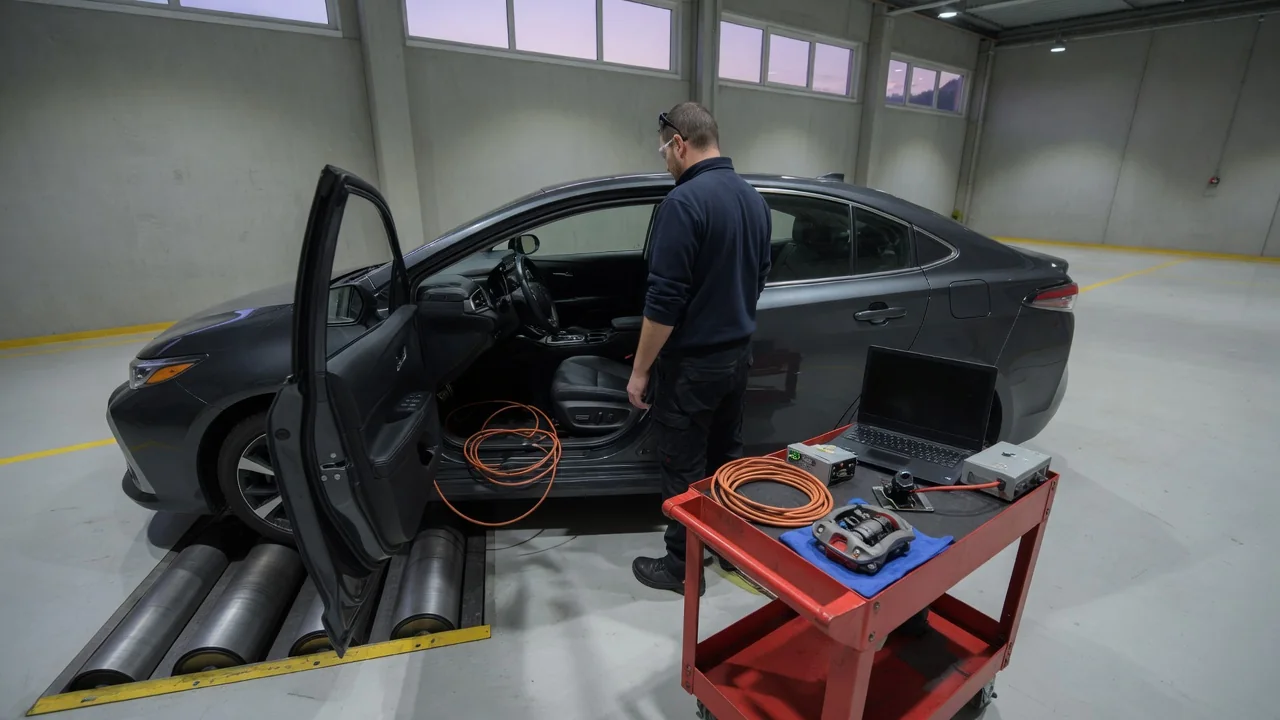
Brake blending calibration is the tuning that decides how a hybrid or electric vehicle divides each stop between regenerative braking, where the electric motor slows the car while recharging the battery, and the conventional friction brakes. The goal is a pedal that behaves the same way every time, as much practical energy recovery as possible, and brakes that remain fully dependable when regeneration is unavailable. This article explains what that calibration covers and why it matters to drivers.
Pedal Feel: One Pedal, Two Braking Sources
In a conventional car, pressing the brake pedal pushes fluid through the master cylinder, and the resulting hydraulic pressure clamps the pads against the rotors. Pedal travel, pedal force and deceleration are tied together mechanically, so drivers learn the relationship once and rely on it. A blended system breaks that direct link. Part of the stopping force may come from the motor, and the amount it can supply changes from moment to moment. If the pedal were still wired straight to hydraulic pressure, the same push would slow the car harder when regeneration was available and more gently when it was not. Calibration solves this by treating the pedal as a request for a certain deceleration rather than a command for a certain pressure.
Many blended systems use a decoupled or brake-by-wire layout. Sensors measure pedal travel and, in some designs, pedal force or master-cylinder pressure, while a pedal simulator supplies resistance so the pedal does not feel dead. Other designs keep a partial hydraulic connection and manage the difference electronically. Either way, calibration shapes the curve that converts pedal input into requested deceleration, the initial free travel before braking begins, how firmly the pedal pushes back, and how it behaves in gentle low-speed stops. A well-calibrated pedal feels linear and predictable; a poorly tuned one can feel long, grabby or inconsistent from stop to stop.
Torque Coordination Between Motor and Friction Brakes
Behind the pedal, the brake controller and the powertrain controller continuously share information. The brake side knows how much total deceleration the driver is asking for. The powertrain side reports how much regenerative torque the motor can absorb at that instant. That figure depends on factors such as vehicle speed, battery state of charge, battery and motor temperature, and how much charging power the battery can accept. In a typical strategy, the system assigns as much of the request as practical to regeneration and lets the friction brakes make up the remainder. This continuously recalculated split is the core of what people mean by regenerative and friction brake calibration.
The hardest part is the handover. Motor torque can change very quickly, while hydraulic pressure takes a short time to build and release. If one source drops away before the other takes over, the driver feels a dip or surge in deceleration. Calibration sets ramp rates and timing so that the total stays steady while the split changes underneath. A common example is the final few miles per hour before a stop: regeneration becomes less effective at very low speed, so the friction brakes are blended in to bring the car smoothly to rest and hold it there. Similar handovers happen when the battery approaches full charge, when it is too cold to accept much current, or when regeneration is reduced for another reason.
Axle balance adds another layer. Depending on the drivetrain, regenerative braking may act on one axle or on both, while friction brakes act on all four wheels. Calibration has to keep the front-to-rear braking distribution within limits that preserve stability, which can cap how much regeneration is used even when the battery could accept more. Lift-off regeneration from the accelerator pedal, including one-pedal driving modes where offered, must also be coordinated with the brake pedal so the two do not stack unexpectedly.
Safety: Friction Brakes Always Stay in Charge
Regeneration is useful but not guaranteed, so blended braking is designed around the friction brakes being able to stop the car on their own. When an anti-lock braking event, traction control or stability control intervention begins, systems generally reduce or suspend regeneration and hand wheel-slip control to the hydraulic brakes, which can modulate individual wheels precisely. This matters most on slippery surfaces, where strong regenerative torque on a single axle could encourage that axle to lose grip. Calibration defines how quickly regeneration is withdrawn and how fast hydraulic pressure replaces it, so the transition does not lengthen the stop or upset the car.
Fault handling is the other half of the safety picture. Brake-by-wire systems are typically built with monitoring and fallback modes. If a sensor, pump, module or communication link fails, the system may revert to a more direct hydraulic path. In that state the brakes still work, but the pedal can require more travel or effort, and a warning light is normally displayed. Calibration and validation also cover less obvious issues: because regeneration handles much routine braking, friction components may be used less often, and some vehicles include strategies intended to keep rotors and pads in working condition. These strategies vary by manufacturer.
Practical Implications and Limits
For drivers, blending explains several normal behaviors. The pedal or the deceleration can feel slightly different right after a full charge, in cold weather, or in the last moments of a stop, because the share handled by regeneration has changed. An energy or power display, where fitted, often shows regeneration rising and falling while braking. What is not normal is a sudden change in pedal height or firmness, pulling to one side, grinding, a brake or stability warning light, or deceleration that surges unexpectedly. Those symptoms deserve inspection rather than adaptation, since they can point to faults the blending logic cannot hide.
Calibration itself is factory engineering. Owners cannot adjust the regenerative share, and the numbers involved, such as how much braking regeneration can cover or the speed at which friction takes over, differ between vehicles and are not published in a consistent way. Servicing is where calibration becomes practical for owners and technicians. On many blended and brake-by-wire systems, replacing pedal sensors, brake modules or other hydraulic components, or bleeding the brakes, can call for scan-tool procedures such as sensor learning or system initialization. The vehicle's own repair manual is the authority on these steps.