What Is Battery Thermal Runaway? Causes, Protection and Emergency Response
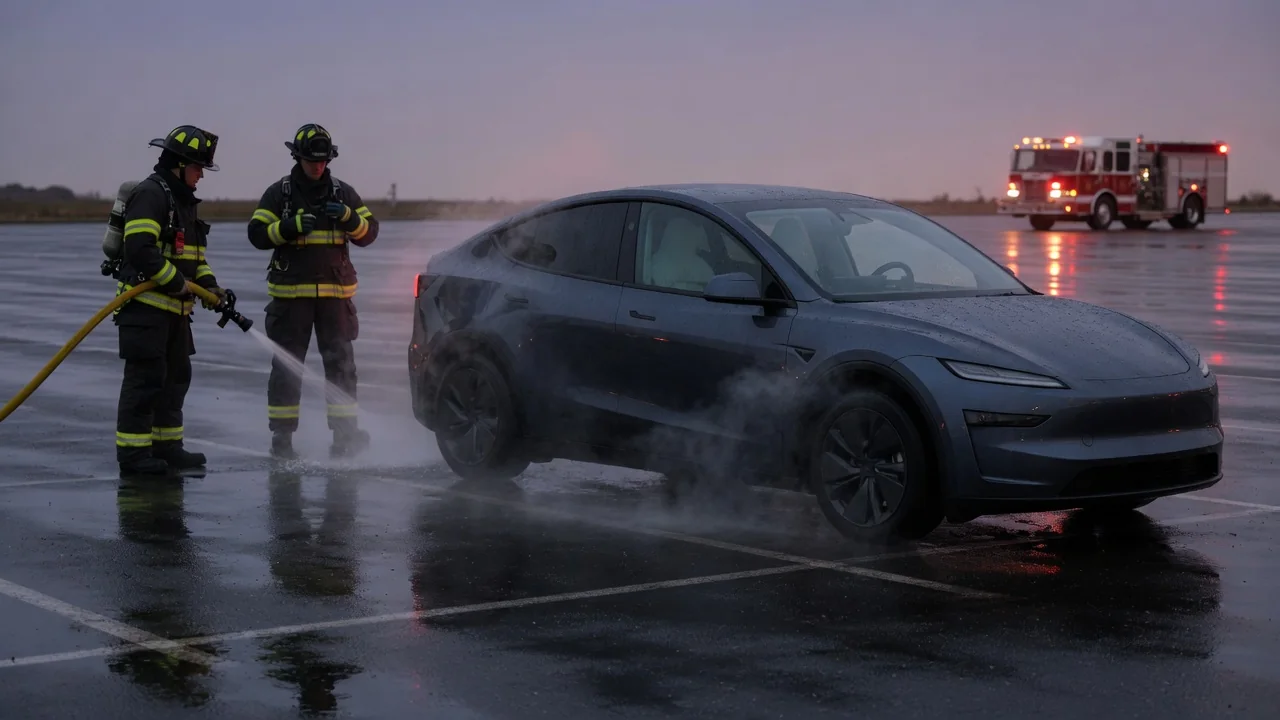
If you have ever wondered what battery thermal runaway is, the short answer is this: it is a self-feeding chain of heat-producing reactions inside a lithium-ion cell that, once started, can keep accelerating without any outside energy. This guide covers EV battery thermal runaway basics: how the heat chain develops, how battery packs are engineered to prevent or contain it, and what drivers and emergency crews should do when it happens.
The Heat Chain: How Thermal Runaway Starts and Spreads
Every lithium-ion cell produces some heat during charging and discharging. Normally, the cooling system and the surrounding structure carry that heat away faster than it builds up. Thermal runaway begins when that balance flips: the cell generates heat faster than it can shed it, its temperature rises, and the higher temperature speeds up chemical reactions that release even more heat. That feedback loop is what makes the process self-sustaining and difficult to stop once it is underway.
The trigger is usually one of a few familiar categories. An internal short circuit can result from a manufacturing defect, such as contamination or a flaw in the separator between electrodes. Mechanical damage from a collision or a puncture can crush or pierce cells. Electrical abuse, including overcharging or charging a very cold battery too aggressively, can cause harmful deposits on the electrodes. External heat, such as a nearby fire, can also push cells past their stable range. Once heating starts, the sequence typically runs through several stages: the protective layer on the anode breaks down, the thin polymer separator softens or melts and allows the electrodes to touch, and the cathode material can decompose. In many chemistries that decomposition releases oxygen, which helps the reaction continue. Meanwhile, the liquid electrolyte vaporizes and vents as hot, flammable, and potentially toxic gas.
A single failing cell is only the beginning. Heat and burning vent gas can raise the temperature of neighboring cells until they enter runaway as well, a process called thermal propagation. It can move from cell to cell, across a module, and through the pack. How quickly this happens depends heavily on cell chemistry and pack design. Lithium iron phosphate cells are generally considered more thermally stable than nickel-rich chemistries, but no lithium-ion chemistry is completely immune.
Protective Design in EV Battery Packs
The first line of defense is electronic. A battery management system continuously monitors cell voltages, temperatures, and current flow. It limits charging and discharging power when conditions drift outside safe limits, balances charge between cells, and can open high-voltage contactors to isolate the pack if it detects a serious fault. Many systems also record and report abnormal readings so the vehicle can warn the driver or request service before a problem escalates.
Thermal management is the second layer. Most modern EVs use liquid coolant circulating through plates or channels in contact with the cells, linked to radiators, chillers, or heat pumps. The goal is to keep cells within a narrow operating window: cool enough during fast charging and hard driving, and warm enough in cold weather that charging does not damage the anode. Preconditioning the battery before DC fast charging is one visible example of this strategy at work.
Physical design forms the third layer. Pack enclosures and surrounding vehicle structure are built to resist intrusion in a crash. Inside the pack, engineers may place heat-resistant barriers between cells or modules, add fuses and current-interrupting devices, and design vent paths that direct hot gas away from the cabin and from neighboring cells. Safety standards in several markets address thermal propagation directly, with a focus on giving occupants warning and time to get out. The specific combination of measures differs from one vehicle and pack design to another.
Emergency Response: What Drivers and Responders Should Do
Warning signs can include a battery or high-voltage fault message on the dashboard, smoke coming from beneath the vehicle, hissing or popping sounds, a sharp chemical smell, or visible vapor. If any of these appear, pull over in a safe spot away from buildings, switch the vehicle off if you can do so quickly, and get everyone out. Move well away and stay upwind, because vent gases can be toxic. Call emergency services and tell them clearly that an electric vehicle is involved. Do not open the hood, lift panels, or try to fight a battery fire with a handheld extinguisher. A lithium-ion pack fire can reignite and release gas in sudden bursts.
Firefighters approach EV battery fires differently from conventional vehicle fires. The main challenge is cooling the cells, which are enclosed inside a sealed, armored pack. That typically requires large volumes of water applied over an extended period. Crews rely on manufacturer emergency response guides, which identify high-voltage components, disconnect points, and safe cutting zones. Because damaged cells can re-enter runaway hours or even days later, a burned or heavily damaged EV is often monitored and stored apart from other vehicles and buildings after the fire is out.
An emergency does not always involve visible fire. After a significant collision, an impact to the underbody, or flooding, especially with saltwater, the pack may be damaged without immediate symptoms. In those cases, avoid charging the vehicle, do not park it in a garage or next to a house, and arrange towing and inspection according to the manufacturer's guidance.
Practical Implications and Limits
For everyday owners, the useful takeaway is that most risk factors sit outside normal driving. Owners can reduce exposure by using properly installed, certified charging equipment, following the charging recommendations in the owner's manual, keeping software updated, responding promptly to recall notices, and taking battery warning messages seriously instead of clearing them and driving on. Having the underbody inspected after a hard strike from road debris or a curb is also sensible, because pack damage is not always obvious from outside.
There are also limits to what anyone can control. An internal manufacturing defect cannot be detected by the owner, and protective design lowers the probability of runaway and slows its spread rather than eliminating it entirely. Thermal runaway is best understood as a low-probability, high-consequence failure mode. How a particular vehicle detects faults, warns occupants, and should be handled after damage depends on its chemistry, pack layout, and software, so the owner's manual and the manufacturer's emergency information remain the authoritative sources for any specific model.