What Battery Bypass Is
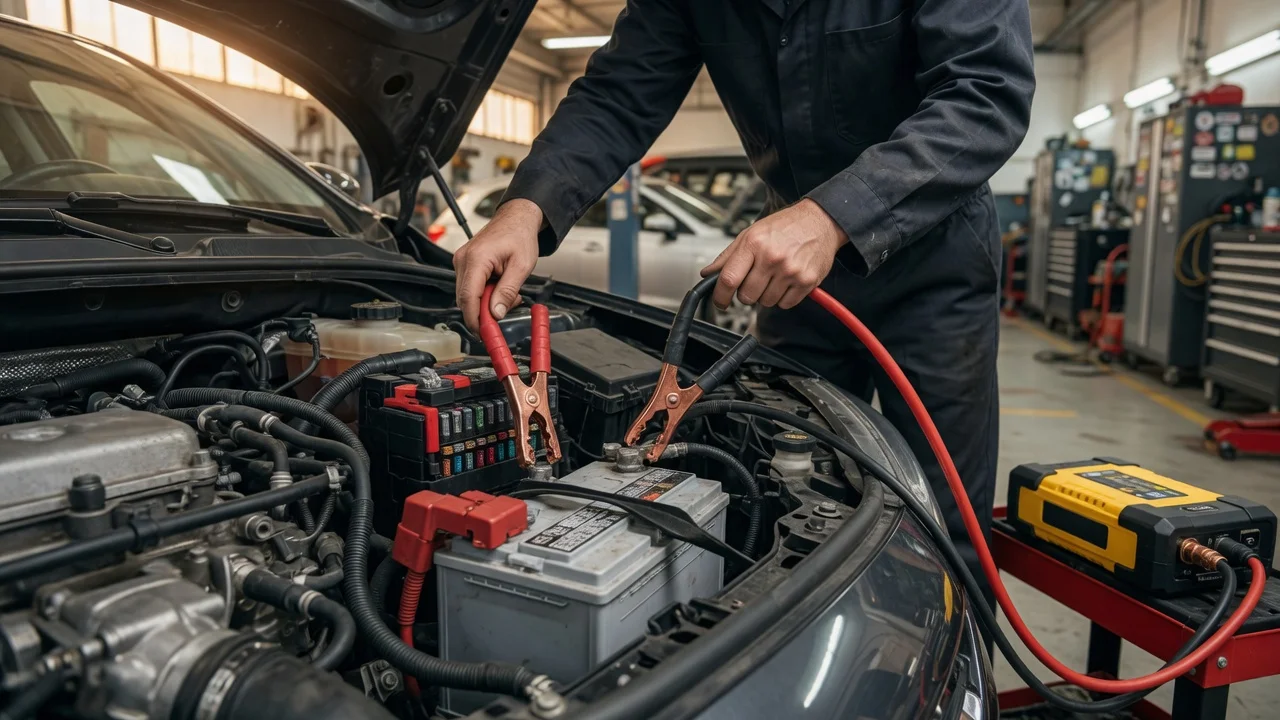
Battery bypass is not a single, standardized automotive component. It is a general term for routing electrical current around a battery, around a battery-related device such as a sensor or isolator, or around part of a battery pack, so that a circuit keeps working without that element in the path. What it means in practice depends on where you encountered the term. It could describe a design feature of an electric vehicle's traction battery, an aftermarket modification to a 12-volt system, or a temporary setup used while a battery is removed.
The Short Answer
In every usage, a bypass gives current an alternative path so that a particular battery, cell or battery-monitoring device is partly or fully taken out of the circuit. The purpose varies. It may keep a vehicle running despite a weak cell, allow two batteries to be linked directly, let a machine run without a conventional battery, or stop a control function that depends on battery data. Before acting on any advice about battery bypass, confirm which of these meanings applies to your vehicle and situation, because the effects and risks differ considerably.
Common Meanings of Battery Bypass
Context | What is bypassed | Typical purpose; Traction battery packs in electric and hybrid vehicles | An individual cell or module | Keep the pack working around a weak or failed section, or manage differences between cells; 12-volt intelligent battery sensor | The sensor that reports battery condition to the vehicle | Change how the charging system or start-stop feature behaves; Dual-battery or auxiliary systems | The isolator or relay that normally keeps batteries separate | Link batteries directly, for example to help start the engine from the auxiliary battery; Batteryless setups, mainly some motorcycles and competition vehicles | The battery itself | Run the electrical system from the charging system, often with a capacitor to smooth voltage; Battery removal or replacement | The vehicle battery, temporarily | Keep control modules and settings powered while the battery is disconnected
How a Battery Bypass Works
Electric current follows the paths available to it, and it favors the path of least resistance. A bypass adds a path, through a wire, switch, relay or electronic circuit, that lets current flow around the element being bypassed instead of through it. A circuit still needs a power source, so a bypass always relies on something else to supply power, such as the rest of the battery pack, the alternator or generator, another battery or an external supply.
Cell and Module Bypass in Traction Batteries
Electric and hybrid traction batteries are built from many cells connected together. In a series string, the weakest cell can limit the usable capacity of the whole string. Some battery designs include bypass circuitry that can route current around a cell or module so that the remaining sections continue to operate. A related principle appears in passive cell balancing, where the battery management system bleeds a small amount of energy from a higher-charged cell through a resistor so that cell voltages stay closely matched. Whether a particular vehicle uses cell or module bypass, and how it is implemented, depends on the manufacturer and the pack design. No model-specific information was supplied for this article.
Intelligent Battery Sensor Bypass
Many modern vehicles have a sensor on the 12-volt battery, usually at the negative terminal, that monitors current, voltage and temperature. The vehicle uses this data to estimate battery condition, adjust charging and decide whether functions such as automatic engine start-stop are allowed. Bypassing the sensor means the vehicle no longer receives accurate battery information. Depending on the vehicle, this can change the charging strategy, disable or alter start-stop operation, or trigger warning messages or stored fault codes. The exact behavior varies by manufacturer, model and model year.
Isolator Bypass in Dual-Battery Systems
Vehicles with a second battery for accessories, which is common in touring, off-road and recreational setups, often use an isolator or relay that keeps the starting battery from being drained by accessories. A bypass, often a manually operated switch or an override function on the isolator, connects the two batteries directly. The usual reason is to start the engine from the auxiliary battery when the starting battery is flat. Because this links the batteries without the isolator's protection, the wiring and switch must suit the current involved.
Batteryless Operation
Some motorcycles and competition vehicles can run without a conventional battery, with the generator or alternator supplying the electrical system directly. A capacitor is often fitted in place of the battery to smooth voltage fluctuations. This is sometimes called a battery eliminator rather than a bypass. Suitability depends heavily on the specific vehicle's charging and ignition design. Many modern road vehicles depend on a battery to start and to keep electronic systems stable, so this approach does not apply to them.
Keeping Power During Battery Removal
When a 12-volt battery is disconnected, some vehicles lose stored settings or require modules to relearn values. A memory-saver device or external power supply can keep the electrical system powered while the battery is out, which effectively bypasses the battery temporarily. Whether a vehicle needs this, and how the supply should be connected, should be checked against the manufacturer's service guidance for that model.
What a Bypass Does in Practice
The practical effect of a bypass depends on what it removes from the circuit.
A cell or module bypass in a traction battery can keep the pack operating, usually with reduced capacity or power. A sensor bypass removes the vehicle's view of battery condition, which can affect charging, start-stop and warning systems. An isolator bypass trades the protection between batteries for the ability to combine them on demand. A batteryless setup removes the battery's role as an energy reserve and voltage buffer, so the electrical system depends entirely on the charging system and any capacitor fitted. A temporary bypass during battery replacement aims to prevent loss of settings without changing how the vehicle normally operates.
Permanent bypass modifications to factory battery systems can affect warranty coverage, battery life and the operation of safety-related electronics. The extent of these effects depends on the vehicle and the modification, and no specific data was supplied to quantify them. Electric and hybrid traction batteries operate at high voltage and carry serious risk of electric shock and fire, so any work involving bypassing cells or modules belongs with a qualified technician using the manufacturer's procedures.
Working Out Which Meaning Applies to You
The context in which the term appears usually identifies the meaning. In a battery pack repair or electric vehicle diagnostic discussion, it most likely refers to cell or module bypass. In an aftermarket product description for a 12-volt battery or start-stop system, it most likely refers to sensor bypass. In a dual-battery or camper installation, it usually means an isolator override. In a motorcycle or race build, it may mean batteryless operation. If the vehicle's owner's manual, wiring diagram or service information uses the term, that documentation is the authoritative source for what it means on that specific model.
Gaps in This Explanation
This article explains the general principle and the common uses of the term. No manufacturer specifications, test results or model-specific procedures were supplied, so it does not state which vehicles use particular bypass designs, give electrical ratings or describe installation steps. For any of those details, consult the manufacturer's documentation for the exact model, model year and powertrain, or ask a qualified technician.