What Is an Open-Pore Wood Car Interior?
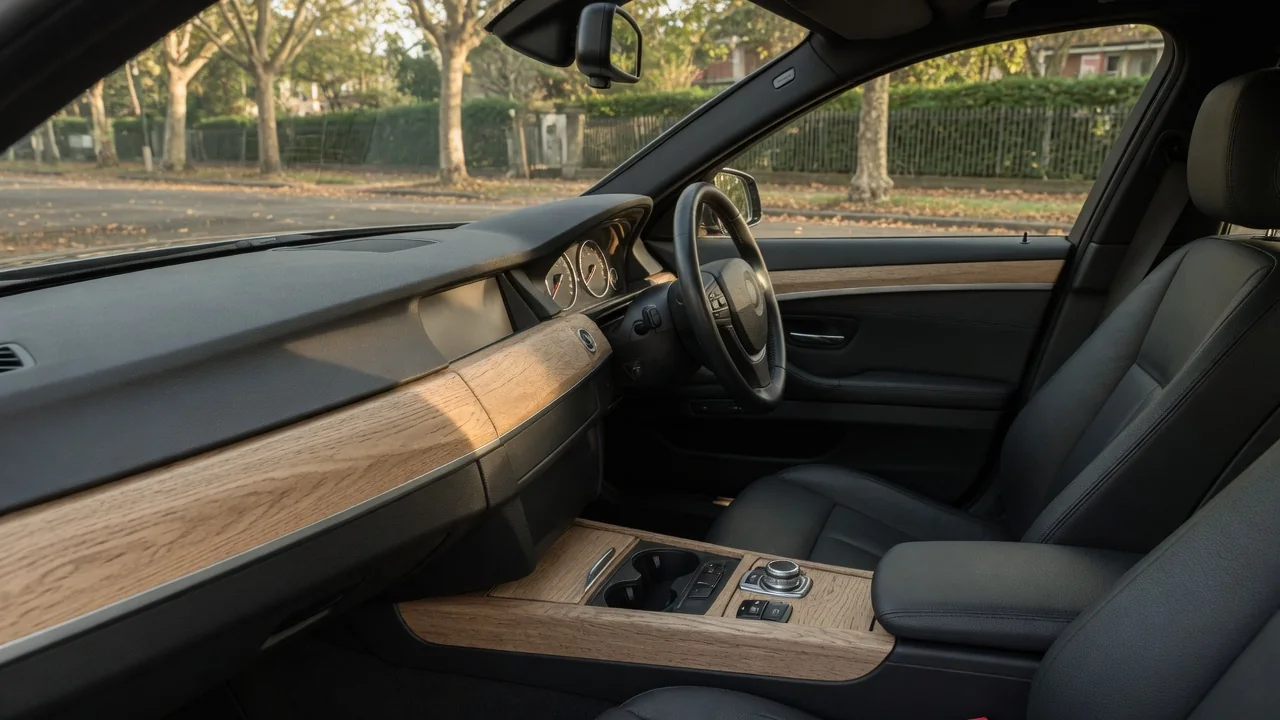
An open-pore wood car interior uses real wood veneer trim with a finish that leaves the natural grain and pores visible. You can also feel them by hand, because they are not sealed under a thick, glossy clear coat. The surface usually looks matte or satin and feels like wood, not polished resin. This guide explains how open-pore wood car trim is treated, what its texture means in everyday use, and how to care for it without harming its thin protective finish.
Surface Treatment of Open-Pore Wood Trim
Wood trim in most car interiors is not solid timber. It is usually a thin veneer of real wood bonded to a shaped backing, such as aluminum, plastic or a composite, so it can follow the curves of a dashboard, door panel or center console. The veneer can come from many species, but the finish applied on top is what defines the trim's character. In a conventional high-gloss treatment, several layers of clear lacquer or resin are built up, sanded level and polished. Those layers fill every pore and groove in the wood. The result is a smooth, mirror-like surface that protects the veneer but also separates the eye and hand from the wood underneath.
Open-pore finishing takes the opposite approach. The pores are deliberately left unfilled, and the veneer gets only a thin protective layer. Depending on the manufacturer, that layer may be a very light coat of matte or satin lacquer, a sealer, or an oil- or wax-based finish that soaks into the wood instead of forming a thick film on top. Some processes also brush the veneer before finishing. Brushing removes a little of the softer wood between growth rings, so the harder grain lines stand slightly proud. Because these methods vary, check the owner's manual or trim documentation for the exact finish on a given vehicle.
The look works best with woods that have naturally pronounced pores and grain, such as open-grained hardwoods like ash, oak or walnut. Veneers may also be stained, smoked or color-washed before finishing to reach a particular tone while the surface stays open.
Texture: How Open-Pore Wood Looks and Feels
Visually, open-pore wood reads as a natural material. The uneven surface scatters light instead of reflecting it in a sharp highlight, so the trim tends to look soft and matte, not glassy. Grain patterns, color variation and the small dark specks of the pores stay clearly visible. Each veneer comes from a different piece of wood, so matching panels are rarely identical. A low-reflection surface may also throw fewer bright highlights around the cabin than a mirror-gloss panel. How much that matters depends on where the trim sits and how the light falls.
To the touch, the difference is even clearer. Run a fingertip across open-pore trim and you can feel the grain lines and the slight recesses of the pores. The surface often feels dry and natural, without the slick, cool smoothness of a thick clear coat. This tactile quality is a large part of the appeal, because the trim feels like finished furniture rather than a decorative panel under plastic. The same open structure has a downside, though. Fine dust, lint and residue from hands can settle into the grain, whereas on a smooth surface a single wipe would remove them.
Care: Cleaning Open-Pore Wood Trim Safely
Routine care starts with gentle dusting. A clean, dry microfiber cloth handles most surface dust, and a soft detailing brush can lift particles out of the pores. Work in the direction of the grain so the bristles or cloth reach into the grooves instead of pushing debris across them. Never drag grit across the surface with a dirty cloth, because a thin finish offers little protection against scratches.
For fingerprints or light grime, use a microfiber cloth that is only slightly damp. Plain water works, or a mild, pH-neutral interior cleaner if the vehicle's manual permits it. Apply the cleaner to the cloth rather than spraying it onto the trim, so liquid does not pool in the pores or seep toward panel edges and seams. Wipe along the grain, then dry the area with a second clean cloth. Blot and clean spills promptly, especially sugary drinks or coffee, before they soak into the open surface.
Knowing what to avoid matters as much as knowing what to use: • Silicone-based dressings and glossy all-purpose interior protectants can leave a blotchy shine and build up in the pores. • Alcohol, ammonia, solvents and strong degreasers may attack the finish or dry out the wood. • Polishing compounds, abrasive pads and melamine sponges can cut through a thin coating and leave shiny or bare spots. If the trim has an oiled finish, the manufacturer may recommend a specific wood care product. In that case, follow the owner's manual and don't substitute household furniture polish.
Practical Implications and Limits
The main trade-off is protection. A thin, open finish gives the wood less of a barrier than a thick lacquer layer. Scratches from keys or rings, dents from hard objects and stains from spills can be more noticeable and harder to remove. Light swirl marks on gloss trim can sometimes be polished out, but polishing open-pore wood tends to fill or burnish the grain. That leaves a shiny patch that no longer matches the surrounding area. The veneer is also thin, so aggressive sanding risks cutting through it. Significant damage therefore usually needs professional refinishing or replacement of the affected panel, not a quick home fix.
The environment also plays a role. Like other natural materials, wood veneer can react to prolonged sunlight, heat and changes in humidity, and its color may shift over the years. Sensible general precautions include using a windshield sunshade, parking in shade where practical and keeping the cabin reasonably ventilated. The actual rate of change depends on the wood, the finish and the climate. Trim in high-contact areas may also show wear sooner if items often rub against the console or if children and pets ride along regularly.
Finally, open-pore describes a finish style, not a single standardized specification. Trim sold under similar names ranges from heavily brushed, oil-finished veneer to wood with a thin satin lacquer that only partly fills the pores. Some interiors use wood-look materials that imitate the effect. If the distinction matters to you, look closely at the surface, feel for the grain, and check the manufacturer's documentation for the exact material and recommended care. Owners who enjoy a natural, tactile surface and accept a little extra attention get a distinctive cabin from open-pore wood. Those who want the lowest-maintenance surface may find glossier or non-wood trim easier to live with.