What Is an Oil Pump Pickup Screen? Sump Intake, Debris, and Pressure
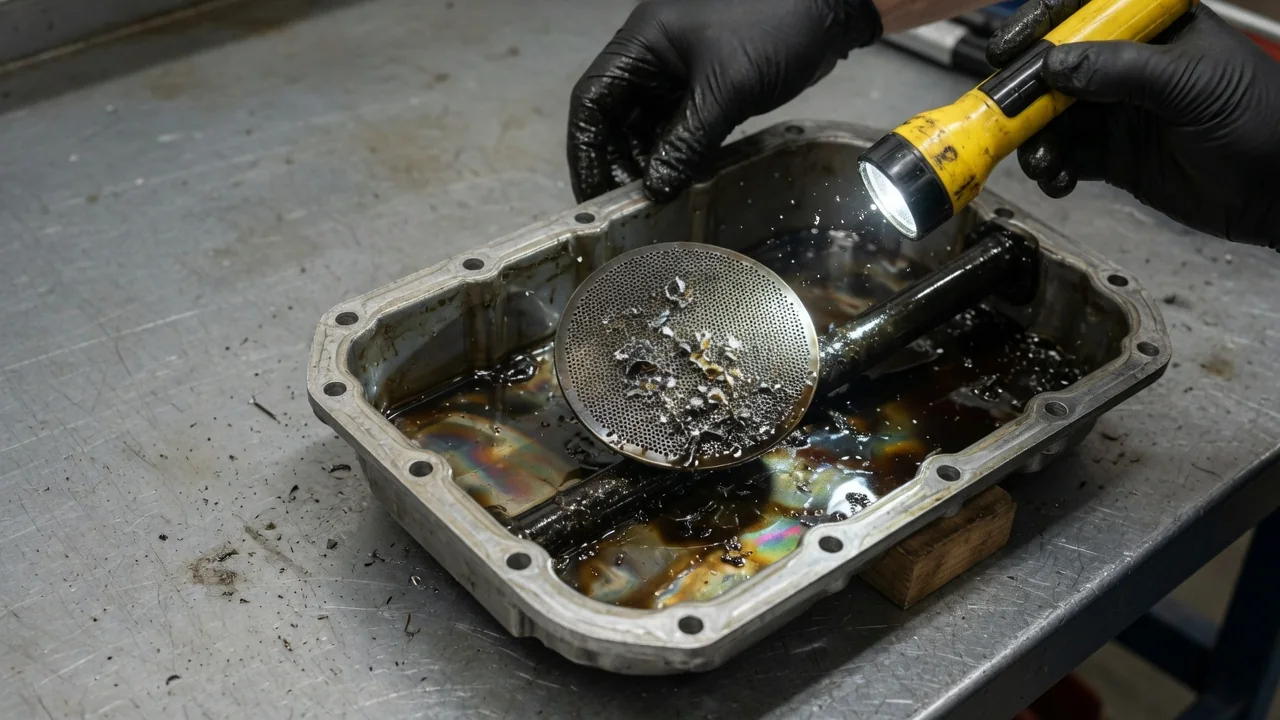
An oil pump pickup screen is the mesh-covered inlet at the end of the pickup tube that sits low in the engine's oil pan. Every drop of oil the pump sends to the bearings, camshaft, and valvetrain passes through it first. Its job is simple: let oil in freely while keeping larger debris out of the pump. Knowing how it works explains why sludge, gasket fragments, or a clogged screen can lead to low oil pressure and accelerated engine wear.
Sump intake
In a conventional wet-sump engine, the oil pan, or sump, is the reservoir that collects oil as it drains back from the upper engine. The oil pump draws from this reservoir through a pickup tube, a rigid tube running from the pump inlet down toward the bottom of the pan. The pickup screen is fitted to the open end of that tube, often inside a shallow housing, and positioned close to the pan floor so it stays submerged as oil level and vehicle attitude change.
The pump creates low pressure on its inlet side, and oil moves up the tube because the pressure in the pan is higher than the pressure at the pump inlet. That pressure difference is limited, so the intake side of the lubrication system is sensitive to restriction. Anything that narrows the path, whether a partially blocked screen, a cracked tube, or a leaking seal where the tube meets the pump, makes it harder for the pump to fill completely. A leak at that joint is especially troublesome because the pump can draw in air instead of oil.
The screen is a coarse strainer, not a fine filter. Its openings are meant to stop larger particles and fragments while letting cold, thick oil pass with little resistance. Removing fine particles is the job of the oil filter, which sits on the pressure side of the pump. Many engines also use baffles, windage trays, or a shaped pan area around the pickup to limit sloshing and keep the inlet covered during cornering, braking, and acceleration, though the arrangement varies by design.
Debris
Because the pickup screen sits at the low point of oil circulation, it meets whatever settles or circulates in the sump. Material that commonly collects on it includes sludge and varnish from oil that has degraded or been changed too infrequently, pieces of gasket or excess silicone sealant left from earlier repairs, and fragments of plastic or metal from failing internal parts such as timing chain guides. Coolant contamination, or frequent short trips that leave moisture and fuel in the oil, can also encourage deposits.
Debris on the screen is often a symptom rather than the root problem. A screen caked with sludge points to oil breakdown or contamination, while hard plastic or metal pieces suggest that something inside the engine is wearing or breaking. For that reason, what is found on the screen when the pan comes off is useful diagnostic information. Metallic particles, bearing material, or guide fragments call for a closer look at the engine before the screen is simply cleaned and reinstalled.
The screen also protects the pump itself. Oil pumps depend on close clearances between their gears or rotors and the housing, and larger particles drawn inside can score those surfaces or, in severe cases, jam the mechanism. The tradeoff is that everything the screen catches stays in the path of the incoming oil, gradually reducing the open area available for flow.
Pressure issues
When the pickup screen becomes significantly restricted, the pump cannot draw in oil as easily as intended. The result is reduced oil delivery and, often, low or fluctuating oil pressure. Symptoms tend to appear when demand is high or the oil is thick: at higher engine speeds the pump tries to move more oil than the restricted inlet can supply, and after a cold start the more viscous oil resists flowing through the clogged mesh. The exact pattern depends on the engine and how severe the restriction is.
Starving the pump at its inlet can also cause cavitation, in which vapor or air bubbles form in the low-pressure zone and then collapse as the oil is pressurized. Aerated oil compresses instead of holding firm pressure, so it supports bearing oil films less effectively and can disturb hydraulic components such as lifters, lash adjusters, and variable valve timing actuators. Drivers may notice a flickering oil pressure warning light, a low gauge reading, valvetrain ticking, or timing-related fault codes on engines that use oil pressure to control cam phasing.
Low oil pressure is not unique to pickup screen problems. Low oil level, incorrect viscosity, a worn pump, a stuck pressure relief valve, worn crankshaft or camshaft bearings, a clogged oil filter, or a faulty pressure sender can produce similar symptoms. Confirming actual pressure with a mechanical test gauge, rather than relying only on a dash light or sender, is a common first step before deciding to remove the oil pan.
Practical implications and limits
For most owners, the most effective way to protect the oil pump pickup screen is to keep the oil in good condition. Following the oil specification and change interval in the owner's manual, including any severe-service schedule that applies to how the vehicle is used, limits the sludge and varnish that build up on the mesh. Checking the oil level regularly matters as well, because a low level makes it more likely the pickup will be uncovered during hard maneuvers, even when the screen itself is clean.
Inspecting the screen is not a routine maintenance item on most vehicles. On many engines the oil pan must come off to reach it, and on some that means supporting the engine or lowering a subframe, so the labor involved varies widely. The pickup is therefore usually examined for a specific reason, such as a confirmed low pressure condition, visible sludge at the filler opening, a known internal parts failure, or an engine rebuild. A service manual for the specific engine is the right reference for access steps, seal replacement, and fastener torque.
Servicing the screen also has limits. Cleaning or replacing a clogged pickup restores the intake path, but it cannot repair bearings, a pump, or other parts that may already have been damaged during a period of low pressure. If heavy sludge caused the restriction, the underlying oil condition has to be corrected or the screen may clog again. Engine flush products can loosen deposits that then migrate toward the screen, so they call for caution and attention to the engine maker's guidance. In short, the pickup screen is a simple part whose condition often reflects the health of the entire lubrication system.