What Is an Inner CV Joint? Purpose, Plunge Motion and Symptoms
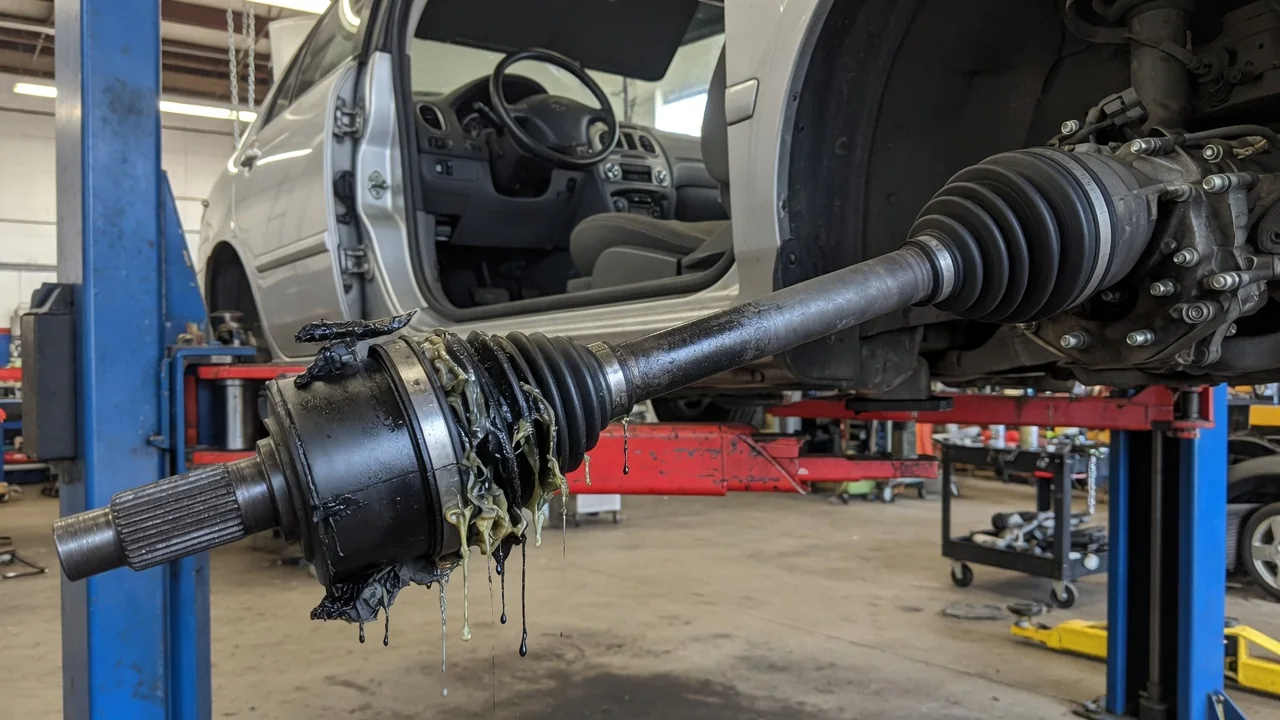
An inner CV joint is the constant-velocity joint at the transmission or differential end of a drive axle. On most front-wheel-drive vehicles, and on many rear- and all-wheel-drive vehicles with independent suspension, each axle shaft has two CV joints: an outer joint near the wheel and an inner joint near the transaxle or differential. The inner CV joint's purpose is to keep power flowing smoothly while the axle changes angle and length as the suspension moves.
Suspension travel
When a wheel moves over bumps, dips under braking, or shifts as the body rolls in a turn, the hub rises and falls relative to the body. The transaxle or differential stays mounted to the body or subframe. The axle shaft bridges these two points, so its working angle changes constantly as the suspension compresses and extends. A simple universal joint operating at an angle makes the output speed fluctuate slightly within each revolution. A constant-velocity joint is designed so the output turns at the same speed as the input across its intended range of angles, which keeps power delivery smooth and avoids driveline vibration.
The two joints on an axle divide this work. On a front axle, the outer joint must handle suspension movement plus steering angle, so it is usually a fixed design, such as a ball-and-cage joint, that tolerates large angles but does not change length. The inner joint generally operates at smaller angles, driven mainly by suspension travel and the relative position of the transaxle and the hub. Because of that, inner joints are designed to combine moderate angle capacity with the ability to slide. The actual angles depend on suspension geometry, ride height and axle length, so they differ from one vehicle design to another.
Plunge motion
Plunge is the in-and-out sliding movement that lets the effective length of the axle change. It is necessary because the wheel hub and the axle do not swing along the same arc. The hub follows a path set by the control arms, strut or other suspension links, while the axle pivots around its joint centers. As the suspension cycles, the distance between the transaxle output and the hub grows and shrinks. The engine and transmission also move on their rubber mounts under acceleration and braking, adding further variation. Without plunge, the axle would bind, push against internal transaxle components or pull apart.
Common plunging inner joint designs include the tripod, sometimes called a tripot, and ball-type plunging joints such as the double offset and cross groove designs. A tripod joint uses a three-legged spider carrying rollers on needle bearings, and the rollers slide in straight channels inside a housing often called a tulip. A double offset joint uses balls running in straight tracks that permit axial sliding, while a cross groove joint uses angled tracks that allow a more limited amount of plunge in a compact package. Which type a particular vehicle uses is a manufacturer design choice documented in its parts and service information.
Plunge capacity is finite. Each design allows only a certain amount of axial travel before internal parts reach their limits, so axle length is chosen to keep the joint within its working range at normal ride height and through normal suspension travel.
Symptoms
A worn inner CV joint often behaves differently from a worn outer joint. Outer joint wear is classically associated with clicking or popping during tight turns under power. Inner joint wear is more often linked to vibration or shudder under acceleration, especially when pulling away from a stop or climbing a grade. The shudder may ease when coasting because the joint is no longer carrying heavy torque. Tripod joints in particular can develop this behavior as the rollers or housing tracks wear.
Excess internal play can also produce a clunk when shifting between drive and reverse, when getting on and off the throttle, or when crossing bumps. A torn or split boot is frequently the first visible sign: grease thrown onto the inner wheel well, subframe or nearby components suggests the boot has failed. Once lubricant escapes and dirt and water get in, wear inside the joint tends to accelerate.
None of these symptoms is unique to the inner joint. Vibration under acceleration can also come from worn engine or transmission mounts, an intermediate shaft bearing on vehicles that use one, tire or wheel problems, or other driveline parts. Clunks can come from suspension bushings, stabilizer links or mounts. A sound diagnosis combines a road test, a visual boot inspection and a check for joint play with the vehicle safely supported.
Practical implications and limits
Because the inner joint depends on the geometry it was designed around, changes to ride height matter. Lifting or lowering a vehicle can increase operating angles and move the joint toward the edge of its plunge range, which can raise wear and, in more extreme cases, lead to binding or separation. Worn powertrain mounts have a related effect, letting the engine and transmission move more than intended and forcing extra angle and plunge into the joint. When driveline vibration appears, the mounts deserve attention alongside the axle itself.
Boot condition is the main factor owners can monitor. Looking at the boots during routine service, such as oil changes or tire rotations, can catch a tear before the joint is damaged. If a split boot is found early and the joint is still quiet and tight, cleaning, repacking with the specified grease and fitting a new boot may be an option. Once the joint is noisy or loose, replacing the joint or the complete axle assembly is the usual repair. Many repairs use a complete axle assembly, but which approach is practical depends on the vehicle and parts availability.
This explanation covers general mechanisms, not any specific vehicle. Joint type, grease specification, retention method, fastener torque and removal procedure vary by design: some inner joints are retained in the transaxle by a clip, while others bolt to a flange. Handling also matters, since pulling on the shaft rather than the housing can separate some plunging joints. Driving for long periods on a severely worn joint risks further damage, so a suspected failure is worth confirming against the vehicle's own service information.