What Is an Immobilizer in a Car?
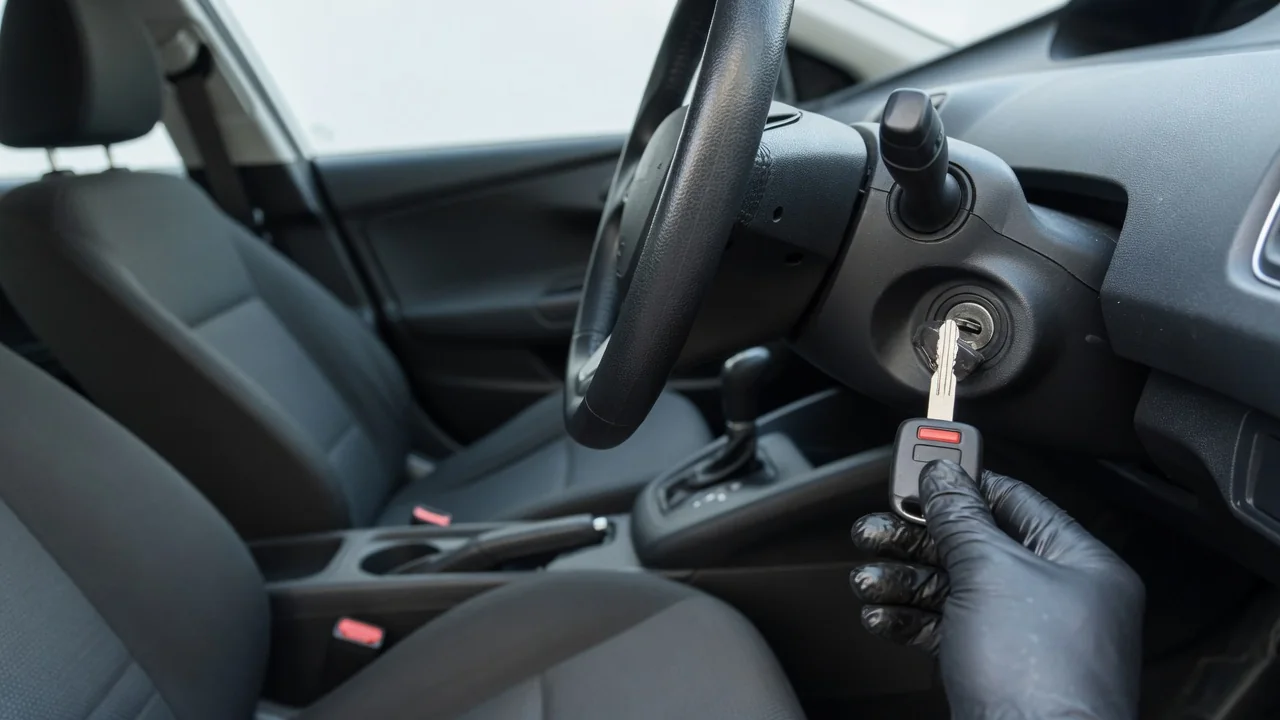
Anyone asking what is an immobilizer in a car is really asking how a vehicle decides who is allowed to start it. An immobilizer is an electronic anti-theft system that checks for an authorized key before the engine is permitted to run. Without that confirmation, the engine control electronics withhold fuel, spark, or starter operation, even if the ignition lock is turned mechanically.
Key identity
Every key or fob paired to an immobilizer carries a small transponder chip holding an electronic identity. When the key is placed in the ignition, or a smart fob is inside the cabin, an antenna ring or interior receiver energizes the chip and reads its response. That response is compared with identities stored in the vehicle's control modules. A key blade cut to the correct shape can turn the lock cylinder, yet without a recognized chip it will not be accepted as a valid key.
Designs differ considerably between manufacturers and model years. Older systems often used a fixed code, while many later ones use encrypted challenge-and-response exchanges that change with every start attempt. Some vehicles store key data in the engine computer, others in a body control module, instrument cluster, or a dedicated immobilizer unit. Drivers rarely see any of this directly; the clearest evidence is that a hardware-store copy without a programmed chip may open the doors but will not keep the engine running.
Start permission
Once the key identity is verified, the immobilizer sends a release message to the engine control module, commonly over the vehicle's data network. Only then are functions such as fuel injection, ignition spark, or starter engagement enabled. The whole exchange usually takes a fraction of a second, so an authorized driver notices nothing more than a normal start. If the message never arrives, or does not match what the engine computer expects, permission is simply not granted.
How a refused start looks depends on the strategy the manufacturer chose. On some vehicles the starter will not crank at all. On others the engine cranks normally but never fires, or it starts, runs for a second or two, and then shuts off. Push-button vehicles may display a message that no key was detected. Because these behaviors resemble a weak battery, a fuel delivery problem, or a failed starter, the pattern alone does not confirm the security system is responsible.
Fault signs
The most recognizable sign is a security indicator on the instrument cluster, often a key symbol, a padlock, or a car outline with a key inside. On many vehicles it illuminates briefly at ignition-on and goes out when the key is accepted. A lamp that flashes rapidly or stays lit during a no-start suggests the key was not recognized, although the exact meaning of each pattern is manufacturer-specific and should be checked in the owner's manual.
Common contributors include a weak fob battery on proximity systems, a damaged transponder after a key is dropped, a failing antenna ring around the ignition lock, wiring or connector trouble, and low vehicle battery voltage that disrupts module communication. A scan tool may show stored fault codes in the immobilizer or engine module, but a code is evidence to interpret rather than proof that a particular part has failed. Many security codes are manufacturer-dependent, so their definitions need vehicle-specific confirmation.
Everyday Use and Observations
In normal driving the immobilizer asks nothing of the driver. It arms itself automatically when the ignition is switched off and the key is removed or the fob leaves the vehicle, and it disarms without any button press when a recognized key returns. Many cars show a slowly blinking security lamp while parked, which generally indicates the system is armed rather than faulty. That passive operation is why many owners are unaware their vehicle has one at all.
A few habits and observations are useful. Trying the spare key is a simple way to tell whether a problem follows one key or stays with the vehicle. Some owners report recognition trouble when several transponder keys hang on the same ring close to the ignition, since the reader may pick up more than one signal. Vehicles with push-button start often provide a backup spot, such as a marked area on the steering column or console, where a fob with a weak battery can still be read.
Limits and Next Steps
An immobilizer has clear limits. It prevents the engine from being started without authorization, but it does not stop a break-in, protect belongings in the cabin, or prevent the vehicle from being towed or carried away. It is also separate from an audible alarm, which may or may not be fitted alongside it. Keyless systems face their own risks, including relay-style attacks that extend a fob's signal, so physical deterrents and careful parking still have a place.
When a security-related no-start persists, sensible next steps are to check the owner's manual for the indicator's meaning, try the spare key, and confirm the vehicle battery is healthy. Beyond that, diagnosis typically requires equipment that can communicate with the security modules. Adding or replacing keys normally involves programming them to the vehicle, a task handled by dealers and qualified automotive locksmiths, often with proof of ownership. Procedures and requirements vary by make, so vehicle-specific service information should guide any repair.