What Is an Extended-Cab Pickup? Cabin, Doors and Bed Explained
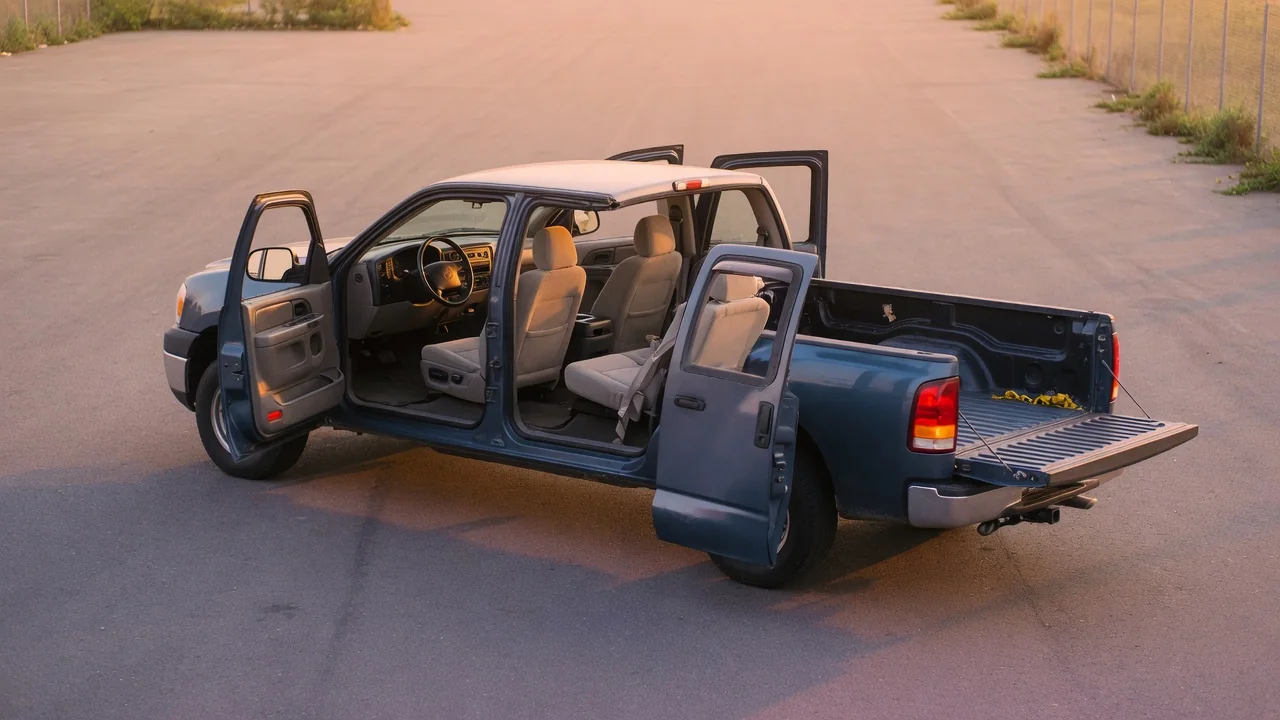
An extended-cab pickup is a truck whose cab is lengthened behind the front seats to create a second, smaller area for people or cargo, without becoming a full four-door crew cab. It sits between the regular cab, which has one row, and the crew cab, which has two full rows. Understanding this layout comes down to three linked questions: how much extra cabin space it adds, how the doors are arranged, and what the longer cab costs in bed length or overall size.
Extra cabin space
The core idea of extended cab truck design is simple: move the rear wall of the cab further back so there is enclosed space behind the driver and front passenger. What fills that space depends on the truck. Some versions have a narrow rear bench, some use a pair of fold-down jump seats, and some offer little more than open floor and storage compartments. Rear seat cushions are often designed to flip up or fold away, turning the area into a covered, lockable load space for items that should stay dry and out of sight.
Because the extension is shorter than the one used for a crew cab, the second row is generally tighter. Rear legroom is usually limited, seatbacks tend to sit more upright, and the space can feel cramped for adults on longer drives. That makes it best suited to occasional passengers, short trips, or cargo rather than daily full-size seating. How usable the rear area actually is varies widely between manufacturers and generations, so the seating count and interior dimensions of a specific truck should be taken from its own documentation rather than assumed from the cab name.
Naming adds confusion. Manufacturers use different trade names for this layout, and the same term can describe different configurations across brands. A label that means an extended cab in one lineup may mean a four-full-door cab in another. The reliable way to classify a pickup is by its physical layout: one full row plus a smaller rear area, as opposed to one row only or two full rows.
Door layout
Early extended cabs kept the same two doors as a regular cab. Reaching the rear area meant opening a front door and tilting or sliding the front seat forward, which worked for stowing gear but was awkward for passengers. Later designs added smaller rear doors on one or both sides to make that space easier to reach.
A common arrangement uses rear-hinged rear doors, often called access doors or clamshell doors, that swing open in the opposite direction from the front doors. On many of these designs there is no fixed pillar between the front and rear openings, so when both doors are open they create one wide entry. The tradeoff is sequence: the front door usually has to be opened first because the rear door latches to it or releases from its edge. Other extended-cab designs use small front-hinged rear doors that open independently, which behaves more like a crew cab but with shorter rear doors and a smaller opening.
The door arrangement shapes everyday use more than the cab length alone. With a sequenced design, a rear passenger typically cannot get in or out unless the front door is opened, and the front occupant may need to unbuckle or shift to allow it. On pillarless designs, some structural and trim elements are carried by the rear door itself, which is part of why the opening order is fixed. Independent rear doors avoid that dependency but give up the extra-wide combined opening.
Bed tradeoff
A pickup's cab and bed share the length available on its frame. Overall length is limited by practical concerns such as parking, garage fit and maneuverability, as well as by the platforms a manufacturer builds. When the cab grows, one of two things happens: either the bed gets shorter so the truck keeps a similar overall length, or the wheelbase and overall length increase so the bed can stay the same. Every extended cab reflects one of these choices or a mix of both.
Manufacturers commonly offer more than one bed length for a given cab style, so an extended cab may be paired with a shorter or longer box depending on the lineup. Pairing the longer cab with a long bed preserves cargo length but produces a noticeably longer vehicle. Pairing it with a shorter bed keeps the truck more compact but reduces how much fits in the open box. Compared with a crew cab of similar overall length, an extended cab can often leave room for a somewhat longer bed, which is one of the main reasons the layout exists.
The real question is which kind of space you value more. The open bed suits bulky, heavy, dirty or long items such as lumber, and a shorter bed may require hauling some loads with the tailgate down. The enclosed cab space suits tools, bags and equipment that need protection from weather or theft. Cab configuration can also affect curb weight, and because payload is calculated from the gross vehicle weight rating minus curb weight, the published payload for a given truck should be checked on its door-jamb label rather than assumed from another configuration.
Practical implications and limits
An extended cab tends to fit buyers who mainly drive alone or with one passenger but sometimes need a little more: a place to lock up work gear, room for an occasional extra rider, or a longer bed than a similar-length crew cab would allow. It is a weaker fit for households that regularly carry adults in the back seat, where a full second row is usually more comfortable and easier to access.
Carrying children in the rear area deserves particular care. Some extended-cab rear seats have restrictions on child seat installation, may lack certain anchor or tether points, or come with specific guidance about the front passenger airbag. These details differ from truck to truck, so the owner's manual and the vehicle's warning labels are the authority on where and how a child seat can be used.
Size matters in daily driving too. If the cab extension came with a longer wheelbase, expect a wider turning circle, tighter fits in parking spaces and, off pavement, a reduced breakover angle. Rear-hinged doors that open outward can also be awkward in narrow parking spots where both doors need room at once. When shopping, especially for a used truck, confirm the actual cab style, door arrangement, seating capacity and bed length from the window sticker, a VIN decode or the manual, because trade names alone do not reliably describe the configuration and features can change between model years.