What Is an EVSE?
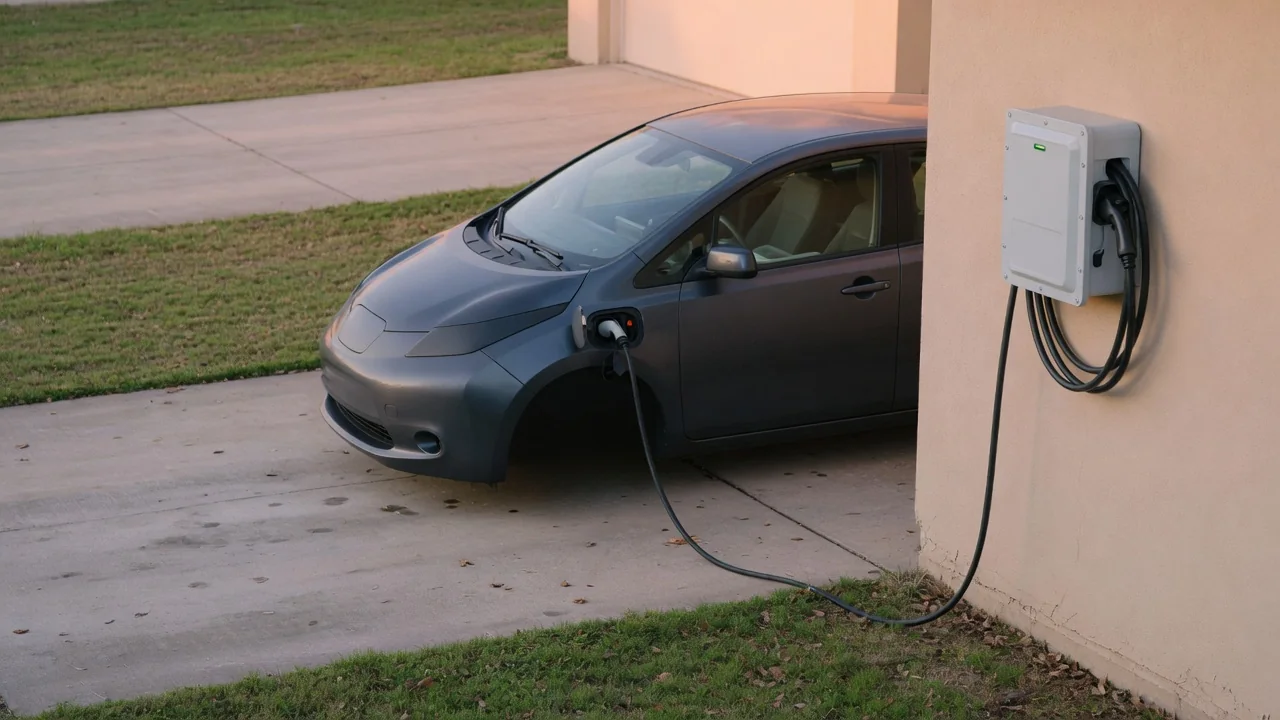
Anyone asking what is an EVSE is usually looking at a wall box or a portable cord and wondering why it is not simply called a charger. EVSE stands for electric vehicle supply equipment, the external hardware that connects a plug-in car to the electrical supply. Its main job is not charging the battery itself but delivering power safely and only when conditions are right.
Power delivery
With alternating current charging, the EVSE does not convert electricity for the battery. It passes household or commercial AC through to the vehicle, where the onboard charger converts it to the direct current the battery pack stores. That is why the same wall unit can charge two different cars at different speeds: the lower of the equipment's supply capacity and the vehicle's onboard charger capacity sets the rate. A portable cord on a standard outlet typically delivers far less power than a hardwired unit on a dedicated higher-voltage circuit.
The safety role shows up in how power is switched. Inside the equipment, a contactor or relay keeps the cable de-energized until the vehicle is connected and has signaled it is ready, so an unplugged connector lying on a garage floor is not live. Ground-fault monitoring is designed to open the circuit if current leaks where it should not. DC fast charging stations work differently, housing the power conversion in the station itself and feeding the battery directly under the vehicle's supervision, with details that vary by manufacturer.
Communication
Before any power flows, the equipment and the vehicle exchange basic signals through dedicated conductors in the cable. In common AC charging standards, a pilot signal tells the vehicle how much current the supply can offer, and the vehicle responds by changing the state of that circuit to show it is connected and ready. The car then draws no more than the advertised limit. This handshake is what lets a modest portable unit and a high-capacity wall box work safely with the same vehicle.
A second signal confirms that the plug is fully seated and detects when the release latch is pressed, so current can be ramped down before the contacts separate. Drivers see the results rather than the signals: a click from the contactor, a status light changing color, or a dashboard message showing charging has started. DC fast charging and some networked equipment add digital communication for battery limits, billing, or scheduling. Which features a particular car supports depends on its model and software, so the owner's manual is the reference.
Connector
The connector is the part most drivers handle, and its design carries much of the safety burden. Pins are recessed inside a shrouded housing so fingers cannot reach them, and the ground contact is generally arranged to engage before the power contacts and separate after them. A latch holds the plug in place, and many vehicles add a locking mechanism at the charge port during a session. Weather seals and drainage paths help the handle tolerate rain, though damaged housings should not be used.
Connector type varies by region, vehicle brand, and model year. In North America, many vehicles use the J1772 style for AC charging, often paired with extra pins for DC fast charging, while others use the more compact design now standardized as the North American Charging Standard. Adapters exist between some formats, but whether one is approved for a given car and station is a manufacturer-specific question. Checking the charge port itself and the vehicle documentation settles which plug fits before buying equipment or planning a trip.
Everyday Use and Observations
In daily use, a healthy unit is mostly uneventful. The driver plugs in, hears a click after a brief pause, and sees an indicator on the equipment or charge port confirm that energy is flowing. Many vehicles display the charging rate and an estimated completion time, and some allow a scheduled start to take advantage of off-peak electricity. Charging often slows as the battery approaches full, and it may also be reduced in very hot or cold weather, which is the vehicle managing its battery rather than an equipment fault.
A few observations deserve attention. A cable or handle that feels mildly warm during a long session can be normal, but a hot plug, discolored outlet, melted plastic, or burning smell points to a poor connection and is a reason to stop using the equipment. Repeated tripping of a breaker or the unit's own fault light suggests a ground fault, an overloaded circuit, or moisture intrusion. Fault indicators differ between brands, so the pattern of lights or the message shown should be checked against that product's documentation.
Limits and Next Steps
The equipment has clear limits. It cannot make a car charge faster than the onboard charger allows, and it cannot exceed what the building circuit safely supports. A charging-related warning or stored fault code on the vehicle is evidence to interpret, not proof that the wall unit or any single component has failed; the cause could be the supply, the cable, the charge port, or the car's own electronics. Many such codes are manufacturer-dependent, so their meaning needs confirmation for the specific vehicle.
Sensible next steps start with simple comparisons. Trying a different station, or another compatible vehicle on the same equipment, helps show which side of the connection a problem follows. Installation of a wall unit, including circuit sizing, wiring, and any permit requirements, belongs with a licensed electrician rather than a weekend project, because the work involves hazardous voltage. Persistent faults on the vehicle side are best handled by a technician with access to brand-specific diagnostic information, especially since high-voltage systems are not safe to probe casually.