What Is an Enzyme Cleaner for Car Fabric?
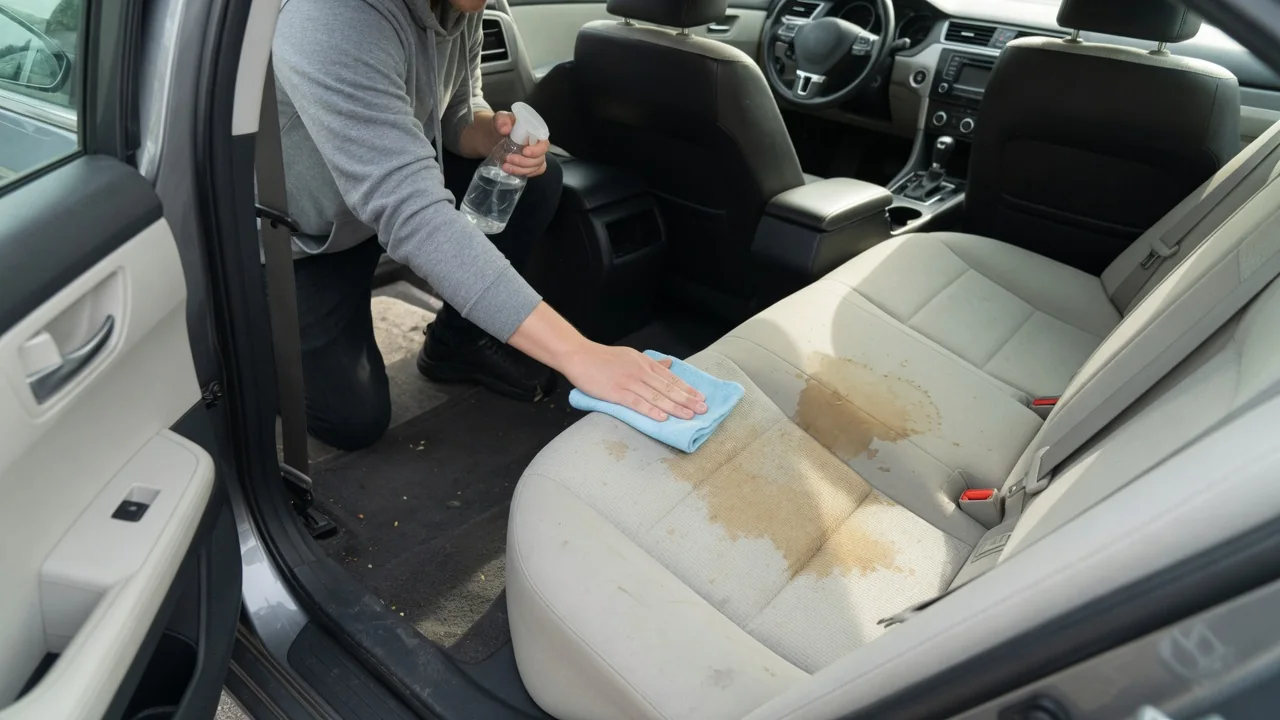
An enzyme cleaner for car fabric is a water-based product that uses biological catalysts to break down organic stains and odor sources in seats, carpets, and other cloth surfaces. A conventional upholstery cleaner relies mainly on detergents to lift soil. An enzyme cleaner instead targets the molecules that make up food spills, body fluids, and pet accidents. Whether it works depends on what the enzymes act on, how long they stay in contact, and whether your upholstery tolerates the product.
Organic Residue and What Enzymes Target
Enzymes are proteins that speed up specific chemical reactions without being used up. In fabric cleaners, each enzyme type is matched to a class of organic material. Proteases break down proteins, which are found in blood, milk, egg, vomit, and many food spills. Amylases break down starches from snacks, sauces, and cereal. Lipases act on biological fats and oils, such as food grease and the skin oils that build up on headrests and seat bolsters. Some formulas combine several enzymes. Some also contain bacterial cultures that produce enzymes while they are active on the surface.
This matters in a car because organic residue rarely stays on the surface. Liquids wick into the fabric pile, then into the backing and sometimes into the foam underneath. A detergent can remove the visible stain from the top fibers while leaving material deeper down. That hidden residue keeps smelling as bacteria feed on it. An enzyme cleaner breaks large organic molecules into smaller, more water-soluble fragments, which are easier to rinse out or extract. That is why these products are often chosen for odors from spilled milk, pet accidents, or sickness rather than for ordinary dust and dirt.
The mechanism has a matching limit. Enzymes act only on the substances they are designed for. They have little effect on road grime, ink, dye transfer from clothing, or petroleum-based grease, because those are not the biological molecules the enzymes recognize.
Contact Time: Why Enzyme Cleaners Need to Dwell
Enzyme cleaners work more slowly than typical spray-and-wipe upholstery cleaners. A surfactant loosens soil within moments. Enzymes, by contrast, have to reach the residue, bind to it, and break it down step by step. That process continues only while the area stays moist, because enzymes work in water. If the product dries on the surface after a minute or two, the reaction largely stops. The stain may look partly treated while its source remains.
For that reason, the dwell time printed on the product label is the main instruction to follow. Labels vary: some products call for a short wait, while others suggest keeping the area damp for an extended period. A common way to keep the spot from drying out is to cover it with a damp microfiber towel or a plastic sheet, which helps most in a warm or sunny car. Apply enough product to reach as deep as the original spill went. A light surface mist will not treat liquid that has soaked into the seat cushion.
Temperature also affects the reaction. Enzymes generally become more active in mild warmth, but high heat can denature them, meaning their structure changes and they stop working. Heat can also set protein stains into fibers. Using steam or very hot water before or during the enzyme step can therefore undercut the treatment. After the dwell time, the area is usually rinsed or extracted with clean water. This removes the broken-down residue and leftover product before the fabric is dried thoroughly.
Material Test: Checking Your Upholstery First
Most cloth automotive seats and carpets are made from synthetic fibers, which generally tolerate water-based cleaners. However, dyes, backings, and finishes differ between vehicles and even between parts of the same interior. A material test is the safest way to confirm compatibility. Choose a hidden area, such as the lower side of a seat, the back of a seat skirt, or a section of carpet under the seat. Apply the cleaner as directed and let it dwell for the full recommended time. Then blot the spot with a clean white cloth.
Check both the cloth and the fabric for color transfer, fading, or a change in texture. Let the spot dry completely before judging the result, because water rings or tide marks often appear only after the moisture evaporates. A ring usually means residue or minerals were pulled to the edge of the damp area. More even rinsing and extraction can sometimes fix it, but it is better to find this out in a hidden spot.
Fiber type matters too. Protease enzymes break down protein, and natural fibers such as wool and silk are themselves made of protein. That is why enzyme detergents are often not recommended for them. Some interiors use wool blends, microsuede, or other specialty materials, and leather is not a fabric at all. For anything other than standard cloth, follow the vehicle maker's care guidance and the cleaner's label rather than assuming the product is compatible.
Practical Implications and Limits
In everyday use, an enzyme cleaner for car upholstery is a targeted tool rather than an all-purpose cleaner. It is most useful when the stain is known or suspected to be biological and an odor persists after normal cleaning. Mixed stains may need two products. With a coffee spill containing milk and sugar, for example, a general fabric cleaner may handle the surface while the enzyme product addresses the remaining organic component. Using both at once is not always wise. Some cleaners, disinfectants, and bleach-containing products can deactivate enzymes or react unpredictably. Applying the products separately, with rinsing in between, avoids that conflict.
Moisture management is a real constraint in a car. Seat cushions are thick foam, and some seats contain heating elements, wiring, or occupant sensors. The long, wet dwell that enzymes prefer has to be balanced against the risk of soaking those parts or leaving damp foam that can develop mildew. Working in sections, extracting thoroughly, and drying with ventilation or fans all help. If a spill reached deep into the foam, a surface treatment may not remove the source, and the odor can return. Repeat treatments or professional extraction may be needed.
Expectations should also match the chemistry. Old, set-in stains may lighten without disappearing. The colored compounds left by coffee, juice, or wine are not the proteins, starches, or fats that the enzymes target. Enzyme products can also lose effectiveness if stored in hot conditions, such as a trunk in summer, so keep them somewhere cool and follow the storage guidance on the label. Finally, an enzyme cleaner does not necessarily disinfect a surface unless its label states that it does.