What Is an Engine Timing Chain?
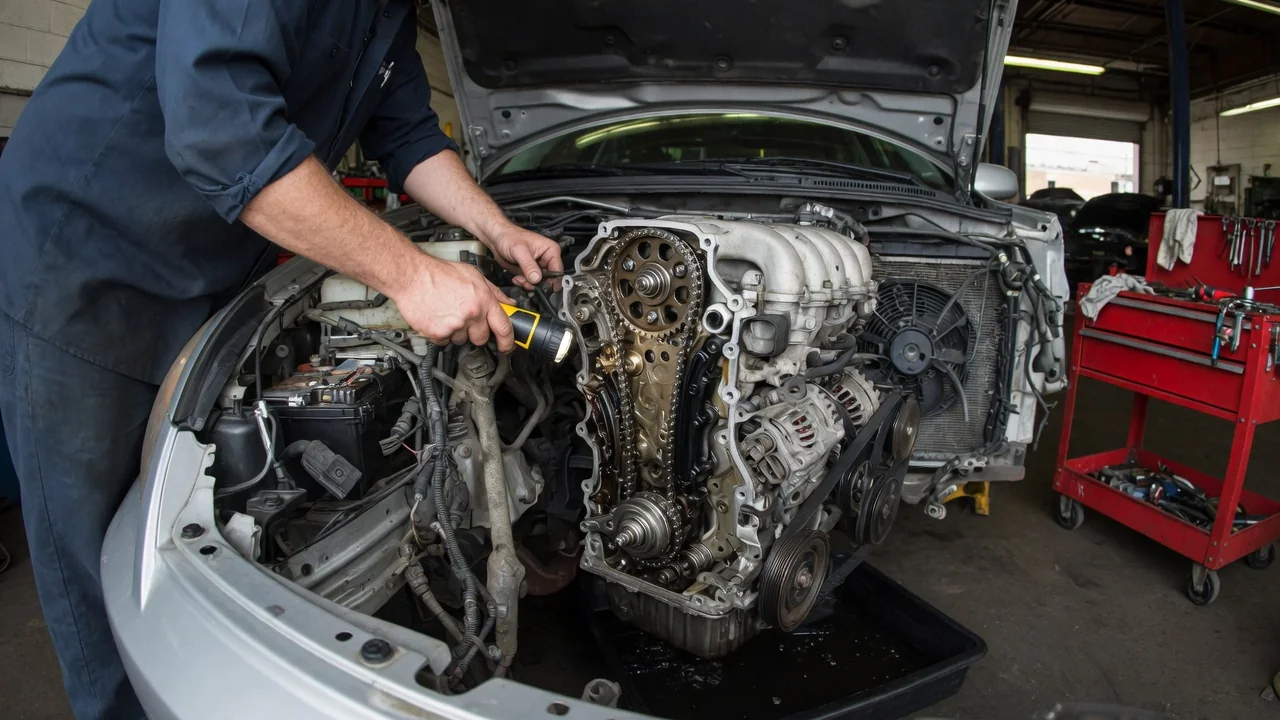
Anyone asking what is an engine timing chain is really asking how an engine keeps its valves and pistons moving in step. The chain is a metal link drive that connects the crankshaft to one or more camshafts, so the valves open and close at the right moment in each piston stroke. Here is how it works, what it depends on, and what owners can notice.
Timing path
The timing path begins at a small sprocket on the nose of the crankshaft and runs up to larger sprockets on the camshaft or camshafts. In a four-stroke engine the camshaft turns once for every two crankshaft revolutions, so the cam sprocket has twice as many teeth as the crank sprocket. That fixed ratio is what makes the intake valves open as a piston descends on its intake stroke and the exhaust valves open as it rises to push burned gases out.
The route differs considerably between engines. A pushrod engine with the camshaft in the block may use one short chain, while a dual overhead cam V engine may use several chains, intermediate sprockets, and separate guides for each cylinder bank. Guides made of wear-resistant material steer the chain, and a tensioner takes up slack on the non-driven side. Most of this lives behind a sealed front cover, so there is little to see without disassembly, though service information for a particular vehicle usually shows the layout.
Lubrication
Unlike a rubber timing belt, which typically runs dry, a timing chain works inside the engine and is lubricated by engine oil. Oil reaches the links, pins, and sprocket teeth through spray, splash, or dedicated passages, depending on the design. That film cushions metal-to-metal contact at every link joint. Because a chain has many pivoting pins, small amounts of wear at each one add together, and the chain gradually grows longer, which is commonly described as stretch even though the metal itself has not elongated.
Oil matters in a second way, because many tensioners are hydraulic and rely on oil pressure to hold the chain snug. Low oil level, degraded oil, or oil thickened with contaminants can slow that pressure from building, particularly just after a cold start. Engines with variable valve timing also use oil pressure to move the cam phasers mounted on the cam sprockets. For these reasons, keeping the oil at the correct level and using the grade and change schedule specified for the vehicle is the most direct way an owner supports the chain drive.
Noise clues
A chain drive in good condition is usually quiet enough that it blends into normal engine sound. When slack develops, the classic clue is a rattle from the front or timing-cover end of the engine, often most noticeable for a few seconds after a cold start before oil pressure fully extends the tensioner. Some drivers describe it as a metallic chatter or a scraping sound, which can occur when a loose chain brushes against a guide or the inside of the cover.
Sound alone is not a diagnosis. Valve train tick, noisy fuel injectors, accessory drive pulleys, a loose heat shield, and exhaust leaks can all produce noises that seem to come from the same area. It helps to note when the sound appears, whether it fades as the engine warms, and whether it changes with engine speed. Those observations give a technician a useful starting point, and how much noise is considered normal varies from one engine design to another.
Everyday Use and Observations
In daily driving, the chain does its work without any attention from the driver. Each time the crankshaft turns, the chain carries that motion to the camshafts with no slippage, which is why idle stays smooth and power delivery feels consistent. Many engines are designed with the intention that the chain will last a long time, but that expectation is not universal, and some manufacturers do publish inspection or replacement guidance. The owner's manual or service schedule for the specific vehicle is the place to check.
When a chain has lengthened or a tensioner or guide is worn, cam timing can drift slightly from where the engine computer expects it. Drivers may notice a rough idle, hesitation, harder starting, or a check engine light. Stored fault codes relating crankshaft and camshaft position can point toward the timing drive, yet they are evidence to interpret rather than proof that the chain has failed. Sensors, wiring, oil condition, and cam phaser operation can set similar codes, and some code meanings are manufacturer-specific and need vehicle-specific confirmation.
Limits and Next Steps
A timing chain is durable, but it is not immune to wear, and the consequences of a severe failure depend on the engine. In an interference design, the valves and pistons occupy the same space at different moments, so a chain that jumps teeth or breaks can let them collide and cause serious internal damage. In a non-interference design the engine would simply stop running. Which type a given engine is, and how much chain wear is acceptable, are details that must be confirmed for the particular vehicle.
If a persistent rattle, a timing-related warning light, or a clear change in how the engine runs appears, the sensible next step is a professional inspection rather than continued driving in the hope that it clears. A technician can compare cam and crank timing data, check tensioner extension, and assess oil condition before recommending any work. Replacing a chain usually involves the guides, tensioner, and sometimes sprockets as a set, and it requires correct alignment of timing marks, which makes it a job for a properly equipped workshop.