What Is an EGR System?
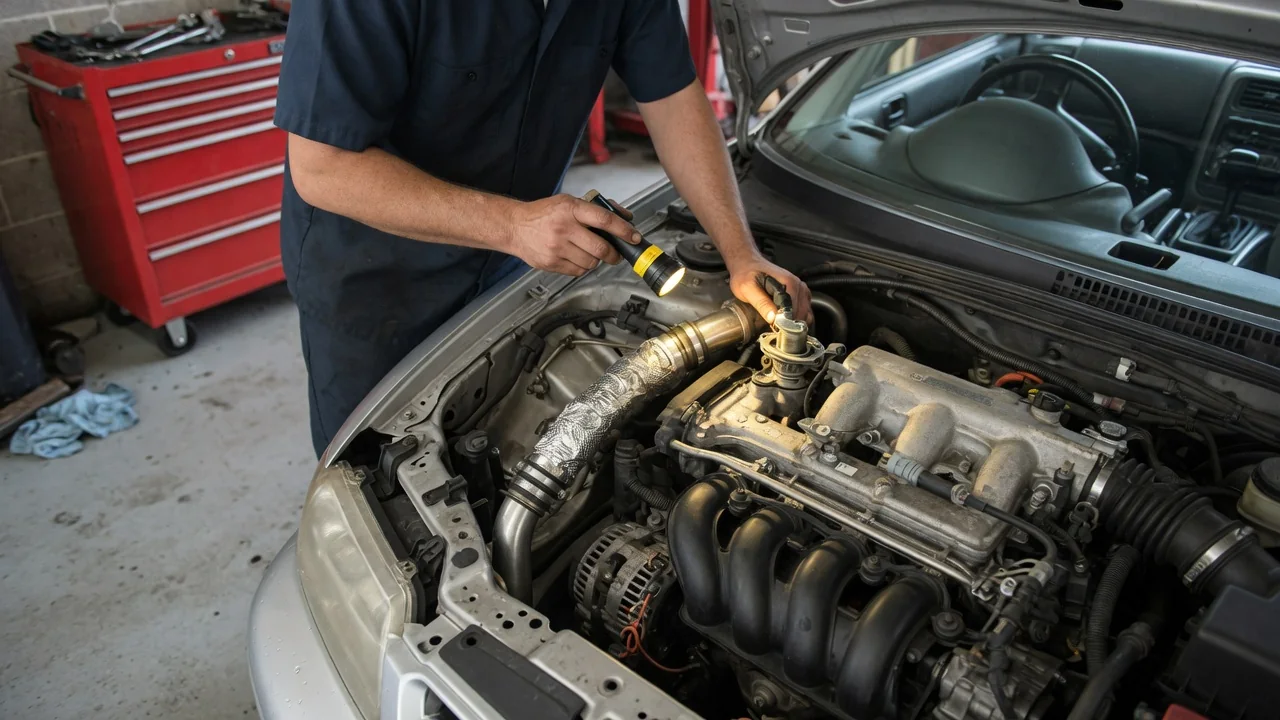
Anyone asking what is an EGR system is really asking how an engine manages combustion temperature. Exhaust gas recirculation routes a measured portion of spent exhaust back into the intake, where it dilutes the incoming charge. Because that gas has already burned, it absorbs heat without contributing much oxygen, which lowers peak flame temperature and reduces the formation of nitrogen oxides.
Gas path
In a typical layout, exhaust leaves the cylinders and a small share is tapped from the exhaust manifold or a point further downstream. That gas travels through a metal tube or a passage cast into the cylinder head, passes a metering valve, and enters the intake stream near the throttle body or intake manifold. Many diesel engines and some gasoline engines add a cooler, a small heat exchanger fed by engine coolant, so the recirculated gas arrives denser and cooler before mixing with fresh air.
Designs differ in where the gas is collected. Some turbocharged engines draw exhaust before the turbine and deliver it after the compressor, often described as a high-pressure loop, while others take cleaner gas from behind the particulate filter and feed it ahead of the compressor. Certain engines skip external plumbing entirely and use valve timing overlap to retain exhaust in the cylinder. Under the hood, a reader may spot a ribbed or corrugated pipe running between the exhaust and intake sides, though its location varies widely by manufacturer.
Control
The engine computer decides how much exhaust to recirculate based on load, speed, coolant temperature, and airflow. Recirculation is generally reduced or shut off at idle, during cold running, and under full throttle, because a diluted charge can cause unstable combustion or limit power when maximum oxygen is needed. It is most active during steady part-throttle cruising, where the engine can tolerate dilution and where combustion temperatures would otherwise favor nitrogen oxide formation.
Older vehicles commonly used a vacuum-operated diaphragm valve, sometimes governed by a solenoid or a backpressure transducer. Newer designs tend to use an electric valve driven by a stepper or DC motor with a position sensor, letting the computer command a specific opening and verify the result. Feedback may also come from a mass airflow sensor, manifold pressure sensor, or a differential pressure sensor across an orifice. Which strategy a given vehicle uses depends on its engine family and model year, so service information should be checked.
Fault symptoms
Problems usually fall into two patterns: too much flow or too little. A valve stuck open, often from carbon deposits holding the pintle off its seat, lets exhaust enter at idle, which can produce a rough or stumbling idle, stalling when coming to a stop, and hesitation at low speed. On a diesel, excess recirculation may show as sluggish response and darker exhaust smoke, because the engine is short of oxygen for the fuel being injected.
Restricted flow from a clogged passage or a valve stuck closed is harder to feel. A gasoline engine might develop a light pinging or knocking noise under load, since combustion runs hotter, and emissions test results for nitrogen oxides may rise. A check engine light with a flow-related fault code is common in either case, but the code describes what the computer observed, not which part caused it. Similar symptoms can come from vacuum leaks, ignition faults, or sensor errors, so the code is a starting point for testing.
Everyday Use and Observations
During normal driving, a healthy system is essentially invisible. The valve opens and closes many times in a trip without any change the driver can feel, and the engine sounds and pulls the same throughout. What owners more often notice is the long-term byproduct: soot and oily vapor from crankcase ventilation can combine in the intake tract and form sticky deposits, particularly on diesels and direct-injection engines, gradually narrowing passages and coating the valve.
Driving patterns influence how quickly that buildup develops. Frequent short trips and extended idling keep temperatures low and tend to leave more deposits than regular highway running, although the difference depends heavily on engine design and fuel quality. A driver may also notice that fuel economy stays steadier with a working system, since recirculation on some gasoline engines reduces pumping losses at part throttle. Owners of vehicles with a cooler should watch for unexplained coolant loss or white exhaust vapor, which can indicate an internal leak worth investigating.
Limits and Next Steps
Exhaust recirculation is one emissions tool among several, and it has boundaries. It cannot operate at every condition, it adds deposits to the intake, and it works alongside catalytic converters, particulate filters, or urea-based aftertreatment rather than replacing them. Disabling or removing the hardware is not a sound fix: it typically violates emissions regulations, can cause inspection failure, and may upset engine calibration, since fueling and timing are mapped with the expected dilution in mind.
When a warning light or drivability complaint points toward this system, the sensible next step is a proper diagnosis instead of replacing the valve on suspicion. A technician can read stored codes and freeze-frame data, command the valve with a scan tool, and watch how sensor readings respond, then inspect passages and wiring as needed. Cleaning sometimes restores function, while other cases need new components. Because layouts, code definitions, and test values differ between manufacturers, vehicle-specific service information should guide any final conclusion.