What Is an Automotive Connector Lock? Retention, Vibration and Safe Release
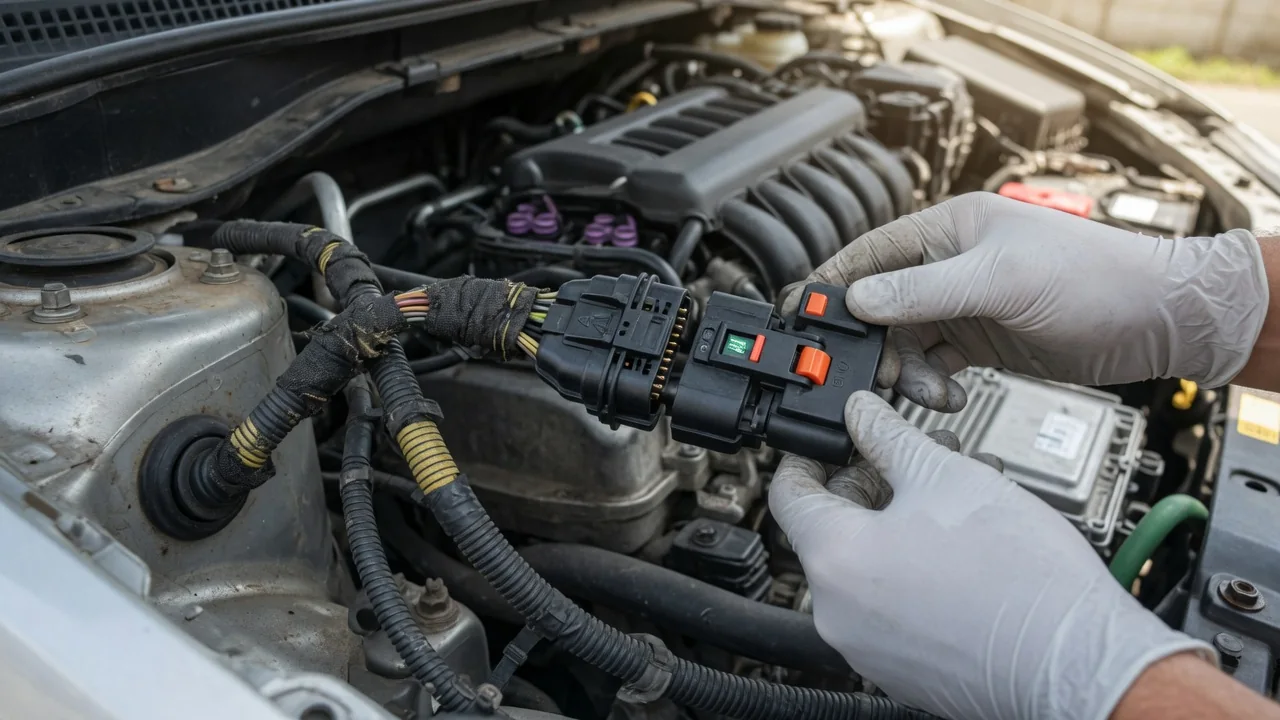
An automotive connector lock is the latching feature that holds the two halves of an electrical connector together and keeps the metal terminals inside seated in their cavities. Vehicles expose connectors to heat cycles, engine movement and road vibration, and over time these forces can work a plug loose. Understanding how a car electrical connector lock works helps explain many intermittent electrical faults. It also shows why connectors should be released and reconnected carefully during repairs.
Retention: How the Lock Holds the Connection
Most automotive connectors use a primary lock molded into the plastic housing. Typically it is a flexible latch arm or tab on one half. When the connector is pushed together, the latch rides over a ramp on the mating half and snaps behind a shoulder once the halves are fully joined. That snap can often be felt and is sometimes audible. The latch is the main mechanical feature resisting a harness that is tugged, routed under tension or moved during service. The latch does not carry current. Its job is to keep the housings at the correct engagement depth so the terminals inside stay fully mated.
Retention also happens at a second level, inside the housing. Each crimped terminal is usually held in its cavity by a small spring tang, often called a lance, which catches on a ledge once the terminal is inserted far enough. Many designs add a separate terminal position assurance piece, usually abbreviated TPA. The TPA slides or snaps into the housing and blocks terminals from backing out. Some connectors also have a connector position assurance device, or CPA. This is a small clip that can only be pushed home once the primary latch has fully engaged. Together these features work in layers. The primary latch holds the housings together, the lances and TPA hold the terminals in place, and the CPA confirms and guards the latch itself.
Vibration: Why Locks Matter in a Moving Vehicle
A vehicle subjects its wiring to continuous vibration from the engine, drivetrain and road surface. Wiring also expands and contracts repeatedly as temperatures change. If two connector halves can move even slightly relative to each other, the terminal contact surfaces can rub back and forth in tiny strokes. This micromotion can wear through the plating and lead to fretting corrosion, where oxidized debris builds up at the contact point and raises resistance. The usual result is an intermittent fault rather than a clean failure. Typical examples are a sensor signal that drops out over bumps, a light that flickers, or a fault code that comes and goes.
A properly engaged lock limits this movement by holding the housings together at their designed position, so the terminal springs keep steady contact force. Sealed connectors used in engine bays and underbody locations commonly include housing seals and individual wire seals. These help keep out moisture, which would otherwise speed up corrosion. A connector can look plugged in without being fully latched. It may still work when checked at rest, but it is far more vulnerable once the vehicle is driven. For this reason, the lock is part of the electrical reliability of the connection, not just a convenience for assembly.
The lock works together with the rest of the harness retention. Clips, brackets and tie points that anchor the wiring near a connector reduce the weight and leverage acting on the housing. When those anchors are missing or broken, the harness can swing and load the connector repeatedly. In that situation, even a sound latch may not prevent wear over time.
Safe Release: Disconnecting Without Damage
Releasing a connector lock correctly starts with identifying how it is designed. Common release methods include pressing down on a latch tab, lifting a tab slightly, sliding a locking bar, or rotating a lever that draws the halves apart. If a CPA clip is fitted, it usually has to be pulled back or removed first, or the latch cannot be depressed. Forcing a connector without releasing every stage is a frequent cause of snapped latches and cracked housings. When the release method is not obvious, check the vehicle's service information. Designs vary between manufacturers and models, and even between locations on the same vehicle.
Always hold and pull the housings, never the wires. Pulling on wires can strain the crimp or drag terminals out of position. Pushing the halves slightly together before pressing the latch can take tension off the catch and make release easier. Use small picks or flat tools gently and only where the design calls for them, because prying against brittle plastic can break the very feature that provides retention. Service procedures commonly call for disconnecting the battery before working on certain circuits. Airbag and other supplemental restraint system connectors have specific precautions, and these should be followed exactly as the manufacturer describes.
Reconnection deserves the same attention. Push the connector straight in until the latch engages, then push the CPA home if one is fitted. A gentle pull on the housing, not the wires, confirms that the lock is holding. If the CPA will not seat, the primary latch has usually not fully engaged.
Practical Implications and Limits
In everyday ownership, connector locks rarely need attention until something is unplugged for repair or a fault appears. Plastic latches can become brittle with age and repeated exposure to engine heat, so an older connector may break even when it is released correctly. When a latch is cracked or missing, tape or a cable tie can hold a plug in place temporarily. However, this does not restore the designed engagement depth or the secondary locks, so it should not be treated as a permanent repair. Replacement housings, terminals and repair pigtails are available for many connectors, but the correct part and procedure depend on the specific vehicle.
A lock also has limits as a diagnostic clue. A fully latched connector can still have a fault. The cause might be a terminal spread open by earlier probing, corrosion that formed before the connector was serviced, a damaged seal, or a wire broken inside its insulation near the housing. Conversely, a loose connector is not always the cause of a symptom that changes when the wiring is touched. Inserting oversized test leads into terminal cavities can stretch terminals and reduce contact force. Testing methods recommended in the service information are therefore preferable to improvised ones.
The key point is that a car electrical connector lock is a system of features rather than a single clip. The housing latch, the terminal retention inside, the assurance devices and the surrounding harness mounting all contribute to a secure connection. Handling each of them with care during disconnection and reconnection helps the connection stay secure under normal operating conditions.