What Is an Alternator?
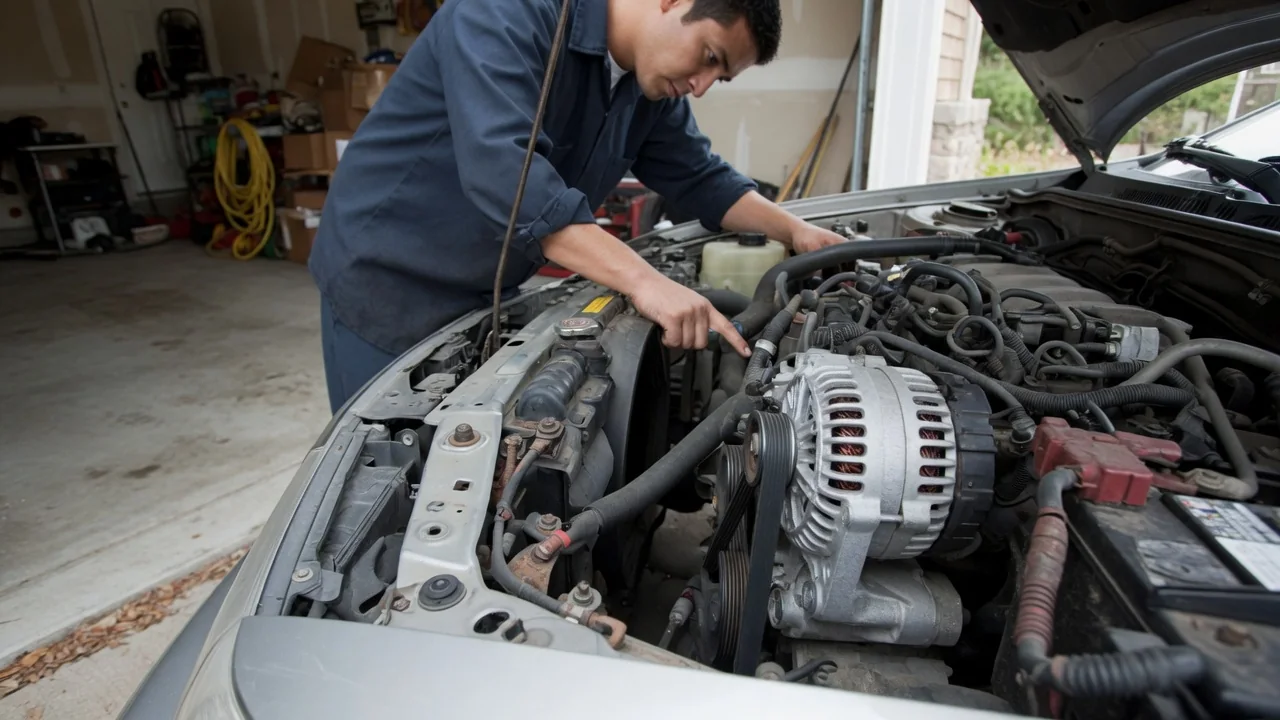
What is an alternator? It is the engine-driven generator that supplies a vehicle's electrical power whenever the engine is running. Spun by a belt, it converts mechanical rotation into electricity, feeds the lights, ignition, and electronics, and keeps the battery topped up. Understanding how it works makes it easier to recognize normal behavior, spot early trouble, and know when professional testing is worthwhile.
Drive belt
An alternator makes no electricity on its own; it needs to be spun. On most gasoline and diesel vehicles, a pulley on the front of the alternator is turned by a serpentine belt that wraps around the crankshaft pulley, so the alternator rotates whenever the engine does. Inside, that rotation carries a magnetized rotor past stationary copper windings, inducing alternating current that internal diodes convert to the direct current a vehicle uses. Because its pulley is smaller than the crankshaft pulley, the alternator spins considerably faster than the engine itself.
With the hood open and the engine off, the belt is usually visible as a ribbed rubber loop running across several pulleys, held tight by a spring-loaded tensioner. Cracks, glazed shiny surfaces, fraying edges, or a squeal on a cold start suggest the belt may be slipping, which reduces alternator output even when the unit itself is healthy. Layouts vary widely: some older vehicles use a dedicated V-belt, some engines bury the alternator low or behind covers, and many hybrids and electric vehicles replace it entirely with a DC-to-DC converter.
Battery charging
The battery's main job is starting the engine; once it is running, the alternator takes over as the primary power source and replaces the energy the starter consumed. A voltage regulator, usually built into the alternator or managed by an engine computer, adjusts the rotor's magnetic field so output stays slightly above the battery's resting voltage. That small difference is what pushes current back into the battery. Without regulation, voltage would climb with engine speed and could damage the battery and sensitive electronics.
Drivers with a voltmeter or a dash gauge can often see this relationship: the reading with the engine running is typically noticeably higher than with the engine off. The exact figures depend on the vehicle, temperature, and battery type, so the manufacturer's specifications are the right reference. Many newer vehicles use smart charging strategies that deliberately lower or raise output to save fuel or protect the battery, so a reading that changes during a drive is not automatically a fault. An alternator is also designed to maintain a battery, not rescue a deeply discharged one.
Warning signs
When charging output falls short, the vehicle starts drawing on the battery, and the symptoms follow from that. A battery-shaped or charging-system warning light on the instrument panel is the most direct signal, though it indicates a system problem rather than naming the failed part. Headlights that dim at idle and brighten with revs, slow power windows, a sluggish blower fan, flickering interior lights, or a radio that cuts out can all point to weak or unstable voltage. Eventually the engine may crank slowly or stall as the battery runs down.
Sound and smell offer further clues. A grinding or whining noise from the front of the engine can indicate worn alternator bearings, while a sharp squeal often traces to a slipping belt, and a hot rubber or electrical odor deserves prompt attention. Stored fault codes related to system voltage are evidence to interpret, not proof the alternator has failed; a weak battery, corroded terminals, a poor ground, a blown fuse, or damaged wiring can produce the same results. Code meanings also differ between manufacturers, so vehicle-specific confirmation matters.
Everyday Use and Observations
In daily driving, a healthy alternator goes unnoticed. Its workload changes constantly, though: heated seats, rear defrost, headlights, wipers, and a high-powered audio system all raise electrical demand, and the regulator responds by increasing output. On some vehicles the idle speed nudges upward slightly when heavy loads switch on, because generating more electricity takes more effort from the engine. Output is generally lowest at idle, which is why a car sitting in traffic at night with every accessory running places the system under its heaviest relative strain.
Driving patterns shape how well the battery stays charged. Repeated short trips may not give the alternator enough running time to replace what each start consumed, particularly in cold weather when batteries accept charge more slowly and demand is higher. Longer drives generally allow fuller recovery. Vehicles with automatic stop-start systems, added accessories such as winches or auxiliary lighting, or towing equipment may use higher-capacity alternators and specialized batteries, so comparing one vehicle's behavior with another's can be misleading. The owner's manual describes what is normal for a given model.
Limits and Next Steps
An alternator has clear limits. It cannot produce power with the engine off, so lights or accessories left on while parked drain the battery alone. It is also a wear item: brushes, bearings, diodes, and the regulator degrade with heat, age, and contamination from oil or coolant leaks. How long one lasts varies considerably with climate, electrical load, and driving conditions, so no single mileage figure applies to every vehicle. If the charging light comes on while driving, the remaining distance depends entirely on battery reserve, and switching off nonessential accessories conserves it.
Because symptoms overlap so heavily with battery and wiring problems, testing should come before replacing parts. A repair shop or parts retailer can measure charging voltage, output under load, and battery condition, and check for excessive electrical ripple that points to failing diodes. Inspecting the belt, tensioner, and cable connections belongs in the same visit. Work around a running engine and live electrical circuits carries real risk, so diagnosis beyond a visual check is best left to a qualified technician, who can also confirm the correct replacement unit for the specific vehicle.