What Is an Air-Fuel Ratio? Mixture, Sensors and Engine Conditions
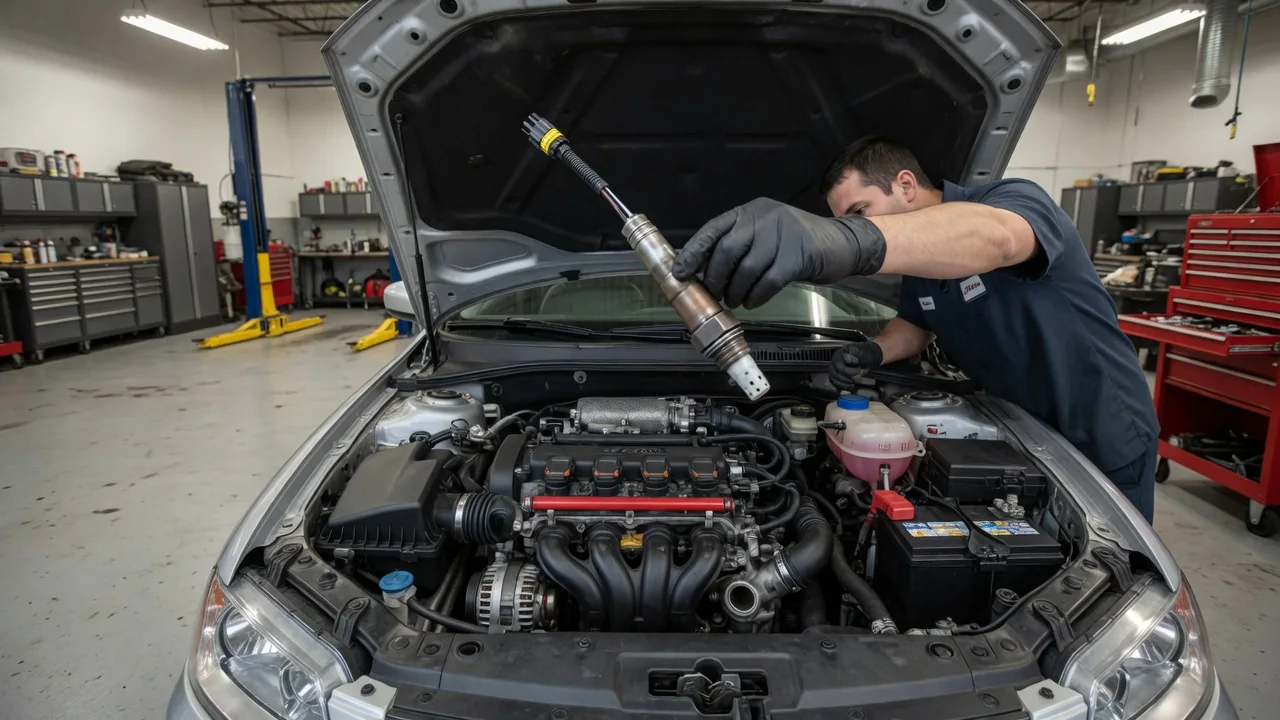
An air-fuel ratio describes how much air an engine mixes with each unit of fuel before combustion. It is usually expressed by mass, so a figure such as 14.7:1 means 14.7 parts of air for every one part of fuel by weight. Understanding what an engine air-fuel ratio means helps explain why modern engines rely on sensors, why fuel economy and emissions change with driving conditions, and what certain diagnostic readings are telling you.
Mixture concept: air, fuel and the chemically correct balance
Combustion needs oxygen to burn fuel. For any given fuel there is a specific proportion, called the stoichiometric ratio, at which all the fuel can, in theory, react with all the available oxygen, leaving neither excess fuel nor excess oxygen. For typical gasoline, that ratio is commonly cited as about 14.7:1 by mass. Fuels with different chemistry have different stoichiometric values. Ethanol, for example, already contains oxygen in its molecules and needs considerably less air per unit of fuel, which is why ethanol blends require more fuel for the same amount of airflow.
A mixture with more air than the stoichiometric amount is called lean, and one with less air is called rich. Engineers often use lambda to describe this independently of fuel type: lambda equals the actual air-fuel ratio divided by the stoichiometric ratio. A lambda of 1.0 is chemically correct, values above 1.0 are lean, and values below 1.0 are rich. Lambda is useful because it stays meaningful whether the engine burns gasoline, an ethanol blend or another fuel, while a raw number like 14.7 applies to only one fuel.
Neither direction is simply good or bad. Slightly rich mixtures can help maximize power, and the extra fuel has a cooling effect, while modestly lean mixtures can reduce fuel consumption. Going too far either way creates problems. Very rich mixtures waste fuel, raise hydrocarbon and carbon monoxide emissions and can foul spark plugs. Overly lean mixtures can burn unevenly, cause hesitation or misfires and increase nitrogen oxide formation. Diesel engines work differently: they run with excess air overall and control power mainly through the amount of fuel injected rather than by throttling the intake air.
Sensor feedback: how the engine knows the mixture
An engine control unit cannot measure the air-fuel ratio directly inside the cylinder. Instead, it estimates how much air is entering, using inputs such as a mass airflow sensor or a manifold pressure sensor combined with engine speed and air temperature, and calculates how much fuel to inject. It then checks the result by looking at the exhaust. An oxygen sensor mounted ahead of the catalytic converter reports how much oxygen remains after combustion, which indicates whether the mixture was rich or lean.
Two broad sensor types are used. A conventional narrowband oxygen sensor produces a signal that changes sharply around the stoichiometric point, so it reliably indicates rich or lean but says little about how far from stoichiometric the mixture actually is. A wideband sensor, often called an air-fuel ratio sensor, provides a proportional signal over a much wider range, allowing more precise control. Many vehicles also have a second sensor after the catalytic converter; its main job is typically to help monitor converter efficiency rather than to set the mixture directly.
The control unit uses this feedback to adjust fueling through fuel trims. Short-term fuel trim reacts quickly to the sensor signal, adding or removing fuel from moment to moment. Long-term fuel trim learns persistent corrections, such as compensating for a small air leak or a weakening fuel pump, so the short-term value can return toward neutral. Positive trim values mean the system is adding fuel because it sees a lean condition; negative values mean it is removing fuel because it sees a rich condition.
Operating conditions that change the target ratio
When sensor feedback is actively steering the mixture, the engine is said to run in closed loop. Under light and steady loads on a warm gasoline engine, the control system typically holds the mixture very close to stoichiometric, oscillating slightly around it. That target is driven largely by the three-way catalytic converter, which can reduce nitrogen oxides while oxidizing hydrocarbons and carbon monoxide efficiently only within a narrow window near lambda 1.0.
Other conditions call for different mixtures, and the engine may run in open loop, relying on stored calibration rather than live oxygen sensor feedback. A cold engine needs a richer mixture because fuel vaporizes poorly on cold surfaces, and oxygen sensors must reach operating temperature before they give useful readings. Under heavy acceleration or full throttle, many calibrations enrich the mixture to support power and help limit combustion and exhaust temperatures. During deceleration with the throttle closed, many engines cut fuel entirely, which makes the exhaust read extremely lean for a moment.
Engine design also shapes the strategy. Some direct-injection engines have been calibrated to use lean or stratified operation in certain conditions, while turbocharged engines may manage enrichment differently under boost. Altitude, intake air temperature and fuel quality all change how much air and fuel the system must meter. These details vary by manufacturer and engine, so general rules describe the overall pattern rather than what any particular vehicle will do.
Practical implications and limits for owners
For everyday driving, the air-fuel ratio matters mostly through its symptoms. When the control system can no longer keep the mixture within its correction range, it may set a diagnostic trouble code for a lean or rich condition and illuminate the check engine light. Fuel trim data, available through many scan tools, can point a technician toward the cause: large positive trims at idle that shrink at higher engine speed often suggest unmetered air from a vacuum leak, while trims that are off across all conditions can point toward fuel delivery or airflow measurement problems. These are diagnostic clues, not conclusions, and confirming the cause requires testing.
Sensor readings also have limits. An oxygen sensor reports oxygen in the exhaust, not the mixture that entered each cylinder. A misfiring cylinder passes unburned oxygen into the exhaust, which can make the sensor read lean even when too much fuel is being delivered. Exhaust leaks upstream of the sensor can draw in outside air and distort readings in a similar way. A failing or contaminated sensor may respond slowly, leading the control unit to make poor corrections. Treating a lean or rich signal as proof of the root cause can lead to replacing parts that are not at fault.
Owners who modify the intake, exhaust or forced induction should also recognize that the factory calibration was built around the original hardware. Changes that alter airflow can push the mixture outside the range the control system can correct, especially in open-loop conditions where feedback is not used. For specific targets, acceptable fuel trim ranges or sensor specifications, the manufacturer's service information for the exact engine remains the authoritative reference, since these values differ between designs.