What Is an Active Grille Shutter?
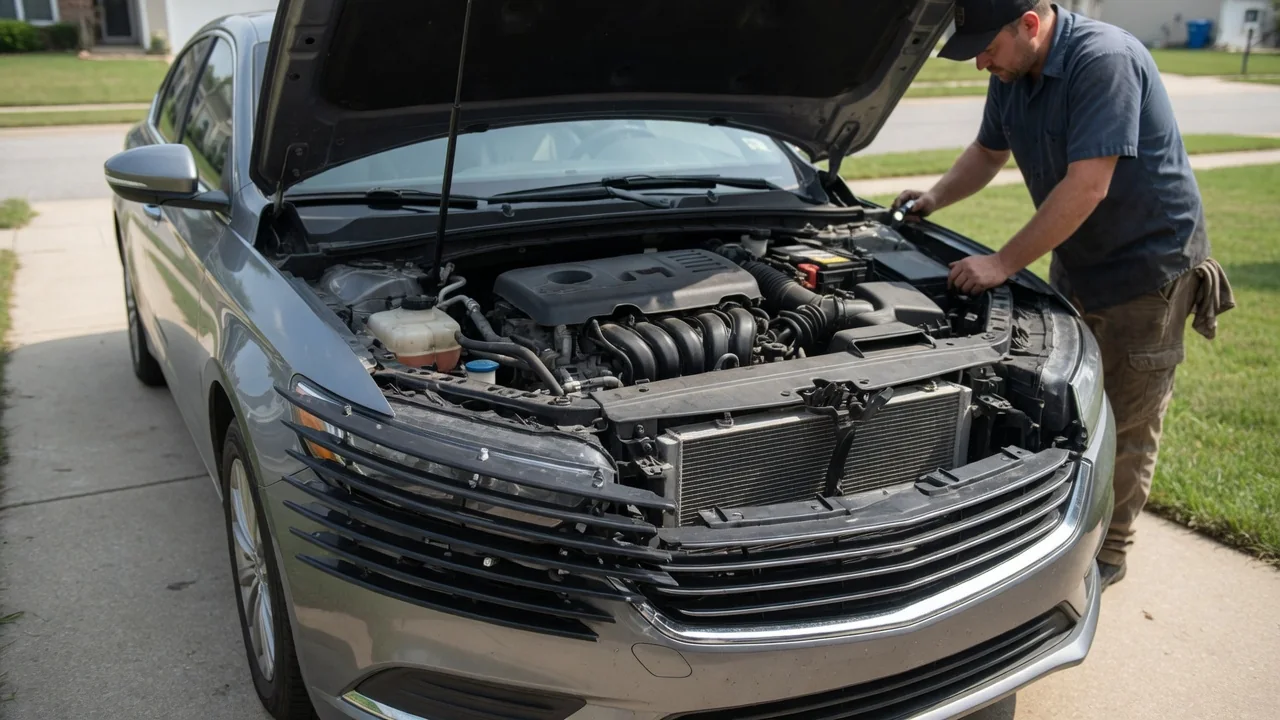
Anyone asking what is an active grille shutter is really asking how a modern vehicle decides when to let outside air into the engine bay. It is a set of motorized louvers mounted behind or within the front grille that open and close on command, balancing the need for cooling against the benefit of smoother airflow around the body.
Cooling demand
A radiator only needs a strong stream of outside air some of the time. During a cold start, the engine and its fluids work best once they reach normal operating temperature, and air rushing through the grille slows that process. With the shutters closed, heat stays in the engine bay longer, which can help the coolant warm up sooner and bring cabin heat on more quickly in winter. The control module watches inputs such as coolant temperature, vehicle speed and ambient temperature to decide when airflow is actually required.
Demand rises sharply in other situations. Towing a trailer up a long grade, sitting in summer traffic with the air conditioning running, or driving hard after a highway run all push more heat into the radiator, the condenser and, on turbocharged engines, the intercooler. In those conditions the vanes open partly or fully so the heat exchangers can shed that load. Hybrids and electric vehicles may use the same idea to manage battery and power electronics cooling, though the exact logic and opening thresholds differ from one manufacturer to the next.
Air resistance
An open grille is a hole in the front of the vehicle, and air that enters it does not pass through cleanly. It tumbles through the radiator core, around the engine and out underneath the body, creating turbulence that adds to aerodynamic drag. When the louvers close, more of that oncoming air is steered over the hood and around the sides instead, so the body presents a smoother shape to the wind. Less drag means the powertrain needs less energy to hold a given speed.
The effect matters most at steady highway speeds, because air resistance climbs steeply as speed increases, while around town it contributes very little. This is why many systems keep the shutters closed during cruising when cooling needs are modest and open them when temperatures rise or speed drops. The gain for any one vehicle is modest and depends on body shape, grille size and calibration, so it is best understood as one of several small efficiency measures alongside underbody panels, air dams and low rolling resistance tires rather than a dramatic change by itself.
Fault clues
Because the shutters sit low and forward, they live in a harsh spot. Road debris, packed snow, ice, mud and minor parking bumps can crack a vane, jam the linkage or strain the small electric actuator that moves them. A common first sign is a check engine light, since the control module usually expects the shutters to reach a commanded position and flags a problem when they do not. Some drivers also notice a clicking or buzzing from behind the grille shortly after startup or shutdown as the motor struggles against a blockage.
Other clues are less direct. Shutters stuck closed may contribute to higher than normal coolant temperatures or weaker air conditioning under heavy load, while shutters stuck open may show up as slower warm-up or a slight drop in highway fuel economy. A stored fault code related to the system is evidence to interpret, not proof that the actuator itself has failed, because damaged wiring, a loose connector, a broken vane or simple ice buildup can produce similar results. Code meanings also vary by manufacturer, so vehicle-specific service information is needed to read them correctly.
Everyday Use and Observations
In normal driving the system works without any input from the driver, and most owners never notice it. There is typically no switch or dashboard indicator for it. Looking through the grille with the vehicle parked, you may see a row of horizontal or vertical black plastic slats in front of the radiator, sometimes only in the lower opening and sometimes in both upper and lower sections. Whether they rest open or closed with the ignition off depends on the design, so either position can be perfectly normal.
Some vehicles cycle the vanes through their full travel at startup as a self-check, which can produce a brief, faint whirring sound that is easy to mistake for a fault. Not every model has shutters, and they may be fitted to certain engines or trim levels within a single model line, so a neighbor's identical-looking car may differ. Simple care helps: gently clearing leaves, slush and ice from the grille area, and avoiding forcing the slats by hand or blasting them at close range with a pressure washer, reduces the chance of a jam.
Limits and Next Steps
It helps to keep the role of the shutters in perspective. They fine-tune airflow, but they do not replace the thermostat, cooling fans, water pump or a clean radiator, and they cannot compensate for low coolant or a failing fan. An overheating engine therefore should not be blamed on the grille shutters without checking the rest of the cooling system. Equally, a shutter fault rarely makes a vehicle undrivable, since many systems are designed to default toward a position that protects cooling, though that fail-safe behavior is not guaranteed and varies by design.
When a warning light or suspicious symptom appears, the sensible next step is a visual look for obvious debris or broken slats, followed by a proper scan and diagnosis if nothing is apparent. A technician with the right scan tool can usually command the shutters open and closed and compare the requested position with what the module reports, which separates a mechanical jam from an electrical problem. After front-end bodywork or a bumper replacement, it is worth confirming the assembly was reinstalled and reconnected, and that any calibration the manufacturer calls for was carried out.