What Is Ambient Lighting in a Car Interior? Placement, Controls and Night Comfort
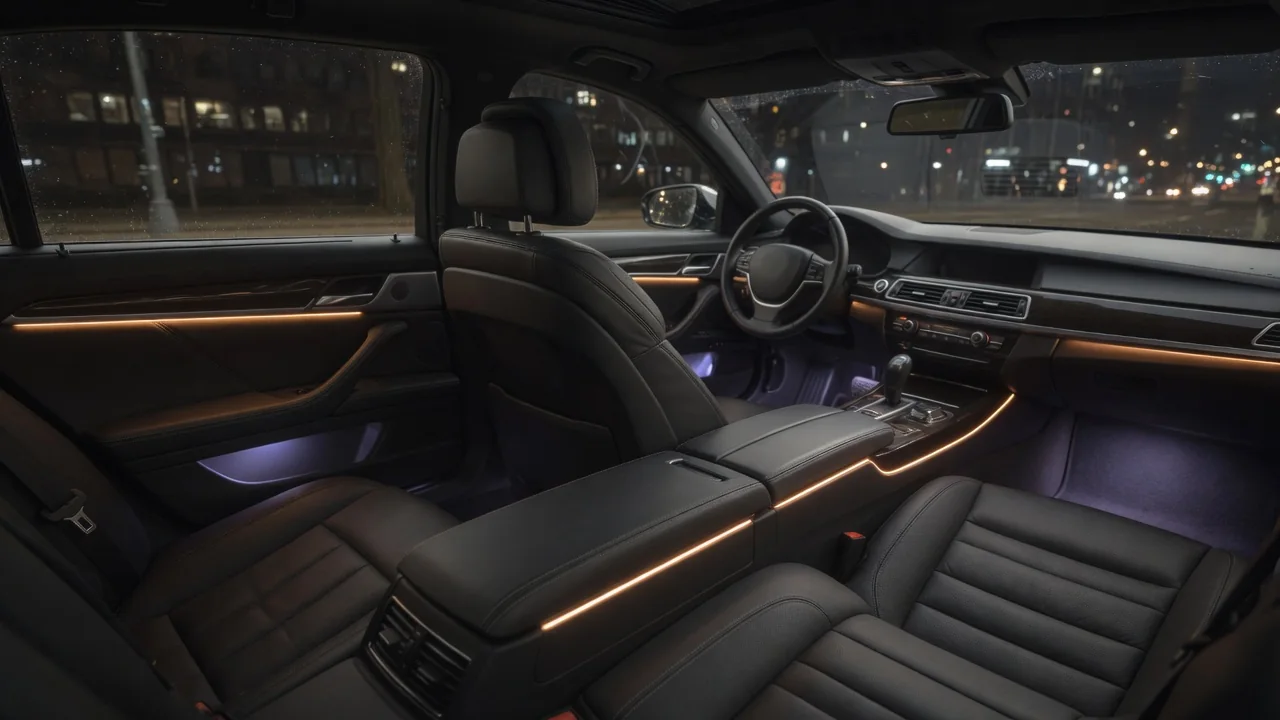
Ambient lighting in a car interior is low-level, mostly indirect illumination built into the cabin to outline surfaces, help occupants find controls and set a visual mood after dark. Unlike dome lamps or map lights, it is not meant for reading or searching the floor. Its job is to soften the darkness of the cabin without competing with the road ahead. Understanding where these lights sit, how they are adjusted and how they affect night driving explains why car ambient lighting design has become a common interior feature.
Light placement
Most ambient lighting is designed to be seen as a glow rather than as a visible light source. Designers typically hide small LEDs behind trim pieces, inside grooves or under ledges so the light washes across a nearby surface. Common locations include the footwells, the lower edges of door panels, decorative strips across the dashboard, the sides of the center console, door pulls and handles, storage bins, cupholders and, in some vehicles, the headliner or speaker grilles. The exact layout differs from one vehicle to another, so the owner's manual is the reliable reference for what a particular car includes.
Two broad techniques are used. One places LEDs directly in a recess so they illuminate a surface from an angle, producing a soft wash of light on fabric, leather or plastic. The other uses a light guide: a clear or diffusing strip that carries light from an LED at one end along its length, creating a thin continuous line. Light guides are popular in car ambient lighting design because they can follow the curves of the dashboard and doors, visually linking separate parts of the cabin into one flowing shape.
Placement is also functional. Light near door handles, switches and storage areas helps occupants find them without switching on brighter interior lamps. Lighting in the footwells makes it easier to see the floor when getting in or out. Designers generally keep sources low or angled away from the driver's line of sight so the glow reaches surfaces rather than eyes, and so it does not create bright spots in the windshield or side glass.
User controls
How much control the driver has depends entirely on the vehicle. Some cars offer a single fixed color with brightness tied to the instrument panel dimmer. Others provide a dedicated settings menu, usually in the infotainment screen or vehicle settings, where occupants can choose a color, adjust intensity and switch the feature off. Systems built around multicolor LEDs can mix red, green and blue elements to produce a wide range of shades, while simpler systems are limited to one or a few preset tones.
More elaborate systems may divide the cabin into zones, letting front and rear areas or upper and lower strips be set separately. Some link the lighting color to other functions, such as a selected drive mode or a climate temperature change, or briefly use it as a visual cue alongside driver alerts. These behaviors are vehicle-specific, so it is worth checking the manual before assuming a feature exists or works a certain way in a particular car.
In many vehicles the ambient lighting also responds automatically. It may switch on when a door is opened, stay at a reduced level while driving at night and fade out after the car is locked. Its brightness may follow the headlight switch or a light sensor rather than being fully independent. If the lighting seems not to work, it makes sense to check the relevant settings, such as a brightness level turned to minimum or the feature disabled in a menu, before suspecting a fault.
Night comfort
The main comfort argument for ambient lighting is contrast. At night, the instrument cluster and center screen are often the brightest objects inside the car, surrounded by near-total darkness. Gentle illumination of nearby surfaces can reduce that contrast, so the cabin feels less like a dark box with glowing rectangles in it. A softly lit interior can feel calmer and easier to orient in, and the glow gives a sense of the cabin's shape and space without demanding attention.
Comfort depends on restraint. The driver's eyes adapt to the dark road, and any bright light inside the cabin works against that adaptation. That is why ambient lighting is typically kept dim during driving and why intensity controls matter. Reflections are another concern: light that is too bright or poorly aimed can appear in the windshield or side windows and overlay the view outside. Color also plays a role. Strong, saturated colors at high brightness are more likely to draw the eye than muted ones, though the right choice is ultimately personal. Passengers may want a different level than the driver, which is one reason zone settings exist where they are offered.
Practical implications and limits
Ambient lighting is a comfort and design feature, not a substitute for proper interior lamps or for the vehicle's required exterior lighting. It will not light a paper map, a dropped item under a seat or a child seat buckle the way a dome or reading lamp does. Its value lies in orientation and atmosphere, so expectations should match that role. A well-judged setup is one the driver stops noticing on the road, yet still finds helpful when reaching for a control or stepping out of the car.
Because factory systems are integrated into trim panels and electrical modules, a failed strip or LED may not be a simple bulb swap. Repairs can involve removing door cards or dashboard trim, and on some vehicles the lighting is managed by a body control module that may need correct configuration after parts are replaced. Following the service information for the specific vehicle helps avoid broken clips, damaged panels and settings that no longer respond.
Aftermarket kits are widely sold as add-ons, but they raise their own issues. Poorly routed wiring can chafe, rattle or interfere with trim and airbag areas, and connections tapped into existing circuits can cause electrical faults if done carelessly. Light visible from outside the car may be restricted by local traffic rules, particularly certain colors or flashing effects, so it is wise to check applicable regulations. Finally, any cabin light left on while the engine is off draws from the battery; factory systems usually manage this with automatic shutoff, while add-on lights may not.