What Is Airflow Separation Behind a Car?
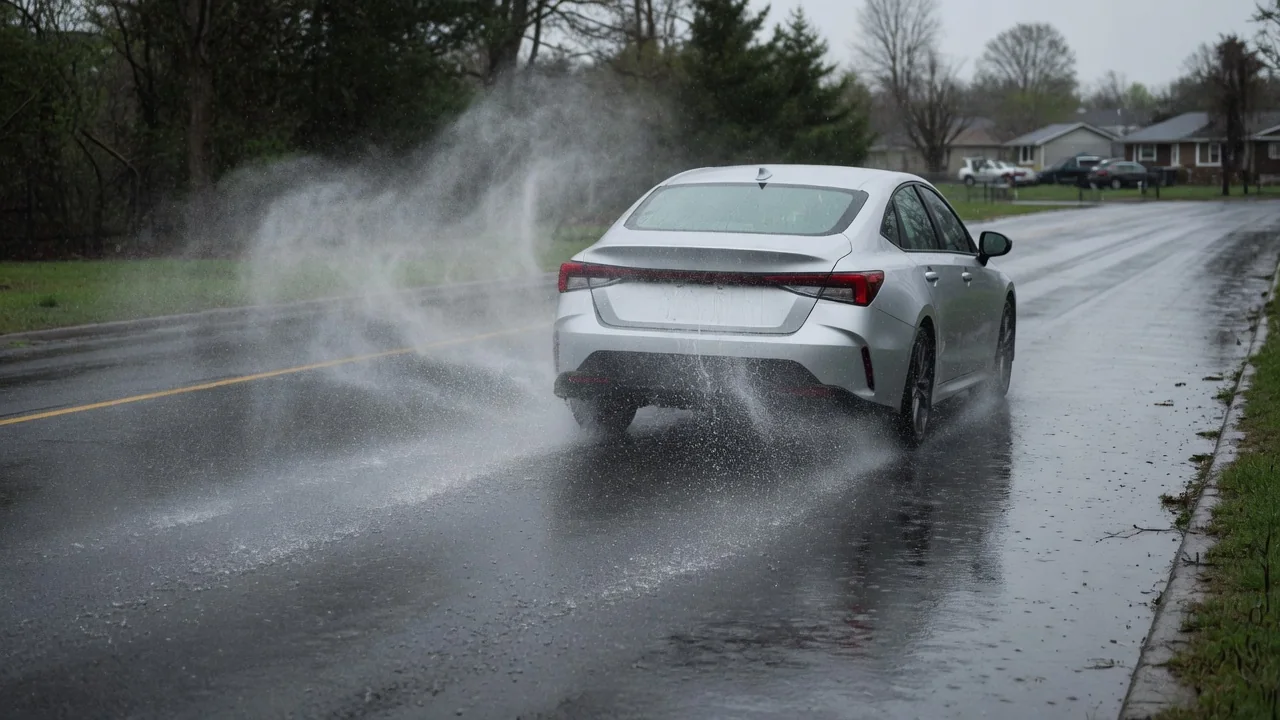
What is airflow separation behind a car? It is the point where air moving along the body can no longer follow the surface and breaks away, leaving a churning, low-pressure region called the wake. That wake pulls back on the vehicle, shapes how dirt collects on the tail, and explains many of the styling choices seen on modern sedans, hatchbacks, and SUVs.
Flow around body
As a car moves, air meets the front bumper and grille, then divides to travel over the hood, around the fenders, along the doors, and beneath the floor. Right against the paint sits a thin region called the boundary layer, where friction slows the air relative to the faster stream farther out. While the body surface changes direction gradually, this layer has enough energy to stay attached, hugging the windshield, roof, and side glass as it moves toward the tail.
Trouble begins where the body narrows or drops away. Toward the rear, the air must slow down and recover pressure, and the already tired boundary layer struggles to push into that rising pressure. If the surface falls away too sharply, as at the top of a steep rear window or the edge of a squared-off tailgate, the flow simply leaves the surface. Smaller separations also occur around mirrors, wheel arches, and windshield pillars, and their location differs with each vehicle's shape.
Rear wake
Once the flow detaches, the space directly behind the car fills with slow, swirling air rather than a smooth stream. This region is the wake. Pressure there is lower than the pressure pushing on the front of the vehicle, and that difference acts as a rearward force commonly called pressure drag or form drag. For typical road cars, this imbalance contributes more to aerodynamic resistance than surface friction does, which is why the tail shape receives so much engineering attention.
Wake structure depends on body style. A boxy SUV or van with a vertical tailgate usually leaves a large recirculating bubble spanning the whole rear face. A sedan may see flow detach at the roof's trailing edge, reattach on the trunk lid, and separate again at its rear edge. Sloped fastbacks and hatchbacks can produce a pair of spiraling vortices from the rear pillars. Pickup trucks add another variation, with air circulating inside the open bed behind the cab.
Design responses
Designers cannot eliminate the wake, so they work to make it smaller and steadier. Gently tapering the roofline and pulling the rear corners inward lets the air close in behind the car before it detaches. Because a long teardrop tail is impractical, many vehicles use an abruptly truncated rear, often called a Kamm tail, which keeps much of the benefit in a shorter package. Crisp edges on taillights and bumper corners give the flow a clean, predictable place to release.
Add-on features serve the same goal. A roof spoiler on a hatchback extends the roofline and fixes the separation point, while a small trunk lip on a sedan can manage pressure over the rear deck. Underbody panels and diffusers smooth air exiting beneath the bumper so it merges with the wake more gently. Some vehicles use small fins near the roof edge to energize the boundary layer. How effective each device is depends on the whole body, so results differ between models.
Everyday Use and Observations
The wake is easy to see in daily driving. Road spray and dust get drawn into the recirculating air and deposited on the tailgate, which is why upright hatchbacks, wagons, and SUVs dirty their rear glass quickly and usually carry a rear wiper, while many sedans stay cleaner on the back window. In rain or snow, mist visibly swirls and hangs behind a moving vehicle, and dry leaves on the road often get tugged forward into that pocket before settling.
Other clues are subtler. Water droplets on a rear window may sit still or creep upward at highway speed, showing that the air there is moving slowly or even reversing. Roof boxes, bike racks, and hitch-mounted cargo carriers change where flow breaks away and can add wind noise or buffeting. Following closely behind a large truck, drivers may feel their car being nudged by its turbulent wake, a reminder of how far the disturbed air extends and why a generous gap matters.
Limits and Next Steps
Casual observation has limits. Dirt patterns and droplet behavior hint at where the flow detaches, but they cannot reveal how much drag a shape produces or how the wake changes in crosswinds, at different ride heights, or with different wheels and tires. Manufacturers rely on wind tunnels, smoke or tuft visualization, and computer simulation to study these effects, and the conclusions apply to that specific body. A feature that helps one vehicle may do little, or even harm, on another.
For owners, the practical takeaway is caution with modifications. Aftermarket spoilers, wings, and body kits can shift the separation point in ways that raise drag, alter rear lift, or upset stability if they were not developed for the vehicle. Keeping factory underbody panels and air deflectors intact, removing unused roof carriers, and securing loose trim preserve the airflow the manufacturer intended. Anyone wanting to learn more can go on to explore related ideas such as boundary layers, pressure drag, and lift.