What Is a Yaw Rate Sensor?
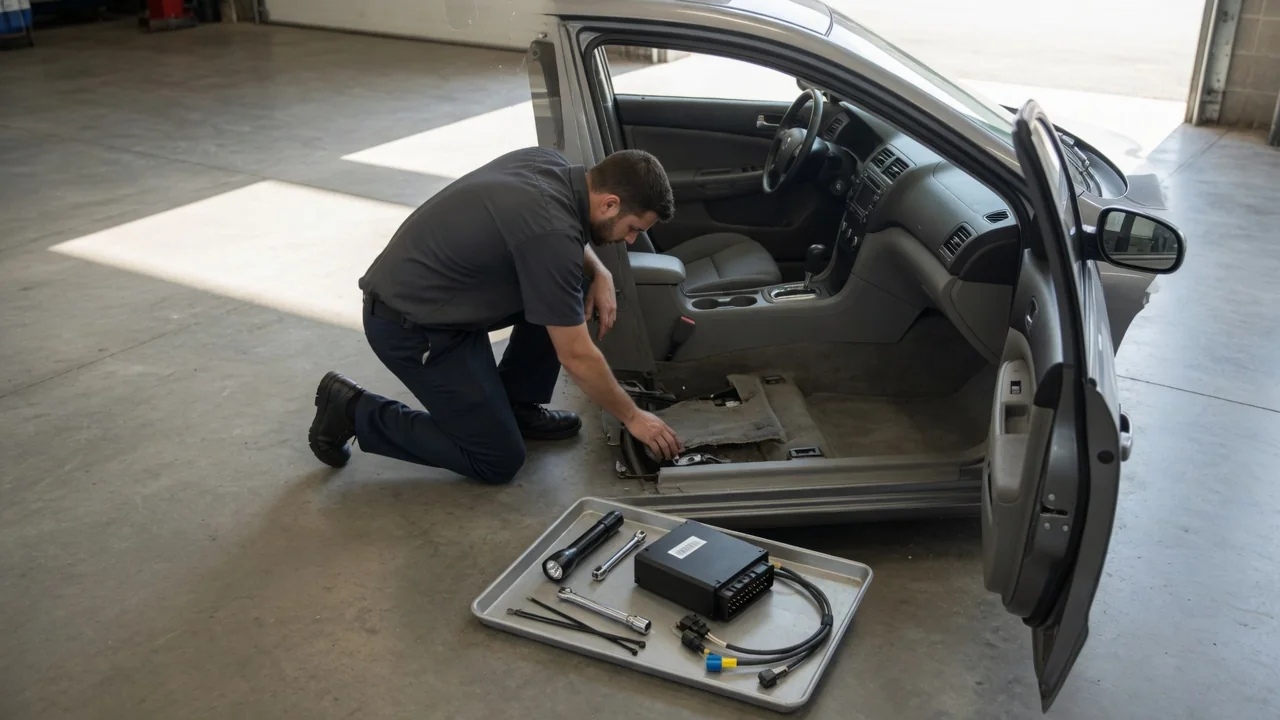
What is a yaw rate sensor? It is a small electronic device that measures how quickly a vehicle rotates around its vertical axis, the imaginary line running straight up through the center of the car. That rotation, called yaw, tells onboard computers whether the vehicle is turning as the driver intends or beginning to spin, slide, or drift off its chosen path.
Motion sensing
Yaw describes the turning motion you would see if you looked down on a car from above and watched its nose swing left or right. A yaw rate sensor reports the speed of that swing, usually expressed in degrees per second. Most modern units rely on a tiny vibrating micromechanical element; when the vehicle rotates, the Coriolis effect deflects that element slightly, and the electronics convert the deflection into a signal that the control module can read many times every second.
Rotation alone does not tell the whole story, so the sensor is often packaged with accelerometers that measure sideways and sometimes fore-and-aft forces. Many manufacturers place this cluster near the vehicle's center of gravity, commonly under the center console or a front seat, while others build it into the brake control unit or the airbag module. Location and packaging differ by make and model year, which is why service information for the specific vehicle matters before anyone goes looking for it.
Stability control
Electronic stability control depends on comparing intention with reality. The steering angle sensor and wheel speed sensors indicate where the driver is pointing the car and how fast it is traveling, which lets the module calculate how quickly the vehicle should be rotating. The yaw rate sensor reports how quickly it actually is rotating. When the two figures agree, the system stays quiet. When they diverge, the module concludes that the tires are losing their grip on the road.
Consider a quick lane change on a wet highway. If the rear end swings out and the car rotates faster than the steering input calls for, that is oversteer, and the system may brake the outside front wheel to pull the nose back in line. If the car plows straight ahead and rotates too little, that is understeer, and braking an inside rear wheel helps it turn. Engine torque may also be trimmed. Exact strategies and intervention thresholds vary between manufacturers.
Warning signs
The most common sign of trouble is a stability control or traction control warning light that stays on, sometimes joined by an ABS light or a message saying the system is disabled. Some drivers notice the opposite problem: the system intervenes when nothing is wrong, pulsing a brake or cutting power in a gentle curve on dry pavement. That can happen when the reported rotation does not match what the other sensors describe, so the module believes a skid is under way.
A stored fault code pointing to the yaw rate circuit or signal is evidence worth interpreting, not proof that the sensor itself has failed. Wiring damage, corroded connectors, water intrusion under a seat, low system voltage, a loose mounting, or a steering angle sensor that lost calibration after an alignment can all produce similar complaints. Many codes in this area are manufacturer-specific, so their meaning should be confirmed against information for the exact vehicle rather than assumed from a generic description.
Everyday Use and Observations
During normal driving the sensor works silently, and most people never think about it. Its signal is constantly changing, though: near zero on a straight road, rising smoothly through a freeway ramp, and switching direction as the car moves from a left turn into a right one. The only everyday hint of its work is a flashing stability indicator on a slick corner or icy intersection, which shows the system detected unwanted rotation and stepped in briefly.
The same rotational data often serves other features. Depending on the vehicle, it may inform rollover mitigation, trailer sway control, hill start assistance, all-wheel-drive torque distribution, adaptive cruise control, or lane keeping functions that need to know how the car is curving through a bend. A technician with a scan tool can watch the live reading, which should sit close to zero when the vehicle is parked on level ground and respond smoothly during a turn. Which systems share the signal depends on the manufacturer.
Limits and Next Steps
A yaw rate sensor measures motion; it cannot create traction. Stability control can only work with the grip the tires and road surface provide, so worn tread, mismatched tire sizes, incorrect pressures, or excessive speed on ice can overwhelm any electronic help. Modifications matter too. A changed ride height, different wheel and tire diameter, or a sensor reinstalled at a slight angle may alter what the module expects to see, leading to false interventions or warning lights.
When a warning light stays on, the sensible next step is a professional diagnosis with equipment that can read the brake and stability modules, not just engine codes. The technician can compare live yaw, steering angle, and wheel speed data before condemning any part. If a sensor or related component is replaced, many vehicles require a zero-point calibration or relearn that follows the manufacturer's procedure. Until the system is confirmed working, drive conservatively, because the safety net may be reduced or unavailable.