What Is a Wheel Flange? Bead Retention, Damage, and Repair
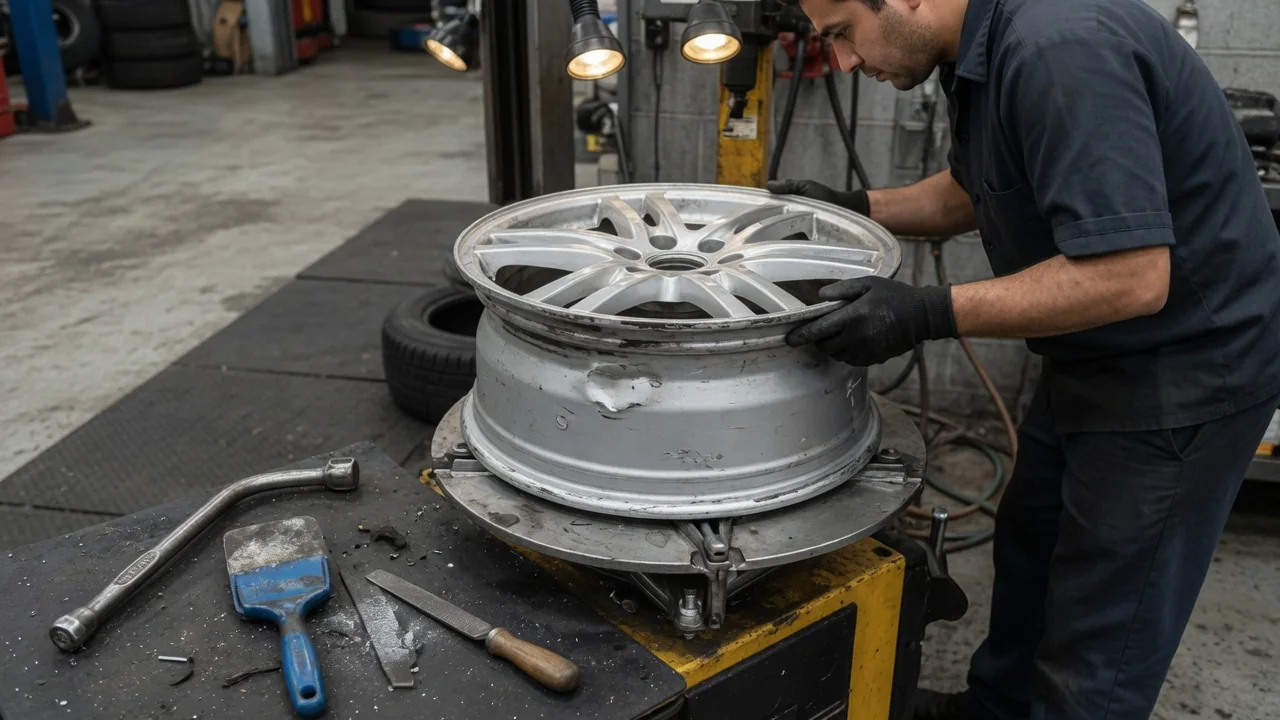
A wheel flange is the raised lip that forms the outer edge of the rim on both the inboard and outboard sides of a wheel. If you are asking about the wheel flange rim purpose, the short answer is that it gives the tire bead a firm wall to press against, keeping the tire located on the wheel under pressure, cornering loads, and impacts. Because it sits at the very edge of the wheel, it is also the part most exposed to curbs and potholes.
Tire Bead Retention
Seen in cross-section, a wheel rim has several distinct zones. The flange is the vertical or curled lip at each edge. Just inside it is the bead seat, a slightly tapered shelf where the tire bead rests. Many passenger-car wheels add a small raised ridge, often called a safety hump, inboard of the bead seat, and the center of the rim drops into a deeper well that allows the tire to be mounted. The tire bead itself is built around a bundle of steel wire that is designed not to stretch. When the tire is inflated, air pressure pushes the bead outward along the tapered seat until it is wedged firmly between the seat and the flange. That combination of a tight fit on the seat and a solid wall behind it is what holds the tire in place.
The flange matters most when the tire is working hard. Cornering, braking over uneven surfaces, and hitting bumps all generate sideways and radial forces that try to roll or shift the bead. The flange resists outward movement, while the safety hump helps resist the bead sliding inward toward the drop center, especially if pressure falls. Correct inflation keeps the bead clamped tightly; a severely underinflated tire has less clamping force, which is one reason bead unseating becomes more likely in that condition.
For tubeless tires, the area where the bead meets the seat and flange also forms the air seal. Flange shape is standardized and is often indicated by a letter in the wheel size marking, such as the J in a designation like 7J. That letter describes the flange contour so tires and wheels from different makers fit together as intended. Matching the tire to an approved rim width and contour is part of keeping retention and sealing reliable.
Damage
Because the flange is the outermost edge of the wheel, it takes the first hit in many everyday incidents. Scraping a curb while parking typically produces scuffs and gouges on the outboard flange, often called curb rash. Hitting a pothole or a sharp road edge can be more serious: the tire compresses until the road surface squeezes it against the flange, and the impact load goes directly into the lip. Wheels fitted with low-profile tires have less sidewall height to absorb that energy, so their flanges tend to be more exposed. Careless tire mounting or demounting with metal tools can also nick or bend a flange.
Damage ranges from purely cosmetic to structural. Light scrapes usually affect only the finish. A bent flange can break the air seal and cause a slow leak, and it can create radial or lateral runout that shows up as vibration. Steel wheels generally tend to deform, while aluminum alloy wheels, depending on how they were made, may crack instead of bending, sometimes on the inboard flange where cracks are hard to see. Corrosion is another form of damage on alloy wheels: if the protective coating at the bead seat or flange breaks down, oxidation can roughen the surface and let air seep past the bead.
Typical warning signs include a tire that repeatedly loses pressure, a vibration or shimmy that balancing does not cure, a visible flat spot or kink in the lip, and a tire pressure monitoring warning after an impact. A hard hit can also damage the tire sidewall, so a bulge near the rim is a reason to inspect both parts.
Repair
Cosmetic curb rash is the most commonly repaired flange problem. Refinishing usually involves sanding out the scrape, filling small gouges, and repainting or re-machining the surface to match. This restores appearance and protects bare metal from corrosion, but it does not correct any bend, and grinding away deep gouges removes material from a load-bearing edge. A reputable shop will assess the depth of the damage before deciding refinishing is appropriate.
Bent flanges can sometimes be straightened by wheel repair specialists using hydraulic equipment, and the result should be checked for runout with the tire off and again after mounting and balancing. Whether straightening is acceptable depends on the severity of the bend, the wheel material, and the manufacturer's guidance. Cracks are a different matter. Welding a cracked aluminum flange is widely discussed but often discouraged, because welding heat can alter the heat-treated properties of the alloy around the repair. Many manufacturers recommend replacing a cracked wheel rather than repairing it, and replacement is the conservative choice when the wheel's integrity is in doubt.
When the problem is corrosion causing a slow leak, the usual approach is to dismount the tire, clean the bead seat and flange down to a smooth surface, apply a bead sealer if appropriate, then remount, inflate, and balance. Sealer can help with surface roughness, but it is not a fix for cracks, bends, or missing material.
Practical Implications and Limits
For everyday ownership, the flange is worth a quick look whenever tires are rotated, replaced, or repaired, because the inboard side is otherwise rarely visible. After a hard pothole strike, checking both the tire and wheel soon afterward is more useful than waiting for a slow leak to develop. Keeping tires at the vehicle's recommended pressure helps protect the flange as well as the bead, since a properly inflated tire cushions impacts better and maintains firm seating. During mounting, if the tire sidewall or mounting instructions list a maximum bead-seating pressure, that limit should not be exceeded.
The explanations here describe general wheel and tire mechanisms. Flange profiles, acceptable runout, approved repair methods, and whether a wheel can be repaired at all vary by wheel design, material, and manufacturer, and some jurisdictions or inspection programs have their own rules about repaired wheels. The vehicle owner's manual, the wheel maker's guidance, and a qualified tire or wheel professional are the right references for a specific case. A wheel that looks fine can still have hidden damage, so visual inspection alone has limits, and any doubt about a structural defect is a reason to have the wheel professionally evaluated rather than continuing to drive on it.