What Is a Wheel Center Cap For? Hub Cover, Retention, and Cleaning
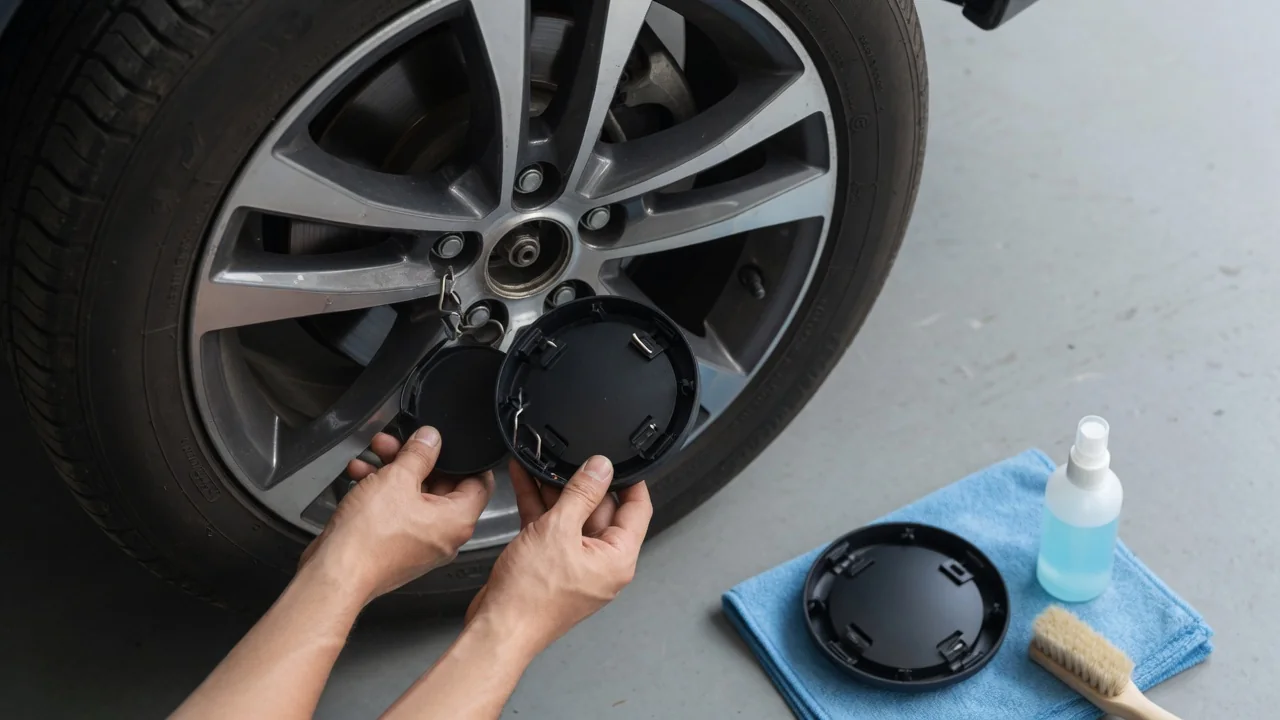
A wheel center cap is the small cover that fits into the middle of a wheel, over the opening where the wheel mounts to the vehicle's hub. Many owners only notice one when it goes missing. Its job is modest but real: it closes off the hub area, gives the wheel a finished look, and relies on a retention method that must suit the specific wheel. This guide explains the wheel center cap function, how caps stay in place, and how to keep them clean.
Hub cover
Every wheel has a center bore, the hole that lets the wheel slide over the hub's pilot or locating diameter. On many wheels, that opening leaves the hub face, the end of the axle or spindle, and sometimes an axle nut visible from outside. The center cap closes that opening. On some wheel designs the cap is large enough to hide the lug nuts as well, while on others it covers only the bore and leaves the lug nuts exposed. Which arrangement applies depends on the design of the individual wheel, not on any universal rule.
So what is a wheel center cap for? Covering the hub area serves two general purposes. The first is protection: a cap limits how much road grime, water, salt, and brake dust collects directly on the exposed hub face and around the center bore. Keeping that area cleaner can help reduce surface corrosion where the wheel meets the hub, which is the same region that can make a wheel stubborn to remove after long service. The second purpose is appearance. A cap gives the wheel a finished center and often carries the emblem of the wheel or vehicle maker.
It is worth being clear about what a center cap is not. It is not a structural part, it does not carry vehicle load, and it does not locate or center the wheel; that work is done by the hub pilot, the wheel's mounting face, and the fasteners. It is also not the same as a bearing grease cap or dust cap, which on some axle designs is a separate metal part pressed into the hub to keep lubricant in and contaminants out of the bearing. A center cap may sit in front of such a part, but it does not replace it.
Retention
Center caps are held in place by several different methods, and the method is set by the wheel design. A common approach uses flexible clips or tabs molded into or attached around the back edge of the cap. These snap past a lip or into a groove inside the center bore and hold the cap by spring tension. Other designs use a separate retaining ring, a compressible ring that grips the bore, or small screws or bolts that fasten the cap to the wheel from the front or the back. On some wheels, the cap is trapped by the lug nuts or by a ring that the lug nuts clamp, so it cannot come off until the nuts are loosened.
Because retention depends on matching geometry, center caps are generally specific to a wheel design rather than to a vehicle. Two different wheels that fit the same car can use caps of different diameters, depths, and clip styles. When replacing a cap, the useful details are the wheel manufacturer's part identification where available, the measured diameter of the cap at its mounting edge, and the retention style. A cap that is nominally the right size but uses the wrong clip shape may seem to fit at first and then work loose.
Retention also weakens over time. Plastic tabs can become brittle with age, heat, and repeated removal, and metal clips can crack or lose tension. Removal technique matters: snap-in caps are usually best released by pressing evenly from behind or by working a non-marring tool gently around the edge, rather than prying hard at one point, which can snap a tab or scratch the wheel finish. Bolted or lug-retained designs should be removed according to their own method instead of being forced.
Cleaning
Center caps sit close to the brakes and collect the same brake dust and road film as the rest of the wheel. They are often made of a different material than the wheel itself, commonly plastic with a painted or plated finish, or sometimes metal. That difference matters when choosing a cleaner. A product that suits the wheel face may be too aggressive for a plated plastic cap, and strong acidic or alkaline cleaners can dull or damage some finishes. A cleaner labeled as safe for the specific finish, used as directed, is the safer choice, along with a soft brush or microfiber cloth instead of abrasive pads.
Rinse thoroughly so cleaner does not dry in the gap around the cap edge or on any emblem. When using a pressure washer, keep the nozzle at a reasonable distance and avoid aiming a concentrated jet directly into the seam between the cap and the wheel, since that can force water and grit behind the cap or stress a weak clip. When a cap is removed for tire or brake service, that is a convenient time to wipe out the back of the cap, clean the visible center bore area, and check the clips or retaining hardware before reinstalling.
Practical implications and limits
In everyday terms, a missing center cap is usually a cosmetic and protective loss rather than an immediate safety problem, because the cap does not hold the wheel on. The practical effect is that the hub area and, on some designs, the lug nuts or axle nut are left open to weather and road spray. Over time that can mean more visible corrosion at the center of the wheel. How much that matters depends on climate, road salt exposure, and the materials involved.
A loose cap is a different matter. A cap that rattles, sits unevenly, or has visibly broken tabs can fall off while driving, and a detached part on the road can be a hazard to other traffic. After any service where the wheels came off, it is sensible to confirm that each cap is fully seated. Keep in mind that a cap is a light barrier, not a seal; it reduces exposure but will not keep all water and dirt out, and it does not substitute for maintaining bearings, fasteners, or a properly fitted grease cap where the axle design uses one.
Finally, details vary widely. Cap sizes, retention methods, and suitable cleaning products differ between wheel makers and even between wheel models from the same maker. For exact replacement parts, removal procedures, or approved cleaning products, the wheel manufacturer's information or the vehicle owner's manual is the authoritative source for a given wheel.