What Is a Wet Sump Engine? Oil Pan, Pickup, and Service Explained
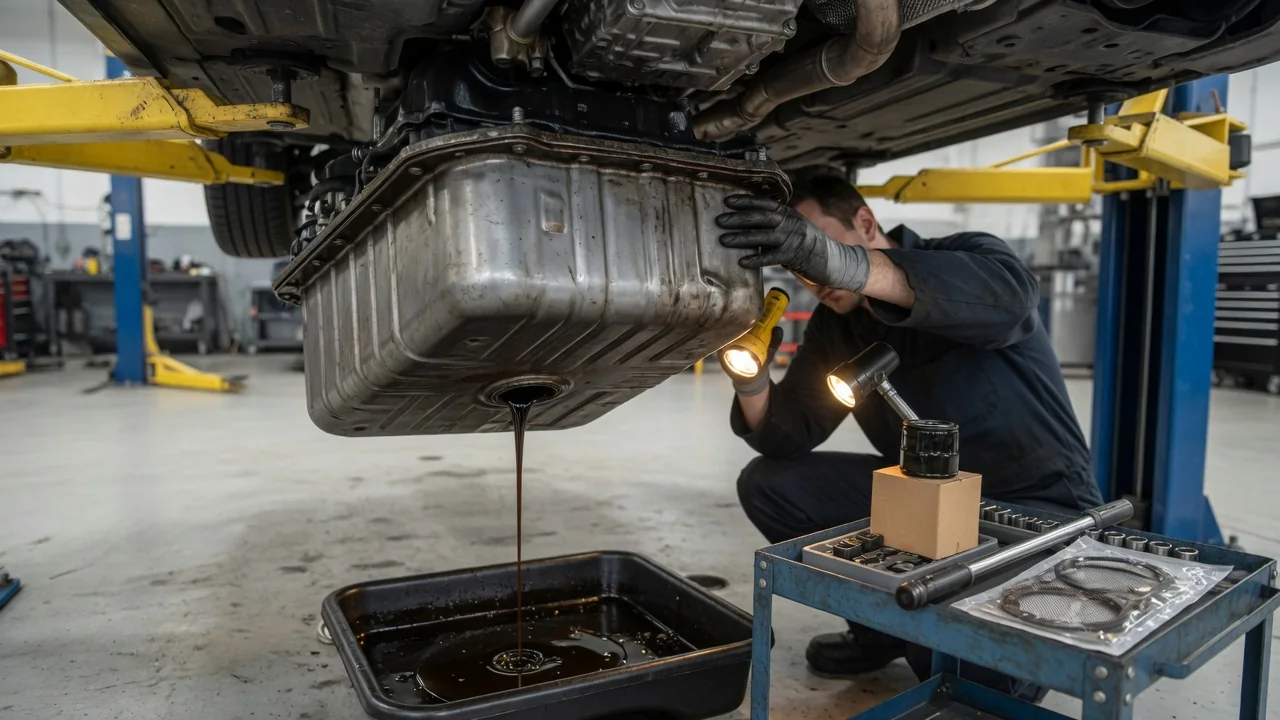
A wet sump engine stores its lubricating oil in a pan bolted to the bottom of the engine, directly below the crankshaft. An oil pump draws oil from that reservoir through a pickup tube, sends it through a filter and into the engine's oil passages, and gravity returns it to the pan. Most passenger car and light truck engines use this layout. To see why oil level, oil condition, and the pan itself matter, it helps to look at how storage, pickup, and service work together.
Oil pan storage: where the oil lives
The sump is the lowest point in the lubrication circuit. Calling it wet means the oil reservoir is part of the engine itself rather than a separate external tank. The pan, usually stamped steel or cast aluminum, closes off the bottom of the crankcase and holds the engine's oil when it is stopped. While the engine runs, a share of that oil is out in the system, coating bearings, filling galleries and the filter, and lubricating the valvetrain, so the level in the pan sits lower than at rest. After shutdown, oil drains back over several minutes.
An oil pan is more than a bucket. Its shape and internal features help manage the oil it holds. Many engines use a windage tray, a perforated or louvered panel between the crankshaft and the oil surface, to keep the spinning crank from whipping oil into froth and to reduce drag. Baffles and partitions slow the sloshing caused by acceleration, braking, and cornering so oil stays near the pickup. On some designs a cast pan also acts as a structural member that stiffens the joint between the engine and transmission.
The alternative is a dry sump system, which uses a shallow pan, one or more scavenge pumps, and a remote oil tank. Compared with that, a wet sump is simpler, has fewer parts and external lines, and costs less to build and maintain. The tradeoff is packaging: the pan must hold its oil below the crankshaft, which generally makes the engine taller and limits how low it can be mounted. For typical road vehicles, that compromise is usually acceptable.
Pickup: how oil gets from the pan to the pump
The pickup is a tube that runs from the oil pump inlet down toward the bottom of the pan, ending in a flared inlet covered by a screen. It is positioned low enough to stay submerged when the oil level is near the minimum mark, but with enough clearance from the pan floor to avoid restricting flow or drawing up settled debris. The pump lowers pressure at its inlet, and the pressure in the crankcase pushes oil up the tube. The pickup usually seals to the pump or block with a gasket or O-ring; a leak at that joint can let the pump draw air instead of oil.
The pickup screen is a coarse first line of defense. It stops larger debris, such as pieces of gasket, clumps of sludge, or fragments from a failing part, from entering the pump. Fine filtration happens later, in the oil filter on the pressure side of the pump. Because the screen sits upstream of everything, a partly blocked screen starves the whole engine. Sludge from neglected oil changes or excess sealant squeezed into the pan can restrict it, and the effect tends to show up as low oil pressure when demand is highest, at higher engine speeds.
The main weakness of any wet sump is that the pickup only works while it is covered. When oil moves away from it, through sustained hard cornering, long steep grades, heavy braking, or simply a low oil level, the pickup can briefly draw air. The pump then delivers aerated oil or a momentary interruption in flow, which bearings tolerate poorly. A flickering oil pressure light in those conditions is a common sign. Baffling, pan shape, and a correct oil level are what keep the inlet submerged.
Service: keeping the sump, oil, and pickup healthy
Because the oil lives in the pan, routine service centers on it. On most engines, an oil change means removing a drain plug at the low point of the pan. Warm oil drains more completely and carries more suspended contaminants out with it. Many drain plugs seal with a crush washer or gasket that manufacturers often specify replacing, and the plug should be tightened to the specified torque, since overtightening can strip threads, particularly in aluminum pans. Some engines are serviced by extracting oil from above or use cartridge filters, so procedures vary by vehicle.
Checking the oil level is really checking the sump. With the vehicle on level ground and the engine off, the dipstick shows how much oil is in the pan once enough has drained back; the owner's manual states how long to wait. Some vehicles use an electronic level sensor in place of, or in addition to, a dipstick. Choosing wet sump engine oil is no different from choosing oil for any engine: use the viscosity and specification in the manual, because the same oil also lubricates the bearings and valvetrain and, on many engines, operates hydraulic components such as chain tensioners and variable valve timing.
The pan itself deserves occasional attention. Look for seepage at the pan gasket and drain plug, and for dents or cracks from road debris, curbs, or steep driveway entries. A dented pan can reduce the space below the pickup. Removing the pan to inspect or clean the pickup screen is a common step after low oil pressure or signs of sludge. Reinstallation requires a new gasket or sealant applied as specified, without excess that could later break loose. On some vehicles, reaching the pan requires removing other components.
Practical implications and limits
In everyday driving, a wet sump system is dependable, and most outcomes depend on things the owner controls: oil level, change intervals, and the correct oil. Running low shrinks the margin against pickup uncovering and leaves less oil to carry heat and contaminants, so it ages faster. Overfilling is not a safe buffer either. If the level rises close to the crankshaft, the rotating assembly can churn oil into foam, which the pump moves poorly and which lubricates less effectively. Keeping the level between the marks is the practical target.
The design has limits worth knowing. Track days, autocross, and off-road driving on steep angles can impose sustained forces beyond what a road-oriented pan was built for. Aftermarket baffled pans and oil accumulators exist for those uses, but whether one is needed depends on the engine and how it is driven. An oil pressure warning light signals low pressure, not necessarily low level, and by the time it stays lit, damage may already be under way, so stopping safely is the prudent response. Capacities, torque values, check procedures, and oil requirements are vehicle-specific; the service manual for your engine is the authority.