What Is a Water-Based Car Dressing? Film, Finish and Reapplication
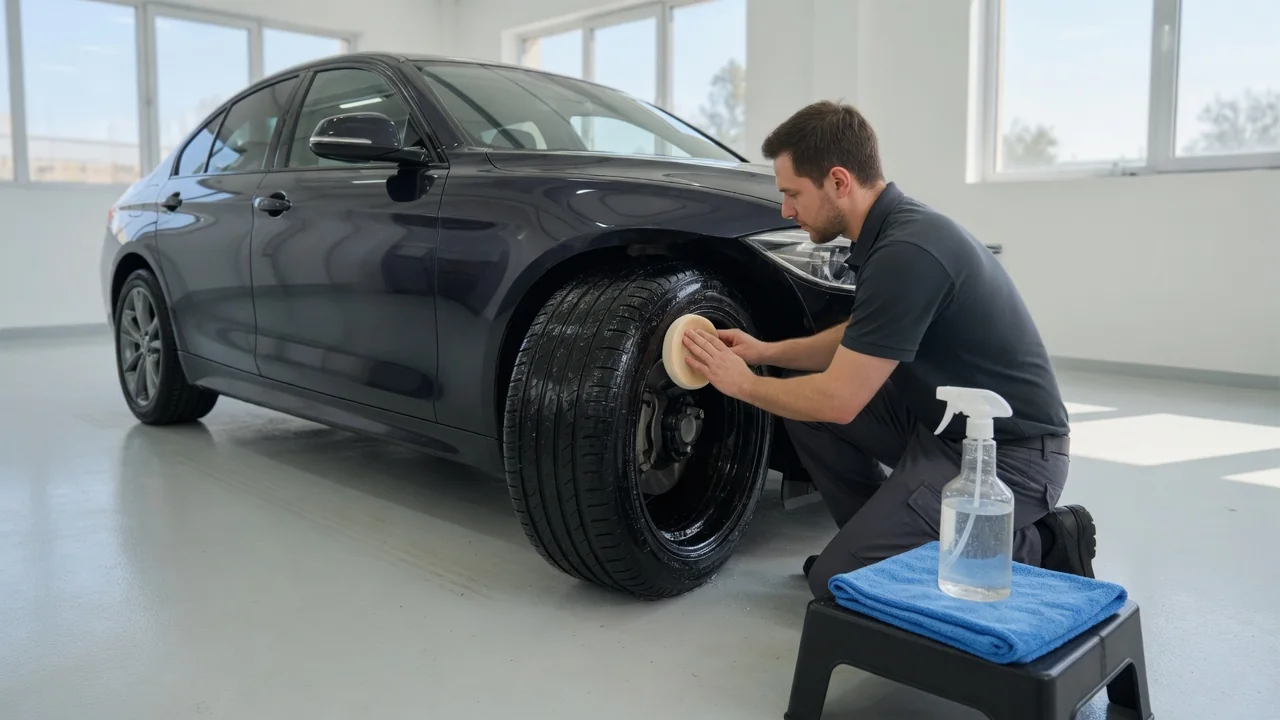
A water-based car dressing is a protectant for tires, plastic trim, rubber, and vinyl that carries its conditioning ingredients in water rather than in petroleum solvents. When people ask what a water based car dressing is, the short answer is an emulsion that leaves a thin, flexible film as the water evaporates. That film darkens and evens out the surface and sets the visual finish. It also wears away gradually, so reapplication is part of using it.
Surface film
Most water-based dressings are emulsions. They contain oils or polymers that would not normally mix with water, commonly silicone fluids or similar conditioning agents. Emulsifiers and surfactants break these into tiny droplets and hold them in suspension, which is why many of these products look milky or creamy. When the dressing is spread on a tire or trim panel, the water starts to evaporate and soak away. The emulsion then breaks, and the droplets merge into a continuous layer on the surface. What remains is a thin film that rests on the material, not a coating that chemically bonds to it.
The film works mainly by filling and leveling. Weathered rubber and textured plastic have microscopic pits and a dry, chalky top layer that scatters light and looks gray. A thin, uniform film fills those irregularities and changes how light reflects, so the surface looks darker and more even. Some formulations also include additives meant to limit ultraviolet exposure or to repel water and dust. The exact composition and the degree of protection depend on the specific product, and only its label or technical data can describe them accurately.
Solvent-based dressings dissolve their active ingredients, and the solvent may interact more strongly with some plastics and rubbers. A water carrier simply delivers the emulsion and then evaporates. As a result, a water-based product tends to leave a lighter deposit for the same amount applied. This is one reason a water based car trim dressing is often chosen for dashboards, interior panels, and exterior plastics, where a heavy, wet-looking layer would be unwanted.
Finish
The finish of a water-based dressing usually ranges from satin or matte to moderate gloss. That range is a general tendency, not a fixed property of the category. The visible result depends on how concentrated the active ingredients are, which polymers are used, how much product is applied, and the condition of the surface underneath. A thin single coat on clean, slightly porous plastic often resembles a refreshed factory finish. The same product on smooth rubber that already carries dressing may look glossier.
Many water-based products let the user adjust the look by layering. A first coat is allowed to dry and absorb, and a second coat then adds depth and shine. Wiping off the excess after a few minutes keeps the finish even and drier to the touch. Leaving more product on the surface increases gloss, but the heavier film can feel slick and attract dust. Streaks and blotches usually come from uneven spreading or from dressing a surface that still had dirt, old dressing, or cleaner residue on it, because the film follows whatever lies underneath. A consistent finish therefore depends as much on preparation and technique as on the product itself.
Reapplication
Because the film sits on the surface instead of bonding to it, rain, washing, road spray, abrasion, sunlight, and heat gradually remove it. Water-based dressings are commonly regarded as less durable than heavier solvent-based ones, especially on exterior tires that face constant water and grime. Interior trim is protected from weather and frequent washing, so the effect typically lasts longer there. No universal interval applies. The product's directions, the climate, how the car is stored, and how often it is washed all affect how quickly the finish fades.
The surface itself shows when it is time to reapply. If tires return to a brown or gray tone, trim looks patchy, or water no longer beads where it used to, the film has thinned enough to need another coat. Clean the surface first so the new layer sits on the material rather than on dirt and degraded old product. A mild cleaner suited to the material, followed by rinsing and complete drying, generally gives the most even result. Applying fresh dressing over grime can trap contamination in the film and leave blotchy areas.
Water-based formulas also tend to build up less than heavier products. Regular maintenance coats are therefore less likely to leave a thick, sticky residue over time. Thin coats worked in with an applicator and buffed as directed stay more uniform than one heavy application. Letting the product dry fully before driving, especially on tires, reduces the chance of fresh dressing spreading onto nearby surfaces.
Practical implications and limits
A dressing changes appearance and conditions the surface, but it does not restore material that has degraded. Deeply oxidized, cracked, or brittle trim may look better for a while. The underlying damage remains, though, and the darker look fades as the film wears. Heavily faded plastic may need a dedicated restoration product or a replacement part, and that decision depends on the specific part and its condition, not on which dressing is used.
Where the product goes matters more than how it looks. Keep dressing off the brake and gas pedals, the steering wheel, and tire tread, because a slick film on contact surfaces can reduce grip. Overspray or drips on paint and glass can leave smears and may interfere with waxes or coatings. Applying the product to a pad instead of spraying it near paint limits this problem. Temperature and humidity also change how fast the water evaporates and the film forms, so results can vary with conditions.
Vehicle materials differ between manufacturers, models, and even trim levels. Some interior surfaces use soft-touch coatings, leather, or textured finishes that a given dressing label may not cover. The owner's manual or the manufacturer's care guidance, together with the product directions, is the authoritative reference for what can be used where. When compatibility or appearance is uncertain, test the product on a small hidden spot before treating a whole panel.