What Is a Vehicle Variant? Body, Powertrain, Naming and Parts Explained
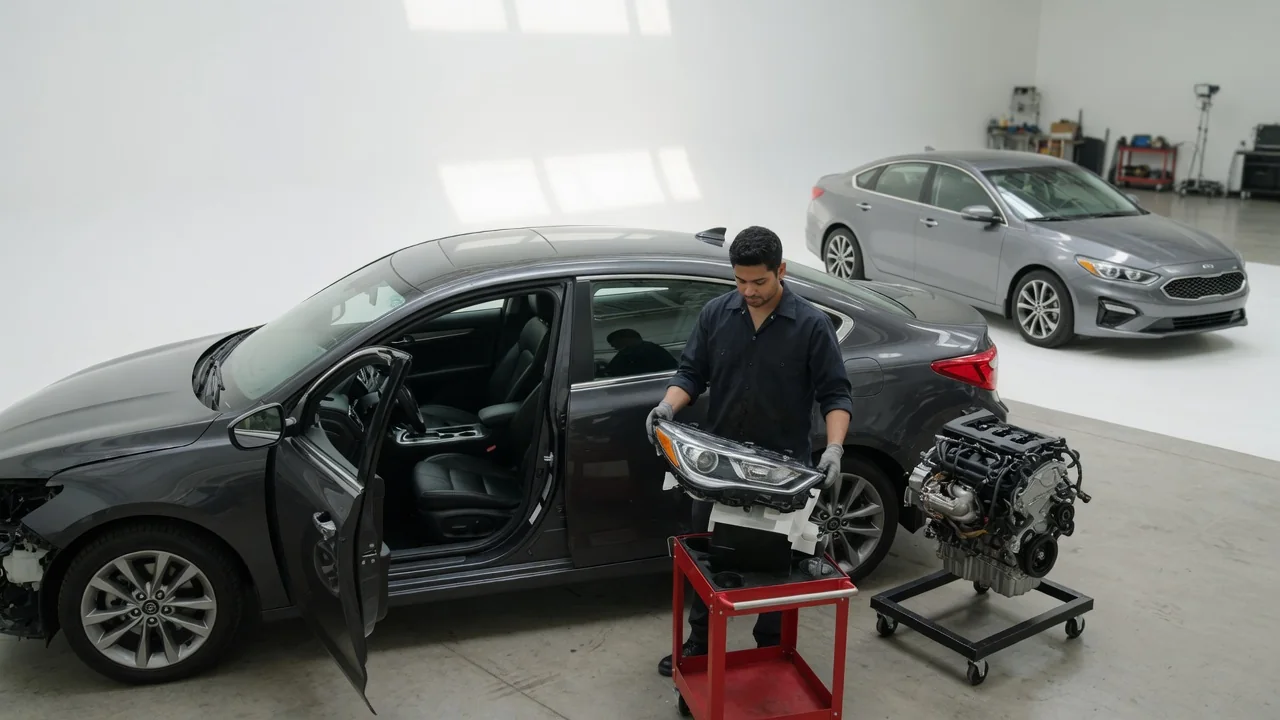
A vehicle variant is a distinct version of a single model that differs from its siblings in a defined way, such as body style, engine, transmission, drivetrain, or equipment level. You may meet the term in a catalog listing, a parts lookup, or a service manual. In each case, a variant narrows a broad model name down to the specific configuration a particular car actually has.
Body or powertrain differences
Body differences are the most visible way variants separate. A single model line may be offered as a sedan, hatchback, wagon, coupe, or convertible. Trucks and vans may come in several cab configurations, bed lengths, wheelbases, and roof heights. These changes go beyond appearance. A longer wheelbase alters the floor pan, exhaust routing, and brake lines. A wagon or hatchback uses a different rear structure and tailgate, and often a different rear suspension mounting arrangement. A convertible typically needs extra structural reinforcement to make up for the missing roof. Because of this, two cars that share a model name and a front end can still have very different body shells behind the front doors.
Powertrain differences cover the engine, transmission, and drivetrain. Within one model, variants may use different engine displacements, gasoline or diesel fuel, turbocharging or natural aspiration, or hybrid and fully electric drive systems. Transmission choices can include manual, conventional automatic, dual-clutch, or continuously variable designs. Drivetrain options may be front-wheel drive, rear-wheel drive, all-wheel drive, or part-time four-wheel drive. Each choice ripples outward into cooling capacity, engine mounts, fuel or high-voltage systems, axles, and software calibration. A powertrain change is therefore rarely a simple swap. It usually brings its own set of supporting components.
It helps to separate a variant from two related ideas. A generation is a broader redesign cycle of the model, and a trim level is usually a package of features and finishes. Some manufacturers treat trims as variants, while others reserve the word for mechanical or structural differences. In general usage, a variant is any officially defined configuration that a manufacturer builds and documents as its own version of the model.
Naming
Variant names are where much of the confusion begins, because there is no single industry convention. Manufacturers may signal a variant with letters, numbers, words, or a combination. The signal might be a suffix after the model name, a badge on the trunk lid, a body-style label, or an internal model code that never appears on the car. The same word can mean different things across brands. A label that marks a performance version for one manufacturer may simply denote an equipment package for another. Naming can also change between markets, so one configuration may be sold under different names in different regions.
Enthusiasts and catalogs often lean on more precise identifiers. Internal chassis or platform codes, engine codes, and transmission codes describe the hardware more reliably than marketing names. The vehicle identification number is the most authoritative record for a specific car. Depending on the market and manufacturer, characters within it can encode the model, body type, engine, restraint system, and assembly plant. The exact meaning of each position varies by manufacturer and region. A build sheet, window sticker, or label in the door jamb or engine bay may add details the VIN does not capture, such as paint or option codes.
Model years add another layer. A variant name can stay the same while its hardware changes mid-cycle. A refresh can also introduce new names for largely unchanged equipment. When a source says a part or procedure applies to a particular variant, check which model years and production dates that statement covers.
Parts
For owners, the variant matters most when buying parts. Some components are shared across an entire model line, such as certain interior trim pieces, some switches, or fasteners. Many other parts are variant-specific. Body panels, glass, weatherstripping, and rear suspension components often differ by body style. Filters, belts, gaskets, spark plugs, clutches, axles, and cooling parts often differ by engine, transmission, or drivetrain. Brake components can vary with engine output or towing packages, and electrical parts can change with equipment level.
Parts catalogs reflect this by asking a series of narrowing questions. They start with year, make, and model, then ask for body, engine, transmission, and sometimes drive type or production date range. Each answer filters the list toward the components that match one variant. When a catalog cannot narrow further, it may show several part numbers with notes such as a production split or an option code. Where a catalog supports it, entering the VIN is often the most direct way to resolve those choices. It ties the lookup to the car as built rather than to a general name.
Service and repair information follows the same logic. Repair manuals frequently split procedures, torque values, fluid capacities, and wiring diagrams by engine, transmission, or body type. Using the section for the wrong variant can lead to incorrect fluid quantities, the wrong tightening sequence, or a misread diagram, even when the cars look nearly identical.
Practical implications and limits
Knowing your exact variant turns vague searches into precise ones. Instead of asking whether a part fits a model, you can ask whether it fits that model with a specific engine, transmission, drivetrain, and body. The same precision helps when reading used-car listings, checking which vehicles a recall or service bulletin covers, or confirming that accessories such as roof racks, tow hitches, or floor mats are designed for your body style.
The variant name alone has limits. A car may have been modified or repaired with non-original parts. It may also have received a replacement engine or transmission from a different variant, so the original identifiers no longer describe the hardware underneath. Dealer-installed or port-installed options may not appear in every database. Aftermarket catalogs can contain errors or broad fitment ranges. When fitment matters, check the part number printed on the old component, the VIN, and the vehicle's own labels. Together they are more reliable than any single source.
Finally, the word variant itself is not standardized. Manufacturers, regulators, insurers, and parts suppliers may each draw the line between model, variant, version, and trim in slightly different places. Treat the term as a practical label for a specific configuration. Read each source's definitions on their own terms rather than assuming they match across documents.