What Is a Vehicle Platform?
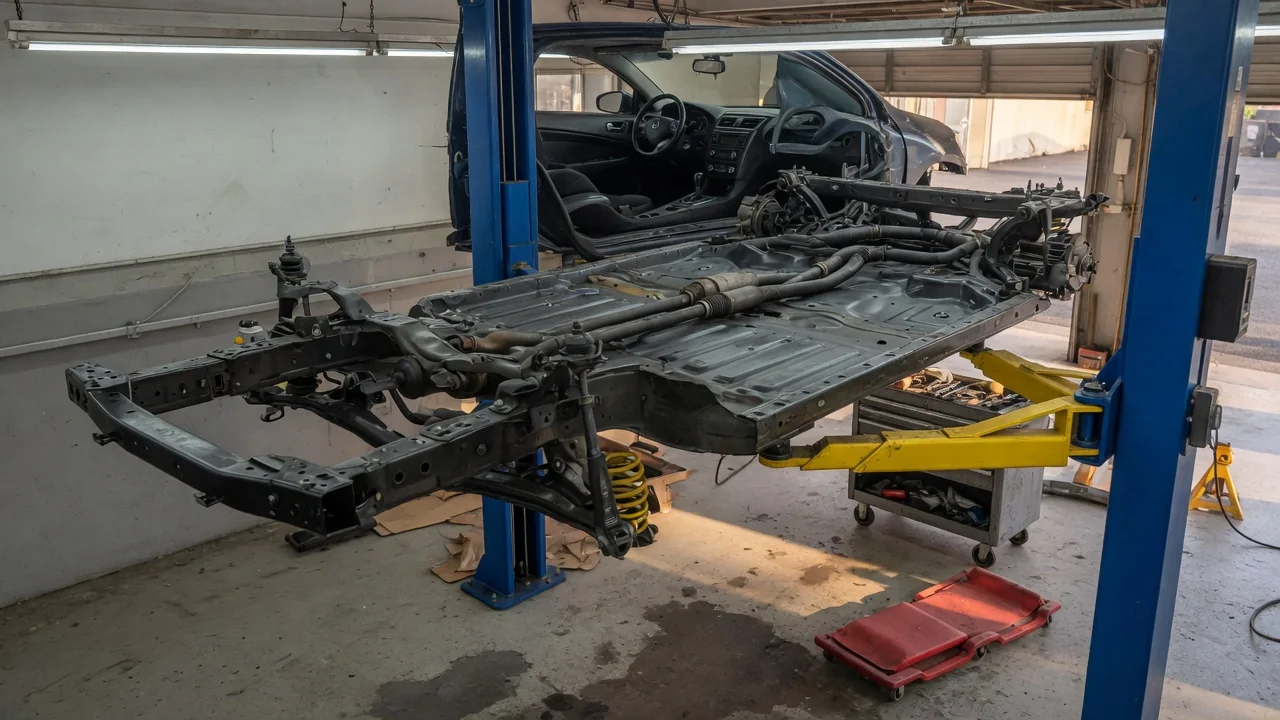
Anyone asking what is a vehicle platform is really asking about the parts of a car nobody sees in a showroom. A platform is the shared underlying architecture, the set of structural dimensions, mounting points, and engineering decisions that several models can be built on. Understanding it helps explain why vehicles that look unrelated can feel related, and why that resemblance has limits.
Common structures
A platform typically defines the floor structure, the front and rear crash structures, the position of the firewall, and the locations where suspension and powertrain components attach. Engineers often call these fixed relationships hard points. The distance between the front axle centerline and the pedal area, for instance, is expensive to change, so it tends to stay constant across everything built on the same architecture. Much of the cost of developing a vehicle sits in this hidden engineering, which is why manufacturers spread it across multiple models.
Layouts differ in basic form. Most passenger cars and crossovers use unibody construction, where the floor, pillars, and roof form one welded shell. Many pickups and large utility vehicles use a separate ladder frame with the body bolted on top. Dedicated electric architectures often place a flat battery pack between the axles, sometimes described as a skateboard. Looking underneath a vehicle on a lift reveals which approach it uses, though the specific details of each design depend on the manufacturer and generation.
Different bodies
Because the visible sheet metal is not the platform, one architecture can sit under a sedan, a hatchback, a wagon, and a taller crossover. The outer panels, glass, roofline, and interior are styled separately and attached to the common structure beneath. Modern modular platforms go further by allowing wheelbase, track width, and overhang length to be stretched or shortened within planned ranges, so a compact car and a three-row family vehicle may share fundamental engineering despite very different footprints.
Shared architecture also crosses brand lines. A mainstream model and a premium one from the same corporate group may use the same foundations while wearing different styling, cabin materials, and sound insulation. Observant shoppers sometimes notice clues, such as similar door opening shapes, matching windshield angles, or identical seating positions relative to the front wheels. Those hints are suggestive rather than conclusive, and confirming a real relationship requires manufacturer information for the specific vehicles and model years involved.
What can still vary
Sharing a platform does not make two vehicles mechanically identical. Engines, transmissions, and drive layouts can differ, with one variant sending power to the front wheels and another adding all-wheel drive. Suspension design may change as well; a lower-priced version might use a simpler rear axle arrangement while a costlier one gets an independent setup. Spring rates, damper tuning, bushing stiffness, steering calibration, and brake sizing are usually set for each model's weight and intended character.
Structural details vary too. A taller or heavier body may receive additional reinforcement, different steel grades, or revised crash structures, and those changes affect how the vehicle behaves in a collision. Electronics are another area of difference, since wiring architecture, driver assistance hardware, and software can change between models and even between production years. For that reason, safety ratings, towing limits, and reliability records belong to the individual vehicle and cannot be assumed from a platform relative.
Everyday Use and Observations
Drivers often feel the platform before they can name it. Two models on common foundations may share a similar driving position, comparable legroom between the wheels, and a familiar sense of how the body responds over bumps or through a corner. Turning circle, the height of the floor, and the size of the center tunnel are frequently inherited as well. Tuning can mask these traits, so a firm sporty variant and a softly sprung family version may feel quite different despite the kinship.
Ownership brings practical observations too. Related vehicles sometimes use similar service layouts, with filters, fluid reservoirs, and jacking points in comparable places, and a technician familiar with one may find another easier to work on. Some components may be common across the family, which can help parts availability. Still, a part that looks alike is not necessarily interchangeable, because mounting dimensions, connectors, and software calibration can differ. Fitment should always be checked against the exact vehicle rather than assumed.
Limits and Next Steps
The term itself has limits. Manufacturers use platform, architecture, and toolkit in slightly different ways, and there is no single industry definition of how much must be shared for two vehicles to count as related. Marketing material may emphasize or downplay a connection depending on the audience. A platform name also says little about build quality, equipment, or long-term durability, all of which depend on choices made for each model, assembly plant, and production period.
For anyone comparing vehicles, platform knowledge works best as a starting point for questions rather than a verdict. It can suggest which models are worth cross-shopping and explain why a test drive feels familiar. From there, the useful steps are to drive each candidate, review the manufacturer's published specifications for the exact trim and year, and look up ratings and recall information for that specific vehicle. When parts or repairs are involved, identification by vehicle identification number gives the dependable answer.