What Is a Two-Bucket Car Wash?
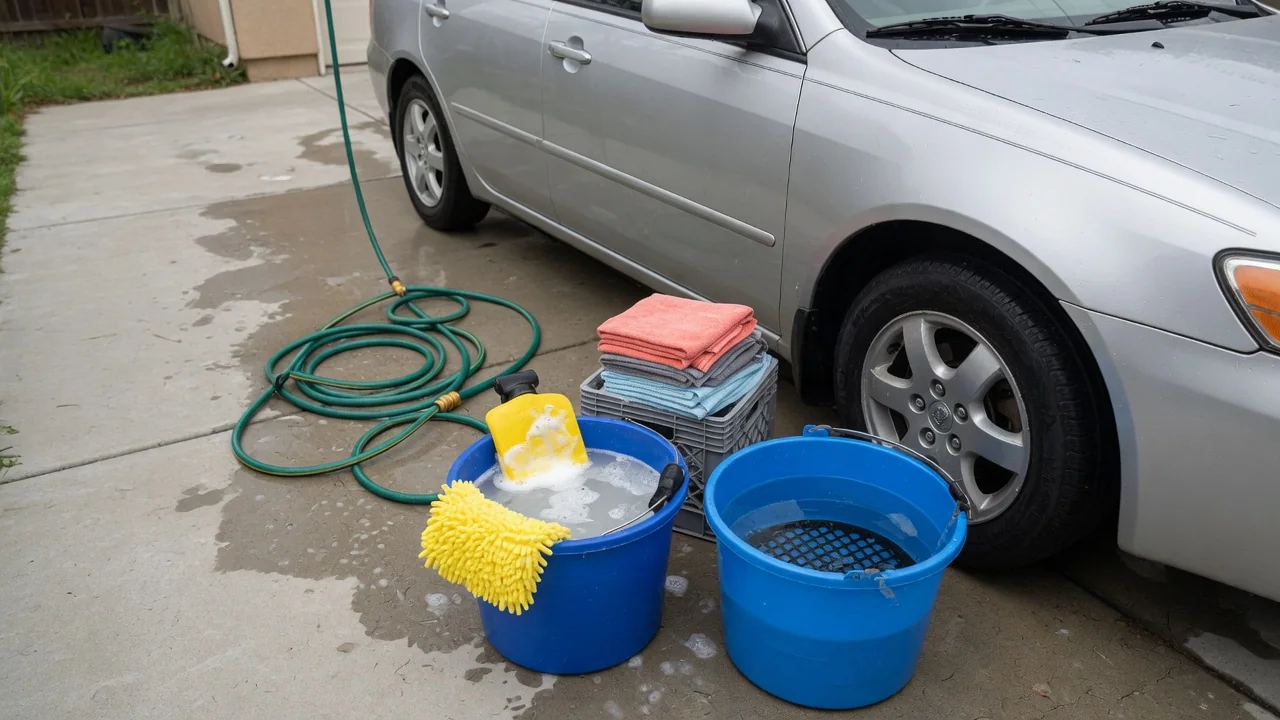
Anyone asking what is a two bucket car wash is really asking how to keep dirt off the paint once it has been lifted. The method uses one bucket of soapy water and a second of plain rinse water, so grit removed from the body goes somewhere other than back into the suds that touch the finish next.
Bucket roles
The first bucket holds car shampoo mixed with water and serves only one purpose: loading the mitt with clean, slippery solution. The second bucket holds plain water and exists to receive whatever the mitt has just picked up from the panel. Keeping those jobs apart is the whole logic. Road film, brake dust and sand are abrasive, and when they collect in a single shared bucket they get carried straight back onto the clear coat with every dip, where they can leave fine swirl marks.
Many people place a grit guard, a raised plastic grate, at the bottom of each bucket so heavier particles settle beneath it and stay out of reach. Marking or color-coding the buckets prevents mixing them up halfway through a wash. The difference becomes visible quickly: the rinse water turns cloudy and gray while the soap bucket stays comparatively clear. A lifted truck after a gravel road will darken the rinse bucket far faster than a garaged sedan, so some washes call for fresh rinse water partway through.
Wash mitt
The mitt is the link between both buckets and the paint, so its condition matters as much as the water. A deep-pile microfiber or lambswool mitt gives particles somewhere to sink away from the surface instead of being dragged across it. The rhythm is simple: load the mitt in the soap bucket, wash a small area, then agitate it in the rinse bucket, ideally rubbing it against the grate, before returning to the soap. Wringing it out between buckets keeps dirty water from diluting the shampoo.
Working from the roof downward makes sense because lower doors, rocker panels and the rear bumper carry the heaviest grime. Straight, light passes let the suds do the lifting; pressure only grinds contaminants in. Many owners keep a separate mitt or brush, and often a third bucket, for wheels, since brake dust is especially harsh. A mitt dropped on the driveway should be thoroughly cleaned or swapped out rather than used again. Soft, dark or freshly polished paint shows marring more readily than harder, lighter finishes.
Drying
Careful washing can be undone at the drying stage, because any remaining grit or a rough towel will scratch just as effectively as a dirty mitt. After a thorough final rinse, a clean, plush microfiber drying towel laid on the panel and gently pulled or patted across it removes water with little friction. Letting an open hose flow over the panels without a spray nozzle encourages water to sheet off, leaving less to absorb. Old bath towels and stiff chamois tend to be less forgiving on modern clear coat.
Drying promptly matters because tap water leaves mineral deposits as it evaporates, and those spots can etch into the finish if they bake in the sun. Working in shade on cool panels gives more time before that happens. Water hides in mirror housings, door handles, badges, trim seams and fuel filler doors, then runs out later as streaks, so a blower or a second towel helps there. How quickly spots form depends on local water hardness, air temperature and whether the paint carries wax, sealant or a ceramic coating.
Everyday Use and Observations
In regular use, the method adds only a few minutes to a driveway wash. A pre-rinse with a hose or pressure washer knocks off loose dirt first, which leaves less for the mitt to handle and keeps both buckets cleaner for longer. Washing one panel or half a panel at a time prevents shampoo from drying on the surface. On a daily commuter this routine handles traffic film and dust; after winter driving, salt and sand make the pre-rinse and frequent mitt rinsing even more worthwhile.
The most telling observation comes at the end, when the buckets are emptied. Sediment sitting at the bottom of the rinse bucket is material that would otherwise have been rubbed across the paint. Over months, owners often notice fewer new swirl marks under direct sunlight or a bright garage light, particularly on black and other dark colors. Results vary with how dirty the vehicle gets, the quality of the shampoo and mitt, and whether the finish is factory clear coat, a repaint, matte paint or vinyl wrap.
Limits and Next Steps
Separate wash and rinse water lowers the risk of wash-induced scratches, but it does not eliminate it and it cannot reverse existing damage. Swirls already in the clear coat need polishing to correct, and bonded contaminants such as tar, tree sap, rail dust or overspray will not come off with shampoo alone. Those usually call for dedicated cleaners or clay treatment. A vehicle caked in mud also needs thorough pre-rinsing or a foam pre-soak, since no amount of bucket discipline makes scrubbing heavy grit safe.
Practical constraints apply as well. Some areas restrict driveway washing or runoff into storm drains, and apartment dwellers may lack a hose, which makes rinseless or self-serve bay alternatives worth considering. Matte finishes, paint protection film and ceramic coatings often come with their own care guidance, so the product maker's or installer's instructions should take priority. Once the basic routine feels natural, a sensible next step is adding protection such as wax or sealant, which helps dirt release more easily at the following wash.