What Is a Turbocharger?
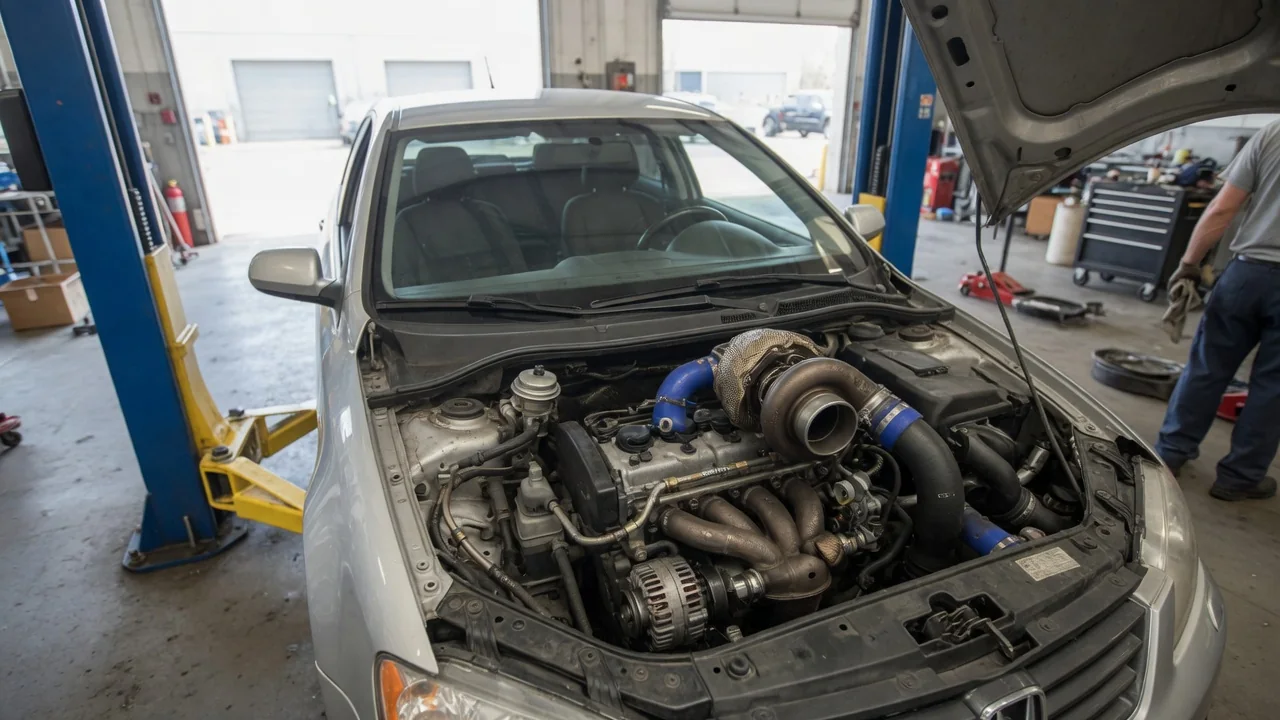
What is a turbocharger? It is an air pump driven by exhaust gas that would otherwise leave the tailpipe as wasted energy. By packing more air into the cylinders, it lets an engine burn more fuel and make more power than its size alone would suggest. Understanding how it works helps drivers recognize normal behavior and spot developing problems early.
Turbine and compressor
A turbocharger is built around two bladed wheels joined by a single shaft. The turbine wheel sits in a housing bolted to the exhaust side of the engine, where hot gas leaving the cylinders spins it at very high speed. The compressor wheel sits at the other end, inside a separate housing connected to the intake tract. As the turbine turns, the compressor turns with it, drawing in filtered air and squeezing it before it reaches the engine.
Between the two housings is a center section holding the shaft bearings, which depend on a steady supply of clean engine oil and, on many designs, coolant as well. Under the hood, the unit usually looks like a snail-shaped metal casting near the exhaust manifold, with large pipes or hoses running to and from it. Location and layout vary widely: some engines use one turbocharger, others use two, and some tuck the unit between cylinder banks where it is hard to see.
Boost
Boost is the pressure the compressor adds above the surrounding atmosphere in the intake manifold. A naturally aspirated engine can only draw in air at whatever pressure the atmosphere provides, while a turbocharged engine receives denser air, meaning more oxygen in each cylinder filling. The engine computer matches that extra air with extra fuel, producing stronger combustion. This is why a smaller turbocharged engine can deliver torque comparable to a larger one without forced induction.
Boost is not constant. It builds as exhaust flow rises, so there may be a brief delay between pressing the accelerator and feeling full thrust, commonly called turbo lag. A wastegate, which diverts some exhaust around the turbine, or a variable-geometry mechanism keeps pressure from climbing beyond what the engine is designed to handle. Some vehicles show boost on a dashboard gauge or display, though target pressures and control strategies differ by manufacturer and should be confirmed for the specific vehicle.
Heat management
Compressing air heats it, and hot air is less dense, which partly undoes the benefit of compression. Most turbocharged engines therefore route the pressurized air through an intercooler, a heat exchanger that sheds temperature to outside air or to a liquid coolant circuit before the charge enters the engine. Cooler intake air also lowers the risk of abnormal combustion known as knock. An air-to-air intercooler is often visible behind the front bumper opening as a wide, finned core.
The turbine side faces even harsher conditions because it is bathed in exhaust gas, and the housing can glow after sustained hard driving. Oil flowing through the center section lubricates the bearings and carries heat away, which is why oil condition matters so much on these engines. Many vehicles keep an electric coolant pump or fan running after shutdown to protect the unit. Whether a cool-down idle is advised after towing or spirited driving depends on the manufacturer's guidance in the owner's manual.
Everyday Use and Observations
In daily driving, a healthy turbocharger mostly goes unnoticed. Drivers may feel a surge of pulling power in the middle of the rev range, particularly when merging or climbing a grade, and may hear a faint whistle or a soft whoosh when lifting off the accelerator. Because the turbine recovers energy from exhaust, mountain driving at altitude tends to feel stronger than in a non-turbo engine, since the compressor can make up for some of the thinner air.
Changes from that normal pattern are worth noting. A loud siren-like whine, a noticeable loss of power, blue or gray exhaust smoke, rising oil consumption, or oily residue around intake hoses can point to trouble somewhere in the system. A check engine light with a boost-related fault code may also appear. A code is a clue rather than a verdict; a split hose, a sticking control valve, or a sensor reading problem can produce symptoms similar to a worn turbocharger, and some code meanings differ by manufacturer.
Limits and Next Steps
A turbocharger cannot add power without consequences. Higher cylinder pressure and temperature place more stress on pistons, bearings, and the cooling system, so engines built for boost use components and calibrations chosen for that load. Fuel economy gains depend heavily on driving style: gentle use keeps the engine out of boost and sips fuel, while frequent hard acceleration consumes much more. Some turbocharged engines also call for a specific fuel grade or oil specification, which varies by vehicle.
For owners, the practical next steps are simple. Follow the oil type and change schedule listed in the vehicle's maintenance documentation, keep the air filter in good condition so debris cannot reach the compressor wheel, and pay attention to new noises or smoke. If performance drops or a warning light appears, a qualified technician can test for leaks, check control components, and inspect the shaft for play before any part is replaced. Diagnosis first avoids paying for a turbocharger the engine did not need.