What Is a Trim Removal Tool?
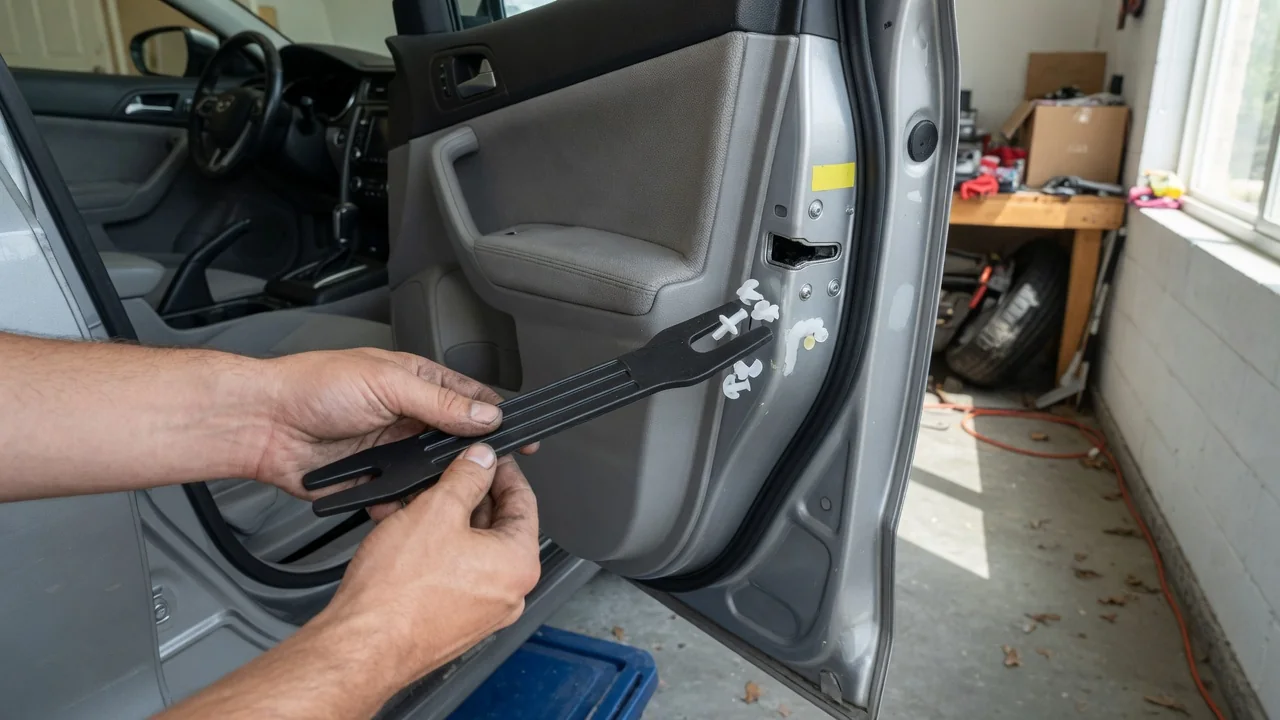
If you have ever wondered what is a trim removal tool, the short answer is a purpose-shaped pry tool, usually made of nylon or another firm plastic, designed to release interior panels without snapping the clips behind them. It spreads force across a wide, smooth edge, so door cards, dash bezels and pillar covers come away with fewer broken fasteners and scuffed surfaces.
Tool shape
Most trim tools share a wide, thin, slightly curved blade that tapers to a blunt edge. That taper lets the tip slip into the narrow gap between a panel and the surface beneath it, while the width spreads prying force over a larger area than a screwdriver tip would. Because the material is typically softer than painted metal and many hard plastics, it tends to flex or deform before the panel does, which is exactly the point of using it.
Kits usually include several profiles because clips differ. A forked or notched end straddles the stem of a push-pin or fir-tree retainer and lifts it from directly under the head, rather than levering against one side. A narrow, angled tip reaches into tight seams around switch bezels and vent surrounds, and a broad wedge suits long door panel edges. Metal versions with forked tips exist as well, offering more strength for stubborn fasteners at the cost of a greater chance of marking soft surfaces.
Clip location
The tool only protects clips if it is placed close to them. Prying midway between two fasteners bends the panel and loads each clip at an angle, which is how retaining tabs snap or pull out of their mounts. On a typical door panel, clips are spaced around the perimeter, and a slight resistance or a firmer feel along the edge often hints at where one sits. Working the blade near that point puts force in line with the clip.
Layouts vary considerably between manufacturers and even between trim levels of the same vehicle. Some panels combine push-in clips with hidden screws behind caps, handle recesses or switch plates, and others hook upward over a window ledge rather than pulling straight out. A panel that refuses to move after gentle effort is usually still held by something unseen. Vehicle-specific service information or a diagram of the panel is the reliable way to confirm fastener positions before applying any more leverage.
Gentle use
Plastic retainers are designed to release at a modest pull, so the technique is slow, steady pressure rather than a sharp yank. Easing the blade in, lifting until one clip pops free, then moving along to the next keeps the panel flat and stops stress from concentrating in a single corner. A gradual rocking motion often works better than a hard pry, and a soft cloth under the tool adds protection on glossy or soft-touch finishes.
Temperature matters more than many people expect. Cold plastic becomes stiffer and more brittle, so clips and the panel's molded mounting towers are more likely to crack in a chilly garage than in a warm one. Older vehicles deserve the same caution, since years of heat cycles can harden retainers. If a clip resists, stopping to reassess beats forcing it; the sound of creaking or a visibly bowing panel is a sign that leverage is being applied in the wrong place.
Everyday Use and Observations
Common jobs for these tools include lifting door panels to reach a speaker or window regulator, releasing the bezel around a radio, removing sill plates to route a dash camera or audio cable, and popping the push-pins that hold trunk liners and underhood covers. The same wedges are handy for exterior badges and weatherstrip retainers, where a metal blade would risk chipping paint. In each case the tool acts as a lever and a spacer more than a cutter.
A few observations help judge whether the work went well. Released clips may stay in the panel or remain in the body hole, and either outcome can be normal depending on the design. A clip with a bent leg, a cracked head or a missing foam washer may not hold firmly when reinstalled, which can show up later as a rattle or a loose edge. The tool itself wears too; a chewed or burred tip can scratch, so it is worth inspecting.
Limits and Next Steps
A trim tool reduces damage but cannot guarantee that every clip survives. Some retainers are effectively single-use, and aged ones may break no matter how carefully they are released, so having the correct replacements on hand for the specific vehicle is sensible. Nylon tools also have a strength ceiling; if a blade is bending sharply, the answer is rarely more force. It usually means a screw, hook or locking tab is still engaged somewhere.
Certain areas call for extra care or professional help. Pillar covers, headliner edges, seat sides and parts of the dashboard may sit near airbag modules and their wiring, and manufacturers publish specific precautions for working around them. Panels with integrated switches or lighting also have connectors that should be released rather than pulled. When the fastener layout is unclear, checking the vehicle's service information or asking a qualified technician costs far less than replacing a cracked panel.