What Is a Tri-Coat Car Paint Finish?
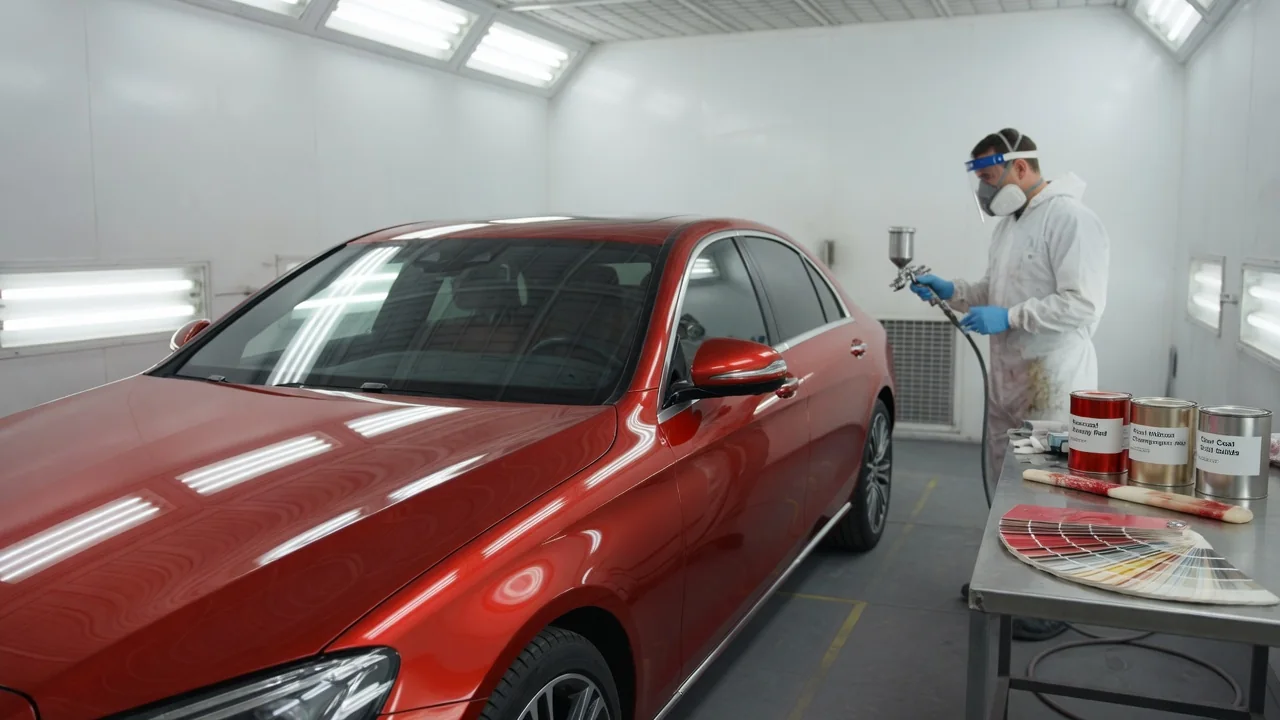
A tri-coat car paint finish is built from three separate stages: a colored base coat, a translucent effect coat, and a protective clear coat. The middle layer is what separates it from the more common two-stage base-and-clear system, and it is what gives tri-coat colors their deep, glowing look. Knowing how these three-stage paint layers work explains why the finish is admired, why it is harder to match, and why repairs usually take more time.
Base and effect coats
In a typical tri-coat finish, the first color layer is the base coat, sometimes called the ground coat. It sits on top of the primer and supplies the underlying hue and most of the hiding power, which means it covers the primer so the layers beneath do not show through. In many tri-coat colors the base is a fairly opaque shade, such as white, cream, or a deep red, although the exact formulation depends on the color and the paint manufacturer.
The second stage is the effect coat, also called the mid-coat or pearl coat. It is a largely transparent layer carrying pearlescent pigments, such as mica or synthetic flakes coated with metal oxides, or tinted transparent toners. Because it is translucent, light passes through it, reflects off the base coat beneath, and travels back out through the effect particles. That interaction creates the shimmer, depth, or subtle color shift associated with pearl finishes. The visual result depends heavily on how thick the mid-coat is, and that thickness is controlled mainly by how many passes the painter applies.
The third stage is the clear coat, a transparent layer with no color pigment. It protects the color layers from ultraviolet light, weathering, and light abrasion, and it provides the gloss. A conventional two-stage finish, by contrast, places color and any metallic or pearl effect in a single base coat under the clear, so there is no separate translucent layer to manage. Single-stage paint goes further and combines color and gloss in one layer without a separate clear coat.
Color matching
Matching a tri-coat finish is harder than matching a two-stage color because the final appearance is not set by one paint mix. It is the combined result of the base color, the effect coat formula, and the number of effect coats applied over that base. Two painters using identical materials can reach visibly different results if one applies an extra mid-coat pass or sprays it wetter or drier. The color can also change with viewing angle, so a panel that matches when viewed straight on may look lighter or darker from a sharp angle, a behavior refinishers often describe as face and flop.
To control these variables, refinish technicians commonly build a let-down panel, also called a step panel. The base coat is sprayed on a test card, then the effect coat is applied in steps so that different sections carry one, two, three, or more mid-coat passes. After clear coat is added, each section is compared with the vehicle in good light to find the closest match, and that count becomes the recipe for the repair. Paint suppliers may also offer several variant formulas for a single paint code because factory production can vary, and some shops use handheld color-measuring instruments to help choose a starting formula.
Even with careful preparation, the original paint is not a fixed target. Sunlight and weather can gradually change how a finish looks, and factory application and curing conditions cannot always be reproduced exactly in a body shop. The paint code identifies the color, but it does not guarantee a perfect match on its own, which is why visual comparison against the actual car remains central to the process.
Repair scope
Because an exact match is difficult, tri-coat repairs often extend beyond the damaged area. A common approach is blending: the new base and effect coats are faded gradually into an adjacent panel so the eye does not catch a hard line where new paint meets old. A repair on a front door, for example, might involve blending into the neighboring fender and rear door, with clear coat applied across the full panels. The final extent depends on the color, the damage location, and the refinisher's judgment, so it is not a fixed rule.
Each extra stage adds work. The painter applies and flashes the base, applies the measured number of effect coats, then applies clear, and the let-down panel itself takes time to prepare and evaluate. Collision estimates often reflect this with separate allowances for the third stage and for blending, which is one reason a tri-coat repair commonly costs more than a comparable two-stage repair. Actual labor and material amounts vary by estimating system, shop, and region.
Not every flaw requires refinishing. Light swirl marks or oxidation confined to the clear coat may be improved by polishing, because the color layers are untouched, although each correction removes some clear coat. Small stone chips can be filled with touch-up paint, and touch-up products for tri-coat colors are often supplied as separate base and effect components. Touch-up usually makes a chip less noticeable rather than invisible, especially on pearl colors, where the effect layer is hard to reproduce with a brush.
Practical implications and limits
For an owner, the first practical step is confirming whether the car actually has a tri-coat finish. The color name alone is not reliable, since many pearl and white colors are two-stage. The paint code, usually printed on a label in the door jamb, under the hood, or in another location described in the owner's manual, lets a paint supplier or body shop confirm the system. Keeping a record of that code is useful before buying touch-up paint or requesting a repair estimate.
The finish also shapes decisions after minor incidents. Because repainting one tri-coat panel may involve its neighbors, refinishing a small dent can be out of proportion to the damage, which can make paintless dent repair, where the paint is intact, or careful touch-up the more sensible option. When comparing estimates, it helps to ask whether blending is included and how the shop plans to verify the match, rather than comparing totals alone.
Some limits are worth accepting. A well-executed tri-coat repair can be very close to the original, yet slight differences may appear under certain lighting, at certain angles, or as new and old paint age differently. Routine care is broadly similar to other clear-coated finishes: regular washing, protecting the clear coat, and addressing chips early help preserve the factory layers, which never need matching as long as they survive. Vehicle-specific guidance, such as approved care products or refinish procedures, should come from the manufacturer's documentation or a qualified refinisher.