What Is a Transmission Valve Body? Fluid Routing, Solenoids, and Faults
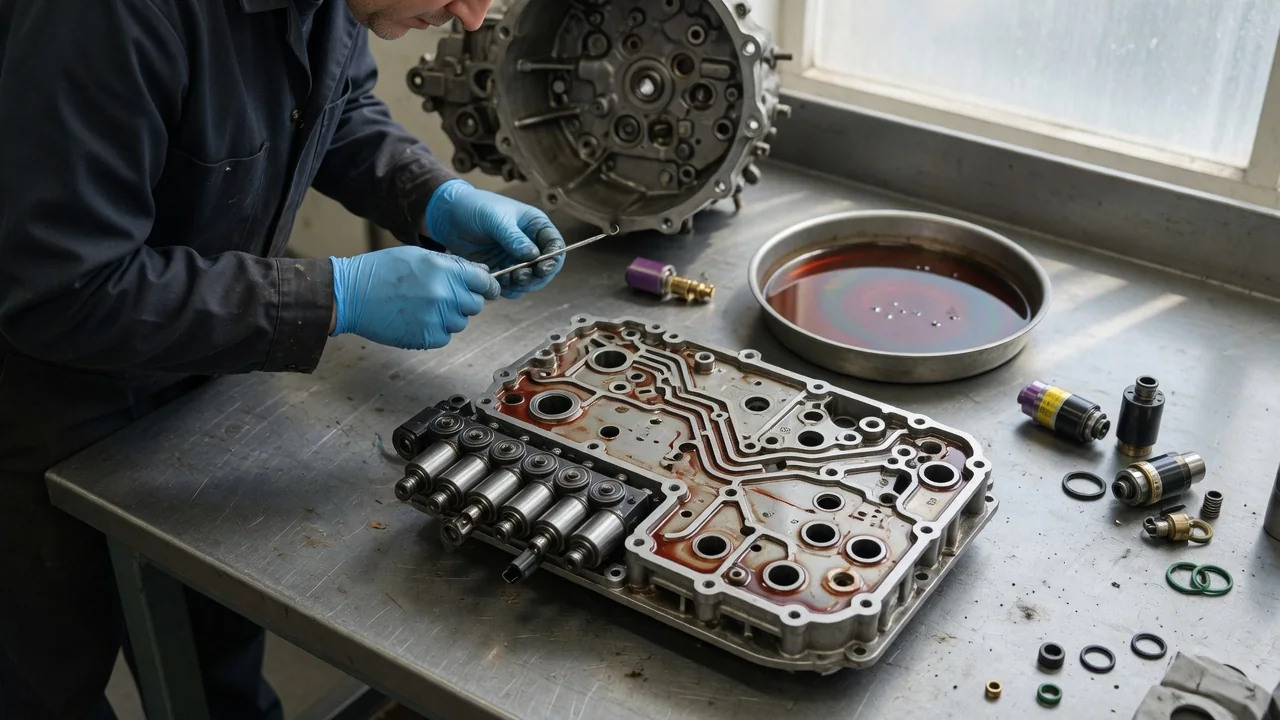
A transmission valve body is the hydraulic control center of an automatic gearbox. It is a block of precisely machined passages and valves, and in modern designs also electrically operated solenoids, that decides where pressurized transmission fluid goes and when. By steering that fluid to the right clutches and bands, the automatic gearbox valve body determines which gear is engaged and how firmly each shift happens. Knowing how it routes fluid, how solenoids command it, and how it fails explains many common shifting complaints.
Fluid routing: how the valve body directs pressure
An automatic transmission relies on a pump, usually driven by the engine through the torque converter, to supply a steady flow of fluid. Flow alone does nothing useful until it is regulated and aimed. The valve body takes that raw supply and converts it into controlled pressure, often called line pressure, using a pressure regulator valve. Line pressure is the baseline force available to apply the friction elements inside the gearbox, and it is typically raised under heavier load so clutches hold without slipping and lowered under light load to keep shifts smooth.
Physically, a valve body is usually built from two or more machined castings with a maze of channels, sometimes called worm tracks, on their mating faces. A thin separator plate with carefully sized holes sits between them, sealed by gaskets in many designs, so fluid can cross from one layer to another only at intended points. Small check balls seated in pockets act as one-way gates for certain circuits. Inside precisely honed bores slide spool valves, cylindrical pistons with lands and grooves that open or close ports as they move. The manual valve is mechanically linked to the gear selector and sends fluid to the circuits for park, reverse, neutral, or drive. Shift valves then decide which clutch or band apply circuit receives pressure, which is what actually selects a gear.
The valve body also manages circuits beyond gear selection. It feeds fluid to the torque converter, controls the torque converter clutch that locks the converter at cruising speeds, and directs flow toward the cooler and lubrication passages. Many designs include accumulators or dedicated apply control valves that cushion how quickly pressure builds in a clutch, shaping the feel of each shift rather than letting it slam on at full force.
Solenoids: electronic control of hydraulic circuits
Older automatic transmissions were controlled almost entirely by hydraulics. A governor produced a pressure signal related to vehicle speed, and a throttle valve or modulator produced a signal related to engine load. The balance between those pressures moved the shift valves, so shift timing emerged from the hydraulic design itself. Most modern transmissions replace or supplement that logic with solenoids, which let a transmission control module decide when and how to shift based on sensor data, then translate that decision into hydraulic action inside the valve body.
A solenoid is an electromagnet that moves a small plunger or valve when current flows through its coil. Transmission solenoids generally fall into a few functional groups. Shift solenoids are often simple on-off devices that open or block a signal circuit, moving a shift valve to change gears. Pressure control solenoids regulate how much pressure reaches a circuit, frequently using a variable current or a rapidly switched pulse-width-modulated signal so the module can vary pressure smoothly instead of in fixed steps. A torque converter clutch solenoid controls when the converter clutch applies and, in many designs, how much it slips during engagement. Exact solenoid count, type, and naming differ widely between transmission designs, so service information for the specific unit is the reference for which solenoid does what.
The control module reads inputs such as vehicle speed, engine speed, throttle position, transmission input and output speeds, and fluid temperature, then commands the solenoids accordingly. Many systems also adapt over time, adjusting pressure commands to compensate for gradual clutch wear or manufacturing variation. In some transmissions the solenoids, sensors, and control electronics are combined with the valve body into a single assembly, often called a mechatronic unit, which affects how the part is serviced and replaced.
Faults: what goes wrong and how it shows up
Mechanical valve body faults usually come down to valves that cannot move or seal as designed. Debris from worn internal components, varnish from degraded fluid, or fine metal particles can make a spool valve stick or move sluggishly. Over long service, a valve can also wear its bore so that fluid leaks past the lands, reducing the pressure a circuit receives. Damaged separator plate gaskets, a warped casting, or a check ball that is missing or out of place can let fluid cross into the wrong circuit. Typical symptoms include harsh or delayed engagement into drive or reverse, firm or flared shifts, slipping, shifting at odd points, or a missing gear.
Solenoid faults can be electrical or mechanical. An open or shorted coil, a damaged connector, or a wiring problem usually lets the control module detect an electrical fault and store a diagnostic trouble code. A solenoid can also be electrically sound yet stick because of contamination, which may not always trigger a direct circuit code and instead shows up as incorrect gear ratios or pressure-related codes. When the module detects a serious fault, many transmissions enter a failsafe or limp mode that holds a single gear to protect the unit, which owners often notice as a vehicle that will not shift up. A torque converter clutch control fault can cause shudder at steady speeds or prevent lockup altogether.
Valve body symptoms overlap heavily with other transmission problems. Low or degraded fluid, a weak pump, worn clutch packs, internal seal leaks, sensor faults, and software issues can all produce similar complaints. Diagnosis therefore typically starts with checking fluid level and condition by the correct procedure for that transmission, reading stored codes and live data, and, where the design allows, measuring line pressure. Concluding that the valve body is at fault usually requires ruling out these other causes rather than relying on a single symptom.
Practical implications and limits
Because the valve body depends on clean fluid moving through tight clearances, fluid quality has an outsized effect on how long it keeps working well. Using the fluid type specified by the manufacturer matters, since friction characteristics and viscosity influence both pressure control and shift feel. Service intervals vary by transmission and by how the vehicle is used, and some manufacturers describe their fluid as long-life or lifetime under normal conditions while recommending more frequent service under towing or other severe use. The owner manual or service schedule for the specific vehicle is the authority here, not a general rule.
Repair options depend on the design and on what actually failed. Some solenoids can be replaced individually, while integrated units may require replacing a larger assembly. Replacement or rebuilt valve bodies and mechatronic units on many vehicles need software programming, a stored adaptation reset, or a relearn drive before shifts feel normal, so the work is not always a simple bolt-on swap. A valve body repair also has clear limits: it can restore correct pressure and routing, but it cannot fix clutches that are already burned, a failing pump, or damaged hard parts elsewhere in the gearbox. When symptoms persist after valve body work, the underlying problem may lie in those components, which is why accurate diagnosis before replacing parts is usually the most cost-effective path.