What Is a Transmission Range Sensor? Function, Start Interlock and Faults
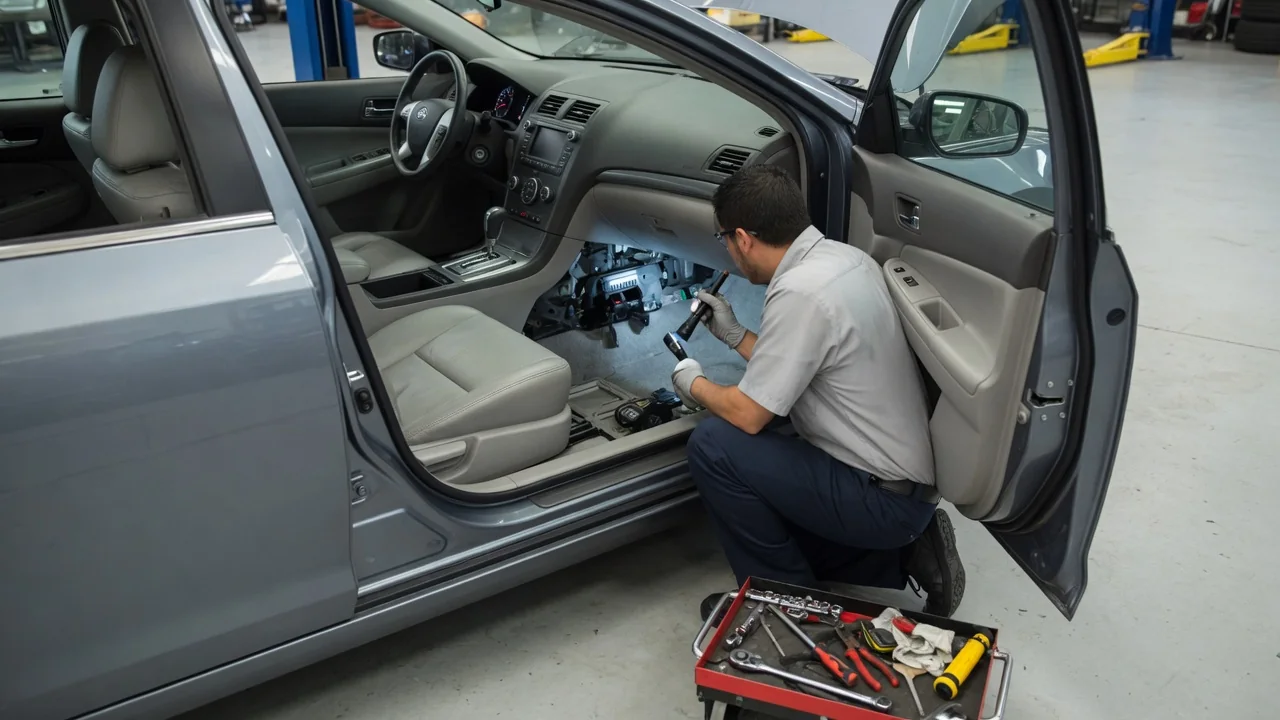
A transmission range sensor tells a vehicle's electronics which position the automatic transmission's selector is in: Park, Reverse, Neutral, Drive, or a lower range. Depending on the manufacturer, it may also be called a park/neutral position switch, neutral safety switch, manual lever position sensor, or gear selector range sensor. It is a small part, but it feeds several systems at once, so a fault can show up as anything from a no-start to an incorrect gear display.
Selected gear input
On most conventional automatic transmissions, the range sensor is mounted where the shift linkage meets the transmission. This is usually on the manual shaft that the selector cable or rod rotates. When the driver moves the lever, the shaft turns, and the sensor converts that rotation into an electrical signal. Some designs place the sensor on the outside of the case, where it can be reached without opening the transmission. Others mount it internally, on or near the valve body, where it sits in transmission fluid. In shift-by-wire systems, position information may come from sensors in the shifter assembly, in a transmission-mounted actuator, or both, depending on the design.
Sensors use several electrical approaches. Many are multi-contact sliding switches that close a different combination of circuits for each position. Others are resistive and produce a distinct voltage for each range. Contactless designs use Hall-effect elements to sense the position of a magnet, which avoids contacts that wear. Many systems encode positions so that a single open or shorted circuit produces an invalid combination rather than a believable wrong gear. That lets the control module detect the problem instead of acting on bad data.
The transmission or powertrain control module uses the range signal to decide what the transmission should be doing. The signal influences which hydraulic circuits are commanded, line pressure during engagement, shift scheduling in manual or low ranges, and torque converter clutch behavior. Outside the transmission, the same input commonly drives the instrument-cluster gear indicator, turns on the reverse lamps, and activates a rear camera or parking sensors. It can also feed idle-speed control, so the engine can compensate for the added load when the transmission engages. The exact list of users varies by vehicle.
Start interlock
The oldest and best-known job of the range sensor is preventing the engine from cranking while the transmission is in gear. If the starter could engage with the selector in Drive or Reverse, the vehicle could lurch forward or backward the moment the engine fired. The range sensor therefore allows the starter circuit to operate only when the selector is in Park or Neutral. In older designs, the switch contacts sit directly in the circuit that energizes the starter relay or solenoid, so the switch physically opens that circuit in every driving range.
In many newer vehicles, the logic is handled electronically. The range sensor reports position to a control module, and that module decides whether to command the starter relay, sometimes together with other inputs such as brake-pedal status or the key or push-button start system. The safety intent is the same, but the failure symptoms can differ. A module may refuse to crank the engine if it sees an implausible range signal, even when the selector is clearly in Park.
The start interlock is different from the brake-shift interlock, which keeps the selector locked in Park until the brake pedal is pressed. The brake-shift interlock relies on a brake switch and a solenoid or actuator in the shifter, not primarily on the range sensor. The two systems complement each other in keeping the vehicle from moving unexpectedly.
Faults
Because so many functions depend on one signal, range sensor problems tend to produce a cluster of symptoms. Common ones include: • The engine cranks in Neutral but not in Park, or does not crank at all. • The gear indicator flickers, shows the wrong position, or goes blank. • The reverse lamps or backup camera do not work. • Engagement is harsh or delayed. • The transmission defaults to a fail-safe or limp mode with limited gears. The most serious symptom is the engine starting with the selector in a driving range. That means the interlock is no longer doing its job.
Typical causes include contacts that wear or become contaminated, corrosion or fluid intrusion at the connector, chafed or damaged wiring, and incorrect adjustment. Adjustment matters because the sensor must be aligned with the detent positions of the manual shaft. After transmission removal, linkage work, or sensor replacement, a slight misalignment can make the module read a position between ranges. A stretched or misadjusted shift cable can produce the same symptoms even when the sensor itself is healthy, because the lever and the transmission are no longer in agreement.
On vehicles with OBD-II diagnostics, range sensor problems often set generic trouble codes in the P0705 to P0709 group. These cover circuit malfunctions, range or performance errors, low or high input, and intermittent signals. Manufacturers may also use their own codes for specific circuits. A code means the signal is wrong, not necessarily that the sensor has failed, so wiring, connectors, and adjustment still need to be checked.
Practical implications and limits
A no-start that changes with selector position is a strong hint toward the range sensor circuit. A no-start that behaves the same in Park and Neutral points more toward the battery, starter, or ignition system. Moving the selector slightly within Park or trying Neutral may get the engine to crank, but that is a diagnostic clue, not a fix. Bypassing or jumpering the interlock is a safety hazard and should never be treated as a repair.
Diagnosis is easier with a scan tool that displays the range input as live data. Comparing the reported position with the actual selector position, one range at a time, helps separate an adjustment or cable problem from an electrical fault. How hard replacement is depends heavily on the design. An externally mounted sensor may be a bolt-on part that still needs careful alignment. An internal sensor can require draining fluid and removing the transmission pan or more. Some vehicles also require a relearn or adjustment procedure, sometimes with dedicated tools, after the work.
This article covers how range sensors generally work. Mounting location, signal type, the systems that use the input, and the correct adjustment and test values all differ between transmissions and vehicles. Shift-by-wire designs can also work quite differently from cable-operated shifters. For any specific test, resistance or voltage check, or alignment step, use the vehicle's service information.