What Is a Transmission Pan Magnet? Purpose, Debris and Cleaning
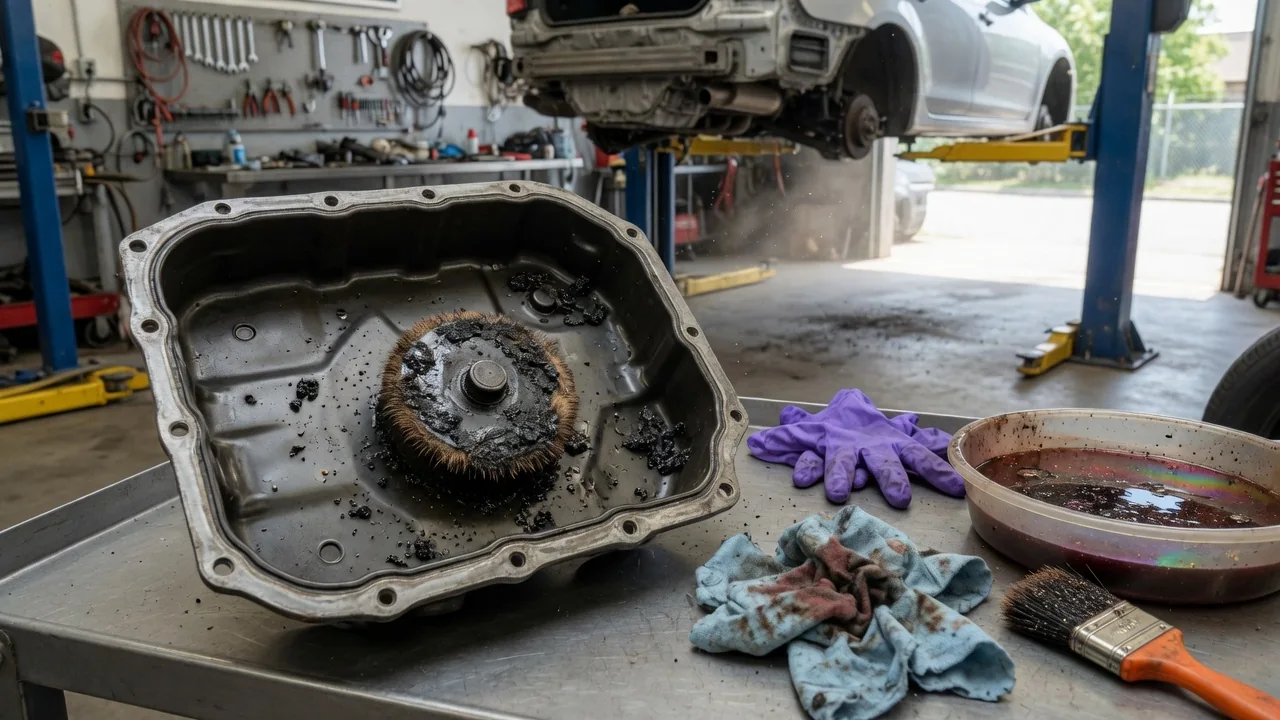
A transmission pan magnet is a small permanent magnet inside the oil pan of many automatic transmissions. It attracts and holds steel and iron particles suspended in the transmission fluid, which keeps them from circulating through the pump, valve body and bearings. Knowing the purpose of a gearbox pan magnet helps owners understand what they see during a fluid and filter service. It also explains why the magnet deserves a careful look rather than a quick wipe.
Metal particles
Every automatic transmission produces some wear debris during normal operation. Planetary gear sets, thrust washers, bearings, the fluid pump and steel clutch plates all contact other parts under load, and tiny amounts of material break away over time. Automatic transmission fluid circulates continuously through the pump, valve body and cooler lines, so loose particles can travel throughout the unit. Fine abrasive debris can speed up wear on tight-clearance components. Valve bodies are especially sensitive because they rely on small passages and precise spool movement, and contamination can disturb both.
The magnet attracts only ferrous material, meaning iron and steel. The pan usually sits at the lowest point of the transmission, so heavier particles tend to settle there, and the magnet holds them in place instead of letting the fluid stir them back up. Non-ferrous materials do not stick to the magnet. These include aluminum from the case or pump components, brass or bronze from bushings and washers, and friction material from clutch packs and bands. Those particles settle loosely in the pan, get trapped by the transmission filter or stay suspended in the fluid.
After a magnet has been in service for a while, the collected material usually looks like a dark gray paste or fuzzy coating. The coating is made of very fine steel particles mixed with fluid. Its texture tells you more than its color. A smooth film means something very different from a layer that contains visible flakes, slivers or chips.
Service interpretation
Reading the magnet means judging the size and shape of the debris, not just noticing that debris is present. A thin layer of fine, uniform sludge is generally considered consistent with normal wear, especially on a transmission that has covered many miles since its last pan service. What counts as normal varies with the transmission design, mileage, driving conditions and how long the magnet has been collecting debris. For a specific transmission, the manufacturer's service information is the right reference.
Particles you can see and feel individually deserve more attention. Slivers, flakes or chips of steel may point to abnormal wear or damage in a gear, bearing or other hardened component. Because the magnet cannot catch non-ferrous debris, a technician usually examines the pan floor and the old filter as well. Glittery aluminum, bronze-colored specks or heavy clumps of dark friction material in the pan can reveal problems the magnet itself would never show.
Magnet findings are most useful when combined with other information. That includes fluid condition and odor, shifting complaints, slipping, harsh engagements, noise, stored fault codes and the vehicle's service history. A single look at the magnet is rarely enough to identify a specific failed part. It is a clue that can justify further inspection, not a diagnosis by itself.
Cleaning
The magnet becomes accessible when the transmission pan is removed, which typically happens during a filter replacement or a pan-drop fluid service. In many designs it sits in a molded recess or a marked spot on the pan floor. Some transmissions use a magnetic drain plug instead of a separate magnet, or in addition to one. Before cleaning, inspect the debris pattern and note the magnet's position so it can go back in the same place.
Cleaning usually means wiping the collected material off with a clean, lint-free shop towel, because stray lint can become contamination itself. Stubborn residue can be removed with a cleaner that is safe for transmission components, followed by thorough drying. Clean the pan of sediment as well, and check the sealing surface and gasket or sealant area before reassembly. Leftover debris in the pan corners can undo the benefit of a clean magnet.
Many pan magnets are brittle ceramic-type magnets that can crack or chip if dropped or struck. Replace a cracked or broken magnet, because loose fragments could end up circulating with the fluid. Reinstall the magnet in the location the service information specifies. A misplaced magnet could interfere with the filter or fluid pickup, or sit where the fluid flow does not carry particles past it.
Practical implications and limits
For owners, the main point is that the magnet is a passive protective device. It works continuously between services, but its role is narrow. It reduces the amount of ferrous debris circulating in the fluid. It does not catch non-metallic contaminants, restore degraded fluid or repair worn parts. It also becomes less effective as it gets heavily coated, because a saturated magnet has less exposed surface to attract new particles. That is one practical reason to clean it whenever the pan is off.
Access is another limit. A simple drain-and-fill through a drain plug does not expose a magnet mounted inside the pan, so its condition stays unknown unless the pan comes off. Some transmissions have no conventional removable pan, or use service procedures that differ significantly from older designs, and they may handle debris collection differently. Check the maintenance schedule and service manual for your vehicle rather than assuming every automatic gearbox has the same layout.
A clean magnet does not guarantee a healthy transmission, and a dirty one does not automatically mean failure is near. Problems with friction material, seals, solenoids or electronic controls may leave little or no evidence on the magnet. If a pan inspection raises concerns, or if driving symptoms appear, a qualified transmission technician can combine the magnet findings with fluid assessment, road testing and diagnostic scans to decide what, if anything, needs to be done.