What Is a Torque Converter Lockup Clutch? Slip, Engagement, and Shudder
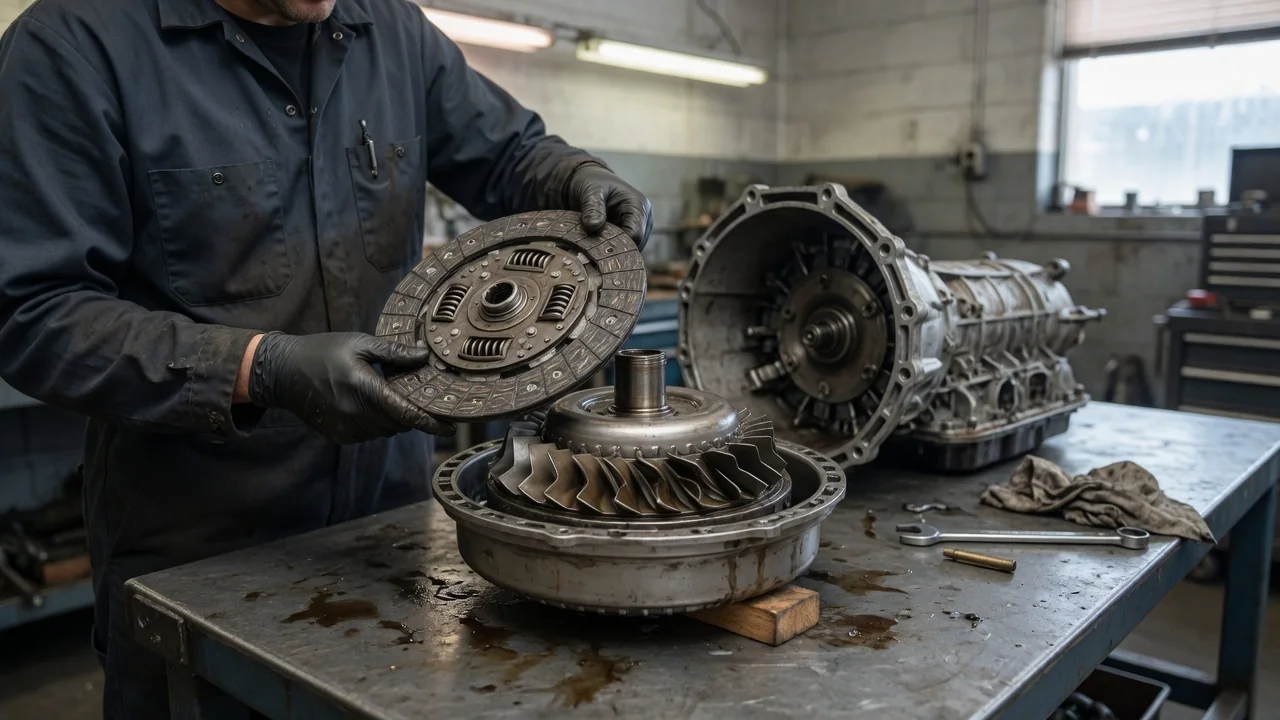
A torque converter lockup clutch is a friction clutch built into the torque converter of many automatic transmissions. Its job is to mechanically join the engine side of the converter to the transmission input when driving conditions allow, so power no longer passes only through moving fluid. Knowing what a torque converter lockup clutch does helps explain why engine speed drops at steady cruise, why automatics run cooler and more efficiently on the highway, and what lockup shudder means.
Slip Reduction: Why a Converter Needs a Lockup Clutch
A conventional torque converter transfers power hydraulically. The impeller, which is part of the converter housing bolted to the engine's flexplate, throws transmission fluid toward the turbine, which is splined to the transmission input shaft. A stator between them redirects returning fluid so the converter can multiply torque when the turbine is turning much slower than the impeller, such as when pulling away from a stop. This fluid connection is what lets an automatic vehicle idle in gear without stalling and gives it smooth launches.
The trade-off is slip. Because power travels through fluid rather than a solid connection, the turbine generally turns somewhat slower than the impeller even at steady speed. That speed difference represents energy that does not reach the wheels; instead, it becomes heat in the transmission fluid. On a long highway drive, continuous slip would mean higher engine speed for a given road speed, more fuel consumed, and more thermal load on the fluid and cooling system.
The lockup clutch addresses this. In a common layout, a piston or pressure plate attached to the turbine side carries a ring of friction material. When applied, it presses against the inside face of the converter cover, which turns with the engine. The turbine is then driven directly by the housing, and slip falls to zero or close to it. Most lockup assemblies also include a torsional damper to absorb engine firing pulses that would otherwise pass straight into the driveline once the fluid cushion is bypassed.
Engagement: How and When Lockup Happens
Lockup is applied and released hydraulically, but the decision is a control function. Older designs used valves or simple electrical switches. In most modern vehicles, a transmission or powertrain control module commands a solenoid that redirects or regulates fluid pressure to the clutch. In many converters, the piston sits between two fluid circuits; changing which side receives pressure, or the pressure difference across it, moves the piston toward or away from the cover. Hydraulic layouts differ between transmission designs, so service information for a specific unit is the reference for its circuit.
The control logic typically weighs inputs such as vehicle speed, throttle position or engine load, current gear, fluid temperature, engine temperature, and brake application. A typical pattern is engagement during steady, light-load driving in a suitable gear, and release when the driver brakes, slows toward a stop, or asks for strong acceleration where the converter's torque multiplication is useful. Some transmissions use lockup only in upper gears, while others engage it across most gears to improve efficiency; the strategy is set by the manufacturer.
Engagement is rarely a simple on-off event in current designs. Many control systems ramp clutch pressure so the friction surfaces close gradually, and some deliberately hold a small, controlled amount of slip in certain conditions. Controlled slip lets the clutch smooth out driveline vibration while still recovering much of the efficiency lost in a fully open converter. Most of this torque converter lockup operation is invisible to the driver, though some notice a modest drop on the tachometer when full lockup occurs.
Shudder: What Lockup Clutch Vibration Indicates
Torque converter shudder is a vibration associated with the lockup clutch, often described as feeling like driving over rumble strips. It tends to appear during light acceleration or steady cruising at speeds where the clutch is applying or holding controlled slip, and it may fade once the clutch fully locks or releases. Because the friction surfaces are working under partial engagement, any irregularity in how they grip and release becomes a vibration the driver can feel.
Common contributing factors include worn or glazed friction material, transmission fluid that has degraded or lost the friction properties the clutch was designed around, the wrong fluid type, contamination, and control problems such as a sticking valve or an erratic solenoid. When friction characteristics change, the clutch can alternate rapidly between gripping and slipping, a behavior known as stick-slip, which shows up as shudder. Software calibration can also influence how sensitive a given transmission is to this condition.
Shudder is a symptom, not a diagnosis. Engine misfires, worn mounts, driveshaft or axle problems, and tire issues can produce similar sensations. Technicians commonly check whether the vibration coincides with lockup commands and converter slip readings on a scan tool, and whether it changes when lockup is released, for example by a light brake application in vehicles where that releases the clutch. Remedies vary by cause and may include a fluid service with the specified fluid, a software update, valve body or solenoid repair, or converter replacement.
Practical Implications and Limits for Owners
In everyday driving, a working lockup clutch shows up as lower engine speed at steady highway speeds, reduced fluid heating, and better fuel efficiency than an always-open converter would allow. When towing or climbing long grades, the control system may release lockup more often to use torque multiplication, which raises fluid temperature. This is one reason owner's manuals often give specific guidance on gear selection and transmission cooling for heavy loads, and following that guidance matters more than trying to influence lockup through driving style.
Faults tend to fall into two broad patterns. If the clutch fails to apply, the engine may run at noticeably higher speed during cruise, the fluid may run hotter, and the control module may store a diagnostic trouble code related to converter clutch performance. If the clutch stays applied when it should release, the engine may stumble or stall as the vehicle comes to a stop, much like a manual car stopped in gear without the clutch pedal pressed. Either pattern warrants proper diagnosis, since sensors, wiring, solenoids, and internal hydraulic leaks can produce similar results.
General knowledge also has limits for any particular vehicle. Lockup speeds, gears, slip targets, fluid specifications, and service intervals are set per transmission and calibration, and not every automatic uses a torque converter; dual-clutch transmissions, for example, typically do not. Because the lockup clutch is sealed inside the converter, it is generally not adjusted or serviced separately during routine maintenance. For a specific car, the owner's manual and factory service information remain the authoritative sources.