What Is a Tire Pressure Gauge?
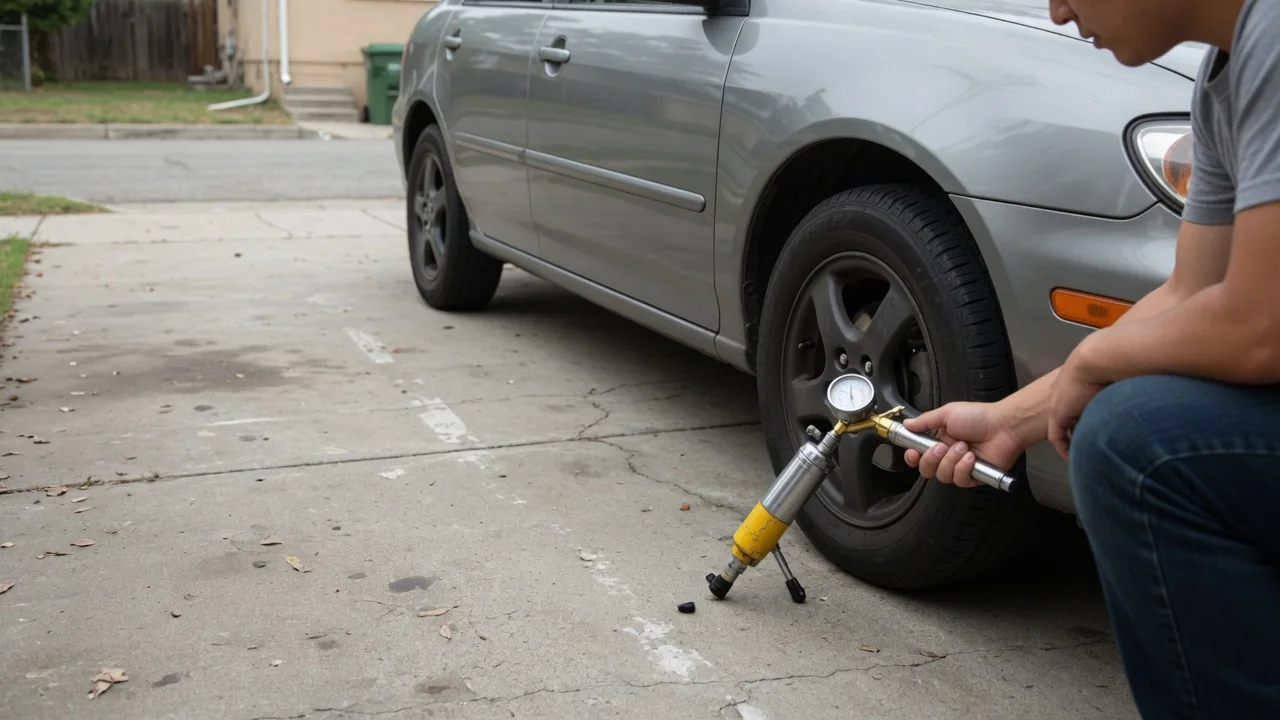
What is a tire pressure gauge? It is a small handheld instrument that measures the air pressure inside a tire through the valve stem, usually displayed in pounds per square inch. Stick, dial, and digital designs all do the same job in different ways. Knowing how each type works, and how to use one consistently, makes routine inflation checks far more trustworthy.
Gauge connection
Every gauge connects to the tire the same way: its chuck presses onto the valve stem after the cap is removed, and a small pin inside the chuck depresses the valve core so air can reach the measuring mechanism. In a stick gauge, that air pushes a calibrated bar out of the body. A dial gauge routes it to a mechanism that swings a needle, while a digital gauge uses an electronic pressure sensor and shows the result on a screen.
A good connection is easy to recognize. A brief puff of air as the chuck seats is normal, but a continuous hiss means the seal is crooked and the reading will be low. Pressing straight and firmly usually fixes it. Access varies by vehicle: some wheels have deeply recessed stems, dual rear wheels on heavy-duty pickups can hide the inner valve, and certain designs use angled chucks or a short hose to reach. Metal stems on wheels with pressure sensors deserve a gentle, square approach.
Read cold tires
Recommended inflation pressures are specified for cold tires, meaning tires that have been parked for several hours or driven only a short distance. Driving flexes the sidewalls and tread, generating heat, and warm air inside the tire expands and raises the pressure. A gauge applied right after a highway trip will therefore show a higher number than the same tire would in the morning, even though no air has been added.
The target figure itself comes from the vehicle, not the gauge. Most cars and trucks carry a tire placard on the driver's door jamb or door edge, and the owner's manual repeats it; front and rear values may differ, and some vehicles list separate pressures for heavy loads or a compact spare. The number molded into the sidewall is the tire's maximum, not the recommended setting. Sun on one side of the car and sharp changes in outdoor temperature can also shift readings, so checking in the shade before driving gives the most comparable results.
Accuracy habits
Repeatable readings depend more on routine than on price. Using the same gauge every time removes the small differences that exist between individual instruments, so a change in the number reflects the tire rather than the tool. Taking two readings per tire and confirming they agree is a simple check on the seal. If they differ, a third reading usually shows which one was caused by a poor connection.
Care of the instrument matters as well. Dropping a dial gauge can knock its mechanism out of calibration, grit can make a stick gauge's bar drag, and a weak battery can cause a digital display to fade or behave erratically. Storing the gauge in the glovebox or a door pocket rather than loose in a toolbox protects it. Comparing it occasionally against another gauge, such as a shop's, reveals whether it has drifted. Reading a dial or stick straight on, rather than at an angle, avoids misjudging the mark.
Everyday Use and Observations
In regular use, a gauge turns a vague impression into a number. Modern radial tires can look normal while noticeably underinflated, so a visual glance or a kick tells very little. A monthly check and one before long trips or towing is a common habit, though the owner's manual gives the vehicle's own guidance. Many inflators at home or at fuel stations include a built-in gauge, but confirming with a personal gauge keeps the measurements consistent.
Patterns over time are the useful observation. All four tires dropping slightly as the weather turns colder is expected behavior, while one tire that repeatedly reads lower than the others suggests a slow leak from a puncture, the valve, or the wheel's bead area. Noting readings mentally or on paper makes such trends obvious. If a tire is overfilled, many gauges have a bleed button or a nub for releasing air in small steps, with a recheck after each adjustment. Remember the spare, if the vehicle carries one.
Limits and Next Steps
A gauge measures pressure and nothing else. It cannot reveal tread depth, uneven wear, sidewall bulges, cuts, or the age of the rubber, so a correct reading does not certify that a tire is sound. It also complements rather than replaces the tire pressure monitoring system. On many vehicles that warning light comes on only after pressure has fallen well below the recommendation, and some systems infer pressure indirectly from wheel speed, so a handheld check catches smaller losses sooner.
When the readings point to a problem, the next step depends on what they show. A tire that keeps losing air after being set correctly should be inspected by a tire shop rather than simply topped off repeatedly, since the cause may be repairable or may make the tire unsafe. A warning light that stays on although every tire measures at the placard value may call for a system reset or sensor diagnosis, and the procedure differs by make and model. A tire found severely low should be examined before further driving.