What Is a Tire Bead Wire? Rim Grip, Sealing, and Damage
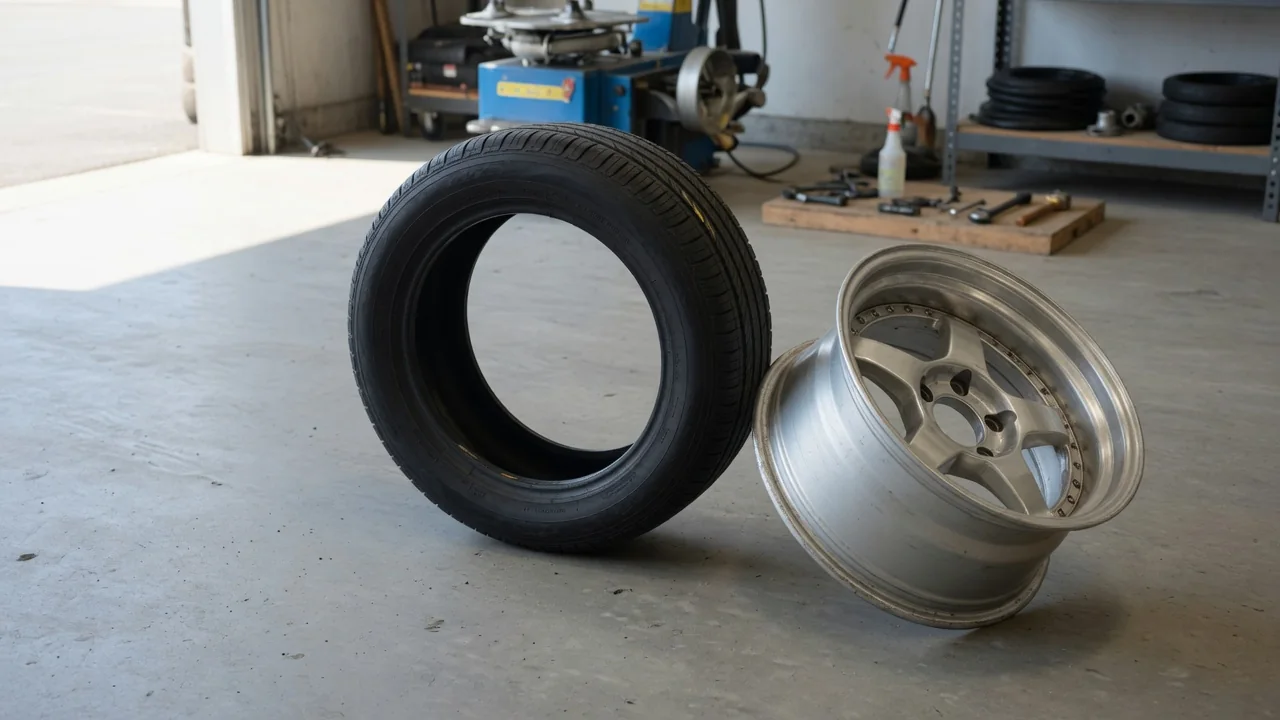
A tire bead wire is the hoop of high-strength steel wire molded into each inner edge of a tire, where the tire meets the wheel. It is small and completely hidden once the tire is mounted, yet it does much of the work that keeps the tire on the rim and the air inside it. Understanding the tire bead wire function helps explain why mounting technique, inflation pressure, and bead damage matter so much.
Rim grip: how the bead wire anchors the tire
In most passenger and light truck tires, the bead wire is not a single solid ring. It is a bundle of individual steel wires, typically coated with a brass or bronze layer that helps rubber bond to the steel, wound into a continuous hoop and encased in rubber. The tire's body plies wrap around this bundle and turn back up into the sidewall, so the bead acts as the anchor for the entire carcass. Above it sits a stiff rubber filler, often called the apex, which smooths the transition from the rigid bead to the flexible sidewall. Wire count, cross-section shape, and arrangement vary by tire design and are set by the manufacturer.
The key property of the bead wire is that it barely stretches. Wheel bead seats are slightly tapered, growing in diameter toward the outer flange. When the tire is inflated, air pressure pushes each bead outward along this taper and against the flange. Because the steel hoop cannot expand to match the larger diameter, the rubber between the wire and the rim is compressed, creating a tight interference fit. This clamping force is what holds the tire firmly on the wheel.
That grip also has a mechanical job beyond simple retention. Acceleration and braking forces travel between the wheel and the tire through friction at the bead seat. If the bead did not clamp tightly, the tire could rotate relative to the rim under high torque, which is one reason severe underinflation is risky: lower pressure reduces the force pressing the beads into place. The same inextensibility explains why tires are mounted using the wheel's drop center, the deeper well in the middle of the rim. Pushing one section of the bead into the well lets the opposite side pass over the flange without requiring the wire to stretch.
Sealing: the bead's role in holding air
On a tubeless tire there is no inner tube, so the air is contained by the tire's inner liner and the wheel itself. The joint between the two is at the bead. The rubber covering the bead bundle, particularly the toe and heel areas that contact the rim seat, must form an airtight seal all the way around the wheel. The bead wire does not seal anything directly; instead, it supplies the steady clamping force that keeps the rubber compressed against the metal so the seal holds as the tire flexes, heats up, and rotates.
This is why seating the bead is a distinct step during mounting. A freshly mounted tire must be inflated until both beads move up the taper and lock against the flanges, often with an audible pop. Technicians typically use a bead lubricant so the rubber slides into position evenly, and they check the molded guide line near the rim to confirm the bead sits at an even height all the way around. If one section of the bead sits low, the seal may be incomplete and the assembly may run with vibration or wobble.
Sealing also depends on the wheel. Corrosion, old rubber residue, or a bent flange at the bead seat can leave gaps the bead cannot close, producing slow leaks even when the tire itself is sound. In those cases the problem lies in the surface the bead clamps against rather than in the wire.
Damage: what can go wrong with a bead wire
A frequent cause of bead wire damage is improper mounting or demounting. Forcing a bead over the flange without using the drop center, or prying with excessive force, can stretch, kink, or break individual wires in the bundle. This kind of damage may not be visible from outside, because the wire is buried under rubber and plies. A tire that will not seat evenly, shows a deformed bead area, or has exposed or protruding wire should be treated as damaged.
The bead area can also be harmed in service. Running a tire severely underinflated or flat lets the bead shift and the lower sidewall flex far more than intended, which generates heat and can chafe the rubber around the bead. Hard impacts against curbs or potholes can bend the rim flange and pinch the bead. Excessive heat from the brakes, overloading, and corrosion where moisture reaches exposed steel are other recognized contributors. Cuts or tears in the rubber at the bead toe compromise sealing even if the wire itself is intact.
A broken or distorted bead wire is generally considered non-repairable. Because the wire anchors the carcass and holds the tire to the rim, a compromised bead can fail under inflation pressure or load. Common tire repair practice is limited to punctures in defined tread areas and does not extend to the bead, so the usual outcome of bead wire damage is replacing the tire.
Practical implications and limits
For owners, the main practical takeaway is that bead health depends heavily on who mounts the tire and how. A shop with suitable equipment, correct technique, and attention to rim condition reduces the chance of bead damage. Bead seating should only be done within the pressure limit stated by the tire manufacturer, and a newly mounted tire is normally inflated in a restraining cage or with a clip-on air chuck so the person stays clear. A bead that will not seat should be investigated rather than forced with more pressure, because an overpressurized bead can fail violently.
Day to day, keeping tires at the inflation pressure listed on the vehicle placard supports the clamping force the bead relies on. If a tire has been driven flat, a technician's inspection that includes dismounting it to examine the inner bead and sidewall is the appropriate way to judge whether it can be reused. A bead that sits unevenly against the rim, persistent slow leaks around the wheel edge, or new vibration after a tire change are reasons to have the assembly checked.
General explanations have limits. Bead construction differs between tire types: run-flat, low-profile, light truck, and high-performance tires may use different bead designs, and some wheels use special rim profiles. Mounting requirements, seating pressures, and wheel compatibility for a particular vehicle and tire are set by the vehicle and tire manufacturers. Their documentation, together with a qualified technician's assessment of the actual tire and wheel, takes precedence over general guidance.