What Is a Tie Rod?
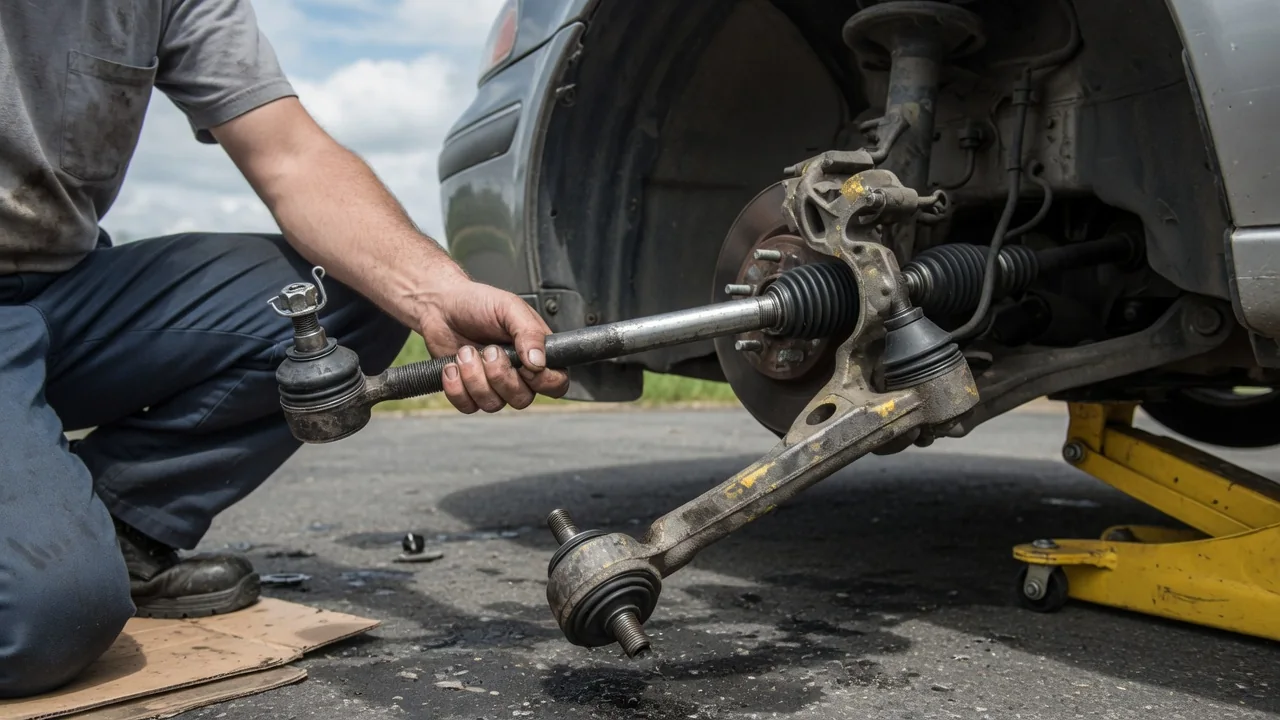
Anyone asking what is a tie rod is really asking how a turn of the steering wheel becomes a change in direction at the road. The tie rod is the slender link that carries steering force from the rack or steering linkage to the wheel assembly, pushing and pulling the knuckle so the tire pivots. It is small, but every steering input passes through it.
Inner and outer ends
On most modern cars with rack-and-pinion steering, each front wheel has a two-piece tie rod. The inner end threads into the end of the steering rack and hides beneath a ribbed rubber bellows boot. It contains a ball-and-socket joint that lets the rod swing up and down as the suspension travels over bumps. When the driver turns the wheel, the rack slides sideways inside its housing, and the inner end transfers that sideways motion into the rod itself.
The outer end connects the rod to the steering arm on the knuckle, the component that carries the wheel hub. Its ball stud sits in a tapered hole and is held by a nut, with a small dust boot sealing in grease. This joint must pivot in several directions at once, because the wheel steers while also rising and falling. Trucks and older vehicles with a steering box use different layouts, often with a center link or drag link, so the exact arrangement depends on the vehicle.
Alignment
The tie rod is also the adjustment point for toe, the alignment angle that describes whether the front edges of the tires point slightly toward or away from each other. Because the inner and outer pieces are joined by threads, lengthening or shortening the assembly swivels the knuckle a tiny amount. A lock nut or adjusting sleeve holds the chosen length. Alignment technicians use this adjustment to set each wheel so the tires roll straight instead of scrubbing sideways.
This is why replacing a tie rod end normally calls for an alignment check afterward. Even a small difference in installed length changes the toe angle, and the effect shows up as an off-center steering wheel or rapid tire wear. Drivers may notice feathered tread edges, where each tread block feels smooth in one direction and sharp in the other. Target settings differ between models and are found in the manufacturer's specifications, so the correct numbers need to be confirmed for the specific vehicle.
Wear symptoms
A worn tie rod end develops clearance between the ball and its socket. Steering force then has to take up that slack before the wheel responds, which the driver feels as vagueness or free play around the straight-ahead position. The car may wander on the highway and need constant small corrections. Because the loose wheel can shift its toe angle on its own, uneven wear on the inner or outer shoulder of a front tire often accompanies the looseness.
Noise and vibration are other common clues. A clunk or knock from the front end during low-speed turns or over broken pavement can come from a joint rattling in its socket, and a shimmy in the steering wheel may appear at certain speeds. A torn boot with grease flung around it suggests that dirt and water have reached the joint. None of these signs is exclusive to tie rods, since ball joints, bushings, wheel bearings and tire balance problems produce similar sensations.
Everyday Use and Observations
In normal driving, tie rods work constantly without drawing attention. Every lane change, parking maneuver and correction on a crowned road sends a push or pull through them, and the heaviest loads come when turning the wheels with the vehicle stationary. Potholes and curb strikes are harder still, because the impact travels backward from the tire through the knuckle into the rod. A hard hit can bend a rod or damage a joint even though the part looked sound beforehand.
Owners can learn a good deal from simple observation. A steering wheel that sits crooked while the car tracks straight, a new pull after hitting a curb, or tire wear that differs from one side to the other all point toward the steering linkage or alignment. With the hood open or the wheels turned outward, the outer end and its boot are often visible behind the wheel. Access varies widely, and on some vehicles undertrays and suspension components hide most of the linkage.
Limits and Next Steps
Looking and listening only go so far. Confirming play in a tie rod means safely raising the vehicle and checking the joints under load, and the inner end is concealed by its boot, so a professional inspection is the reliable way to separate it from other worn front-end parts. Vehicles with electric power steering or driver-assistance features may also need a steering angle sensor reset after linkage work or alignment, depending on the manufacturer's requirements.
Suspected looseness deserves prompt attention because the tie rod is the only connection steering the wheel. If a joint separates, that wheel is free to turn on its own and steering control on that side is lost. A shop can measure the play, inspect the boots, check the related suspension parts and verify alignment afterward. Replacement parts, torque values and procedures differ by make and model, so the work should follow the service information for the exact vehicle.