What Is a Throttle Body?
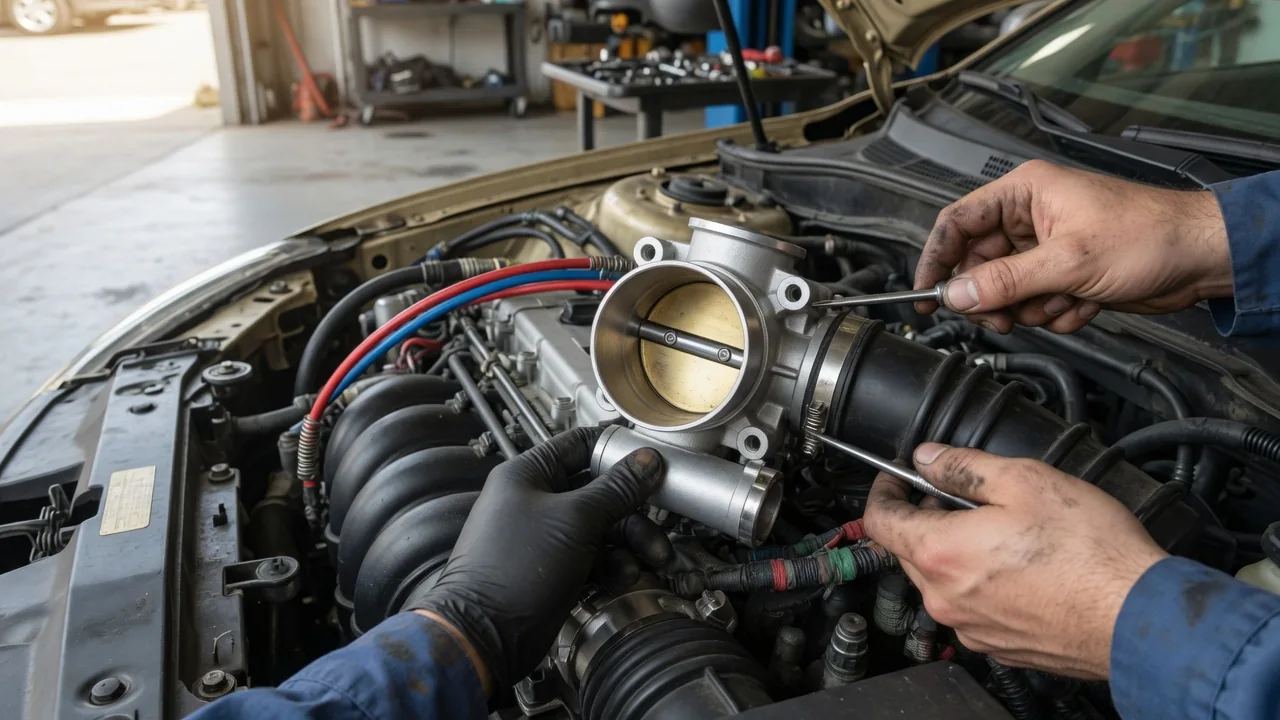
What is a throttle body? It is the air valve assembly mounted between the air intake ducting and the intake manifold on a gasoline engine. Inside its bore, a pivoting plate opens and closes to meter how much air the engine can draw in. Because fuel delivery is matched to airflow, this one valve largely determines how much power the engine makes at any moment.
Pedal request
Pressing the accelerator does not add fuel directly; it asks for more air. On older vehicles, a steel cable links the pedal to a lever on the throttle shaft, so pedal travel rotates the butterfly plate mechanically. On most newer vehicles, the pedal carries position sensors instead, and the engine computer reads that signal as a torque request. An electric motor on the throttle body then turns the plate to an angle the computer chooses, a layout commonly called electronic throttle control or drive-by-wire.
That distinction explains some behavior drivers notice. With a cable, plate angle follows the foot almost exactly. With electronic control, the computer may open the plate more gradually, hold it steadier during a gear change, or close it slightly when traction or stability systems intervene, so pedal position and valve opening are not always proportional. Selectable drive modes often change this mapping, which is why the same car can feel eager in one setting and relaxed in another. The exact arrangement depends on the manufacturer and model year.
Idle airflow
With the foot off the pedal, the plate sits nearly closed, yet the engine still needs a small, steady stream of air to keep running. Cable-operated designs commonly route that air through a bypass passage around the plate, metered by an idle air control valve that the computer adjusts. Electronically controlled units usually dispense with the separate passage and simply hold the plate open a tiny amount, nudging the angle as conditions change. In both cases the opening involved is very small, so minor changes matter.
Idle demand is not constant. A cold engine needs extra air to overcome thicker oil and poor fuel vaporization, and loads such as the air conditioning compressor, power steering, or a charging alternator pull speed down unless airflow rises to compensate. Drivers can watch this on the tachometer: engine speed typically sits higher after a cold start and settles as temperature climbs, with a brief dip and recovery when the compressor engages. Target idle speeds differ between engines, so the vehicle's own service information is the reference.
Cleaning context
Over time, a dark film can collect on the bore walls and the edges of the plate. It comes largely from oil vapor routed back into the intake by the crankcase ventilation system, and on some engines from recirculated exhaust gas. Since idle air squeezes through a gap not much wider than a sheet of paper, even a thin layer of deposits can reduce the flow the computer expects, and the control system has to compensate by opening the plate farther than it originally did.
Cleaning is therefore a common maintenance item, but the right approach is vehicle-specific. Electronic units contain a motor, gears, and position sensors that can be damaged by forcing the plate by hand or by unsuitable solvents, and some bores carry a factory coating that harsh cleaners may strip. Many vehicles also need an idle relearn procedure afterward so the computer can adapt to restored airflow; without it, idle may run high or unsteady for a while. Checking the manufacturer's guidance before any cleaning avoids creating a new problem.
Everyday Use and Observations
In normal driving a healthy throttle body goes unnoticed. The engine answers the pedal smoothly, holds a steady idle at stoplights, and returns to idle cleanly when the driver lifts off. Under the hood, the assembly is usually easy to spot by following the large intake tube from the air filter housing to where it meets the manifold; the metal housing at that junction, often with an electrical connector or a cable attached, is the throttle body. Location and orientation vary with engine layout, and some engines use more than one.
When airflow control becomes less precise, the signs tend to show up at small openings first. A rough or wandering idle, a stumble when pulling away, stalling as the car coasts to a stop, or a sticky feel in the first bit of pedal travel on cable systems are typical observations. Electronic systems may illuminate a warning light and limit engine power to protect against unintended acceleration. None of these symptoms is unique to the throttle body, though; vacuum leaks, ignition faults, and sensor problems can look very similar from the driver's seat.
Limits and Next Steps
Understanding what the valve does has limits as a diagnostic tool. A stored fault code related to throttle position or actuator performance is evidence to interpret, not proof that the unit has failed; wiring, connectors, the pedal sensor, low system voltage, or heavy deposits can set the same code. Some codes are manufacturer-specific, so their meaning has to be confirmed for the particular vehicle rather than assumed from a generic description. Replacing the assembly on the strength of a code alone risks leaving the real cause in place.
A sensible next step is to gather observations before deciding anything: when the symptom occurs, whether the engine is cold or warm, and whether warning lights are on. A technician with a scan tool can compare the requested plate angle with the measured one, check sensor agreement, and inspect the intake tract for leaks. Diesel engines and some gasoline engines with variable valve lift manage air differently and may use the throttle valve in a secondary role, so the owner's manual and model-specific service information remain the final authority.