What Is a Throttle Body and What Does It Do
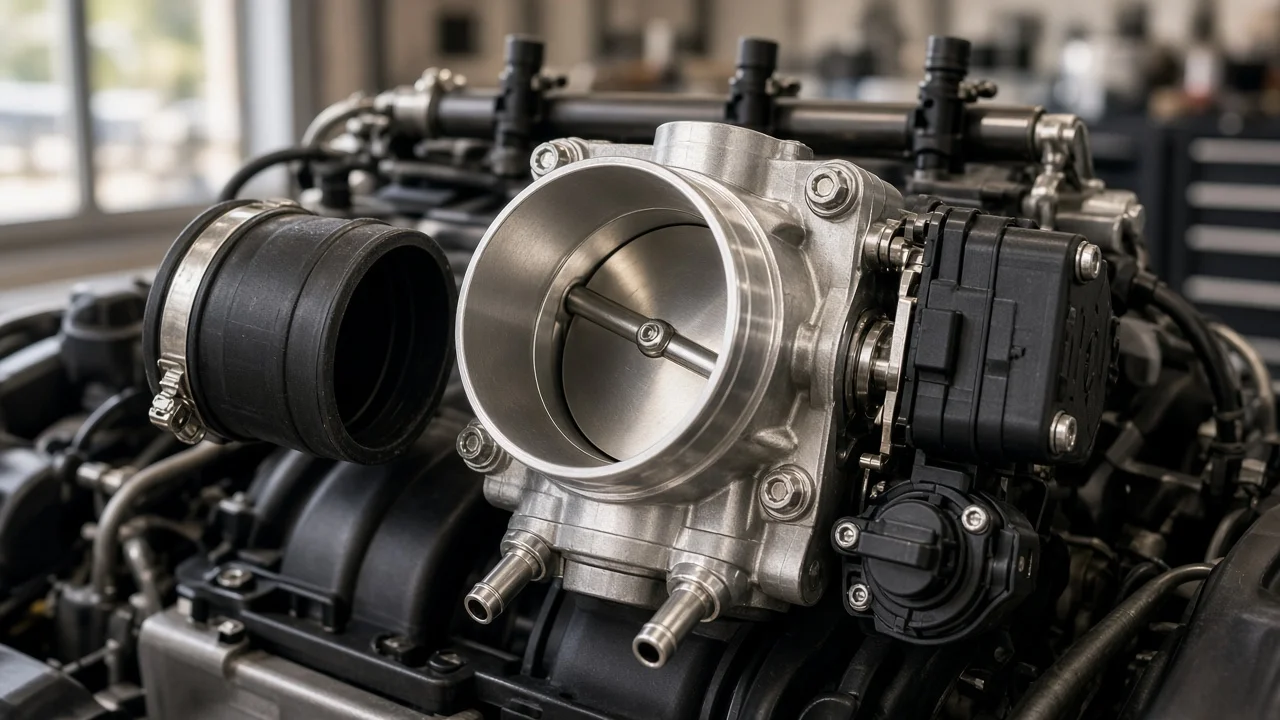
The throttle body is one of the simplest-looking parts on a modern engine, yet it sits at the center of how a car responds to the accelerator pedal. Whether you have seen the term on a repair estimate or a scan tool readout, understanding this car part helps you separate airflow problems from fuel delivery problems. Below is what the throttle body does, how designs differ between engines, what an owner can safely check, and where vehicle-specific service information becomes necessary.
What a Throttle Body Is and What It Does
A throttle body is a valve housing mounted between the air intake ducting and the intake manifold. Inside it, a round plate on a shaft, often called the butterfly, pivots to let more or less air into the engine. On a gasoline car, that airflow is what the driver is really controlling with the pedal: more air allows the engine computer to add more fuel, which produces more power. At idle the plate is almost closed; at full throttle it lies nearly parallel to the airflow.
In most cars built in recent decades, the throttle body handles air only. Fuel is delivered separately by injectors in the intake ports or directly in the cylinders. The exception is older throttle-body injection systems, where one or two injectors sit on top of the throttle body itself. So the short answer to what a throttle body does on a car is that it meters intake air, and with it engine speed and load, but how much else it does depends on the engine design.
How the Throttle Body Works with the Rest of the Engine
When the plate opens, manifold vacuum drops and more air flows past it. A mass airflow sensor upstream, a manifold pressure sensor downstream, or both, tell the engine control module how much air is entering. A throttle position sensor reports the plate angle. The module combines these readings to calculate injector pulse width and ignition timing, then fine-tunes the mixture using oxygen sensor feedback, which appears on a scan tool as fuel trim.
This is why the throttle body matters even though no fuel passes through it on most engines. If air enters downstream of the airflow sensor through a cracked duct or leaking gasket, the computer sees unmetered air and adds fuel to compensate, pushing fuel trim positive. Carbon deposits around the plate edge have a different effect at idle: they restrict the small gap the engine relies on, so idle speed may drop or hunt until the control system adapts.
Cable, Electronic and Throttle-Body Injection Designs
Older and simpler cars use a cable from the accelerator pedal that pulls the throttle lever directly. These engines usually have a separate idle air control valve or an adjustable stop to manage idle. Most current vehicles use electronic throttle control, sometimes called drive-by-wire. A pedal sensor sends the driver's request to the engine computer, which commands an electric motor in the throttle body. Two position sensors cross-check each other; if their readings disagree, the system typically sets a code and limits power as a safety measure.
Throttle-body injection, common on many vehicles from the 1980s into the 1990s, places the fuel injector in the throttle body housing. On those engines, the assembly is part of the pressurized fuel system, fed by a fuel pump, fuel filter and pressure regulator. Problems there can involve fuel pressure, injector spray pattern or leaks, not just airflow. Port-injected and direct-injected engines keep their fuel components elsewhere, so the throttle body on those engines is an air-control part only.
How Fuel Type and Engine Configuration Change the Picture
Diesel engines regulate power by the amount of fuel injected rather than by restricting air, so they traditionally run without a throttle plate controlling output. Many modern diesels do have an intake throttle valve, but it serves functions such as managing exhaust gas recirculation, supporting particulate filter regeneration and smoothing shutdown. Its faults behave differently from a gasoline throttle body, and diagnosis follows the diesel system's own procedures. Some gasoline engines with variable valve lift also control load mainly through the valves, keeping the throttle largely open.
Turbocharged gasoline engines place the throttle body after the turbocharger and intercooler, so it sees boost pressure; leaks in the charge piping can cause lean running or low power that resembles a throttle fault. Most engines, inline or V-shaped, use a single throttle body feeding a common plenum, while some performance engines use individual throttle bodies for each cylinder that must stay synchronized. Because these layouts differ, readings and procedures should always be compared against specifications for the exact engine configuration.
Common Signs of a Throttle Body Problem
Symptoms that often point toward the throttle body include an unstable, unusually high or unusually low idle, stalling when coming to a stop, hesitation when pressing the pedal, and a warning light accompanied by reduced power, often called limp mode. On electronic throttles, stored codes related to throttle position sensor correlation or throttle actuator control are a strong lead. On throttle-body injection engines, a fuel smell near the assembly or hard starting may also be relevant.
None of these symptoms is unique to the throttle body. A weak fuel pump, a restricted fuel filter, a leaking or clogged injector, a vacuum leak or a faulty airflow sensor can produce similar driving complaints. Fuel trim data helps narrow it down: a lean condition that is worst at idle and improves at higher engine speed suggests an air leak, while one that worsens under heavy load points more toward fuel delivery.
What You Can Check Yourself
Start with a scan tool. Read stored and pending codes, note freeze frame data, and watch short-term and long-term fuel trim at idle and at a steady higher engine speed. Then, with the engine off, inspect the intake duct between the air filter housing and the throttle body for cracks, loose clamps or disconnected hoses, and look at the electrical connector for corrosion or damage. Removing the intake duct lets you see whether a heavy black carbon ring has formed around the plate and bore.
If deposits are present, cleaning is a common maintenance step, but follow the manufacturer's guidance. Some throttle bodies have coated bores that should not be scrubbed, electronic units should not be forced open by hand, and many vehicles need an idle or throttle relearn afterward. Use a cleaner labeled safe for throttle bodies and their sensors, with the ignition off. Fuel additives poured into the tank do not reach the throttle plate on port or direct injection engines and should not be treated as a proven repair for throttle or injector faults.
On a throttle-body injection engine, limit yourself to a visual leak check: look for wet fuel or a fuel odor at the fittings with the engine off, and do not loosen any fuel lines. The system can hold pressure after shutdown, and opening it safely requires the manufacturer's procedure and proper equipment.
Limitations and When to Get Professional Help
Codes, sensor values and relearn procedures vary by manufacturer, model year and engine, so general guidance cannot confirm that a throttle body has failed. Replacing it based on symptoms alone can waste money if the real cause is wiring, the pedal sensor, an air leak or a fuel delivery issue. Use the vehicle's service information for exact specifications, connector tests and calibration steps, and check whether software updates or warranty coverage apply.
Seek professional help if the engine surges, the throttle seems to stick or the car will not return to idle, and stop driving as soon as it is safe to do so. A shop can perform smoke testing for vacuum leaks, measure fuel pressure with proper equipment, check injector performance and run actuator tests that most owner tools cannot. Any fuel smell or visible leak should be addressed before the vehicle is driven further.