What Is a Temporary Spare Tire?
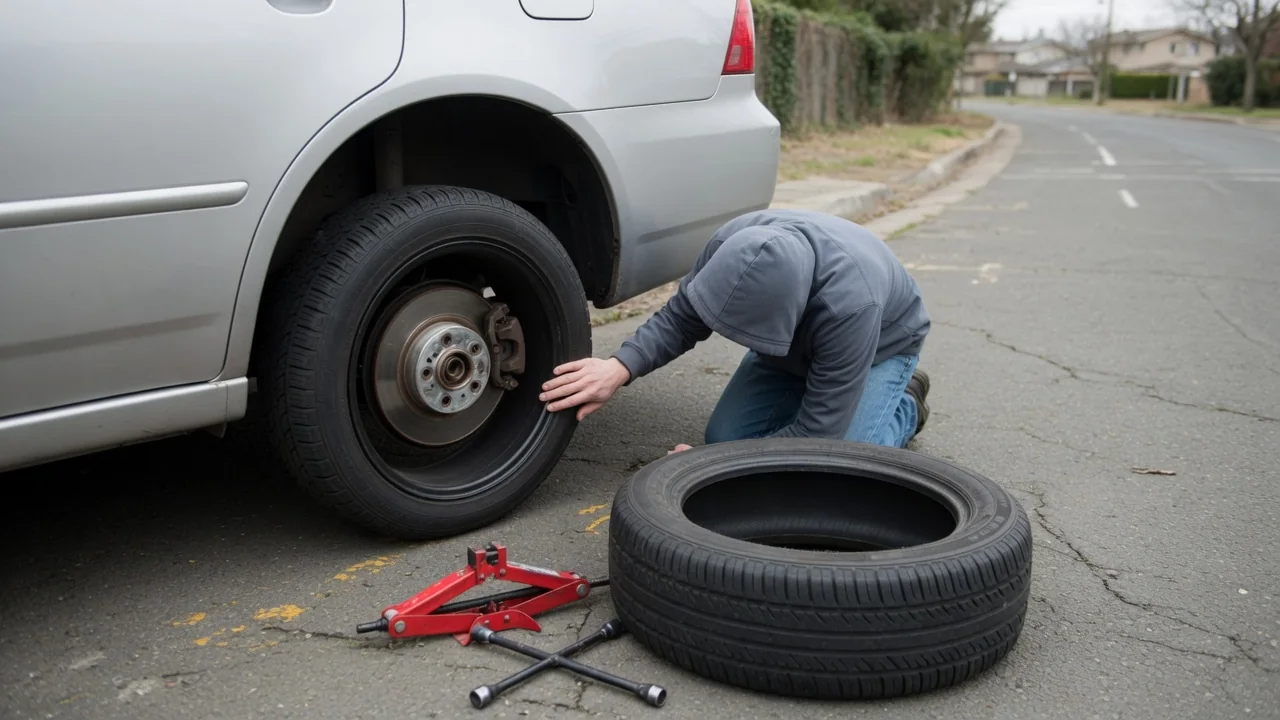
A flat tire raises a quick question for many drivers: what is a temporary spare tire, and how far can it be trusted? Often called a compact spare or donut, it is a smaller, lighter wheel and tire carried to get a vehicle moving again after a puncture. It saves trunk space and weight, but it comes with speed, distance, and handling limits that a full-size tire does not have.
Tire design
A temporary spare is built to be stored, not to rack up miles. Its tread is noticeably narrower than the tires on the vehicle, the tread depth is shallow, and the internal construction is lighter. The wheel is usually a plain steel rim, often painted a bright color so it stands out as a short-term fitment. Because the tire holds a smaller volume of air, it typically runs at a higher inflation pressure than the regular tires to carry the same corner of the vehicle.
Those design choices explain the trade-offs. A narrow contact patch means less grip under braking and cornering, particularly on wet pavement, and the thin tread wears quickly and sheds heat poorly at sustained highway speed. Some vehicles carry a full-size spare instead, others use a folding spare that must be inflated before use, and some have no spare at all, relying on run-flat tires or a sealant kit. Looking under the cargo floor shows which arrangement a particular vehicle uses.
Vehicle instructions
The limits for a compact spare are set by the vehicle and tire manufacturers, so the printed instructions matter more than general rules of thumb. A warning label on the spare wheel and markings on the sidewall normally state the maximum speed and the required inflation pressure. The owner's manual adds the recommended driving distance, the jacking points, and the wheel nut tightening guidance. The tire pressure placard on the driver's door jamb often lists the spare's pressure alongside the regular tires.
Manuals also carry instructions that are easy to overlook. Some advise against fitting the compact spare on a driven axle, which can mean moving a good rear tire to the front and putting the spare on the back. Vehicles with all-wheel drive or a limited-slip differential may have specific cautions because a smaller rolling diameter makes one wheel turn faster than its partner. Towing, tire chains, and automatic car washes with guide rails are frequently restricted as well, depending on the vehicle.
Replacement plan
A temporary spare buys time, so the sensible plan begins the moment it is fitted. The first stop should be a tire shop that can inspect the damaged tire. A small puncture in the tread area can sometimes be repaired properly from the inside, while damage to the sidewall or shoulder, or a tire driven on while flat, usually means replacement. Carrying the flat tire along in the cargo area lets the shop make that judgment without a second trip.
If a new tire is needed, matching matters. The replacement should match the size, load rating, and speed rating shown on the door placard, and ideally the brand and tread pattern of the tire on the opposite side. On all-wheel-drive vehicles, a large difference in tread depth between new and worn tires can strain the driveline, so some manufacturers recommend replacing tires in pairs or as a full set. The shop can measure remaining tread and check the vehicle's guidance before ordering.
Everyday Use and Observations
Driving on a compact spare feels different, and those sensations are normal rather than a sign of a new fault. Steering may pull slightly toward the side with the spare, braking distances can grow, and the car may feel less settled in corners or on rough pavement. Ground clearance at that corner drops a little. Leaving extra following distance, slowing earlier for bends, and avoiding hard acceleration keep the smaller tire within the grip it can actually deliver.
The dashboard may also react. Many compact spares have no tire pressure sensor, so the monitoring light can stay on until the regular wheel returns. Because the spare spins at a different rate, traction control or anti-lock brake warnings sometimes appear on certain vehicles, and stability systems may intervene sooner than usual. The more common everyday problem is neglect: a spare that sits for years slowly loses air, so checking its pressure whenever the other tires are checked keeps it ready.
Limits and Next Steps
The core limits are speed, distance, and time. A temporary spare is intended to reach a repair facility, not to finish a road trip or cover a week of commuting. Exceeding the speed marked on the wheel builds heat in a tire that has little material to absorb it, and stretching the distance wears the shallow tread toward its indicators quickly. Age matters too, since rubber hardens and cracks in storage even when the tread has never touched the road.
Once the regular tire is back on, a few steps close the loop. The spare should be inspected for cuts, bulges, or cracking, reinflated to the pressure on its label, and secured in its well with the jack and tools. Wheel nuts on the reinstalled wheel are worth rechecking after a short drive, following the manual's guidance. If the spare shows damage, heavy wear, or obvious aging, replacing it now is far easier than discovering the problem at the roadside.