What Is a Tailgate Strut?
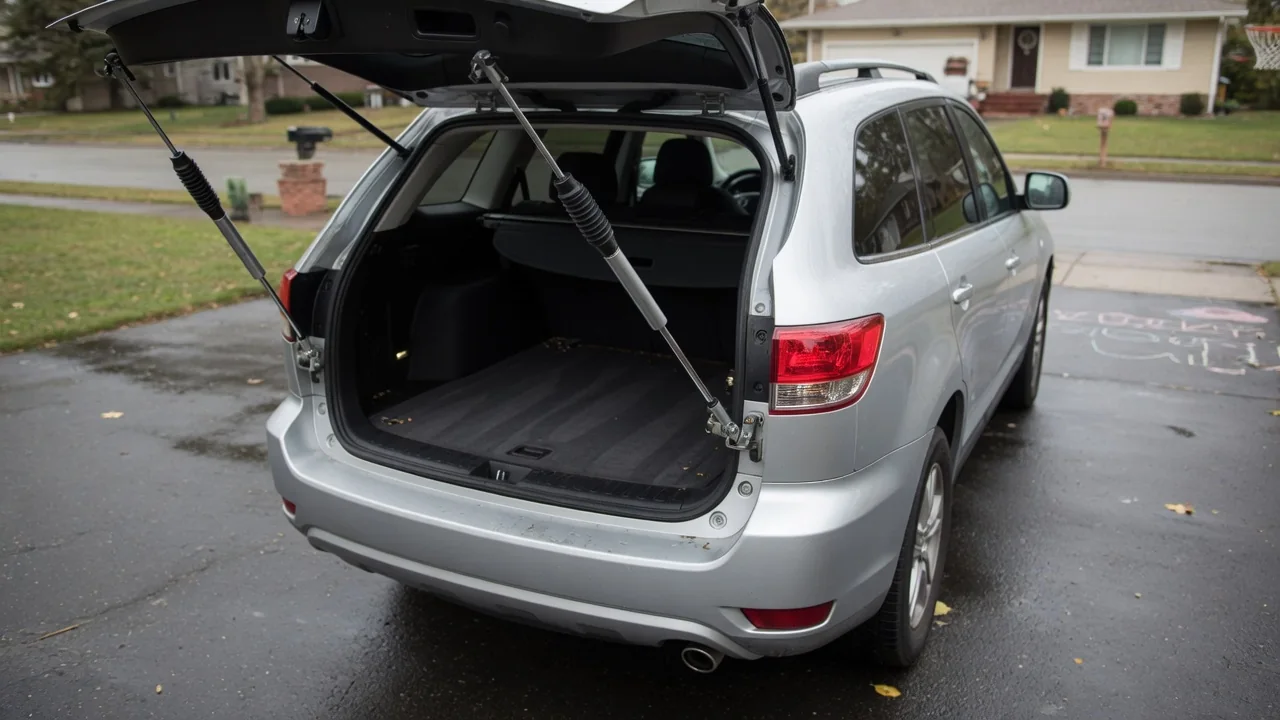
If you have ever wondered what is a tailgate strut, the short answer is that it is a gas-charged support that helps lift and hold the rear opening of a vehicle. Found on hatchbacks, SUVs, wagons, and some pickup truck tailgates, these slim cylinders make a heavy panel feel manageable and keep it safely in position while you load cargo.
Lift support
A tailgate strut, often called a lift support or gas spring, is a sealed cylinder containing pressurized nitrogen gas and a small amount of oil. A polished rod attached to an internal piston slides in and out of the tube. As the liftgate opens, gas pressure pushes the rod outward, supplying the force that offsets the weight of the panel, its glass, wiper motor, and trim. The oil provides damping, which slows movement near the end of travel so the gate does not snap open.
Most vehicles with an upward-swinging liftgate use a pair of struts, one on each side of the opening, mounted between the body and the gate on ball studs or brackets. Pickup trucks are different: where a strut is fitted, it usually acts as a damper that eases the drop-down tailgate downward rather than lifting it. Power liftgates may use electric spindle drives instead of, or alongside, conventional gas supports, so the hardware you see depends on the vehicle's design and trim level.
Weakness signs
Weak struts usually announce themselves gradually. The liftgate may need more effort to raise, stop short of its full height, or drift downward slowly after you let go. In a more advanced stage, the gate will not stay up at all and drops as soon as it is released. Because the two supports share the load, one tired unit can make the gate feel heavy or twist slightly as it rises, even though the other strut still has pressure.
Temperature often reveals a marginal strut. Gas pressure falls as it gets colder, so a liftgate that holds on a warm afternoon may sag on a frosty morning. Visual clues matter too: an oily film on the rod or around the seal suggests leakage, while a bent, pitted, or corroded rod can damage the seal further. Loose or worn end fittings may cause rattles or clicking. None of these observations alone confirms the cause, since hinges, added accessories, or body damage can produce similar behavior.
Replacement
Gas struts are sealed units that generally cannot be recharged or repaired in service, so a weak one is replaced rather than rebuilt. Replacements are specified by extended length, stroke, end-fitting style, and force rating, and those values must suit the particular gate. A support that is too weak will not hold; one that is too strong can make closing difficult and strain hinges and mounting points. Matching the part to the exact vehicle, body style, and equipment is therefore the essential first step.
Replacing both sides together is commonly advised, because a fresh strut paired with a worn one carries an uneven share of the load. The job looks simple on many vehicles, but the gate is heavy and must be securely supported by a helper or a sturdy prop before any strut is released, or it can fall without warning. Struts should never be punctured, heated, or pried apart, as they contain high-pressure gas. Vehicles with power liftgates, spoilers, or wiring routed nearby may be better served by a professional.
Everyday Use and Observations
In daily use, a healthy strut goes largely unnoticed. You release the latch, give the gate a light lift, and it rises smoothly under its own assistance, slows near the top, and stays put while you load groceries or luggage. Closing takes a firm, steady pull against the gas pressure. That consistent feel is a useful baseline: knowing how your liftgate normally behaves makes it easier to spot a change in lifting effort or opening height months or years later.
Certain habits and conditions influence how long supports stay effective. Bike racks, spare tire carriers, heavy spoilers, or accumulated snow add weight the original struts were not necessarily rated for. Dirt and grit on the exposed rod can wear the seal, so wiping it gently with a clean cloth during washing is sensible, while lubricants and solvents on the rod are best avoided. Forcing the gate shut faster than the damping allows, or hanging items from it, also places extra stress on the mounts.
Limits and Next Steps
A tailgate strut assists and holds; it is not a safety lock. Even a good one should not be trusted as the only thing between a heavy gate and your head if there is any sign of weakness. Until a sagging gate is fixed, a temporary prop is a wiser choice than relying on a failing support, and children should be kept clear of the opening. Struts also cannot compensate for misaligned hinges, a damaged latch, or a gate bent in a collision.
If your liftgate shows the symptoms described here, start by noting when the problem occurs, whether both sides look intact, and whether anything has been added to the gate. Then check the owner's manual or a parts catalog for the correct support for your specific model, since designs and ratings differ widely. On vehicles with power-operated gates, a warning message or irregular motor operation calls for vehicle-specific diagnosis rather than assumption. When the cause is unclear, a qualified technician can inspect the struts, hinges, and mounts together.