What Is a Tactile Detent in a Car Switch?
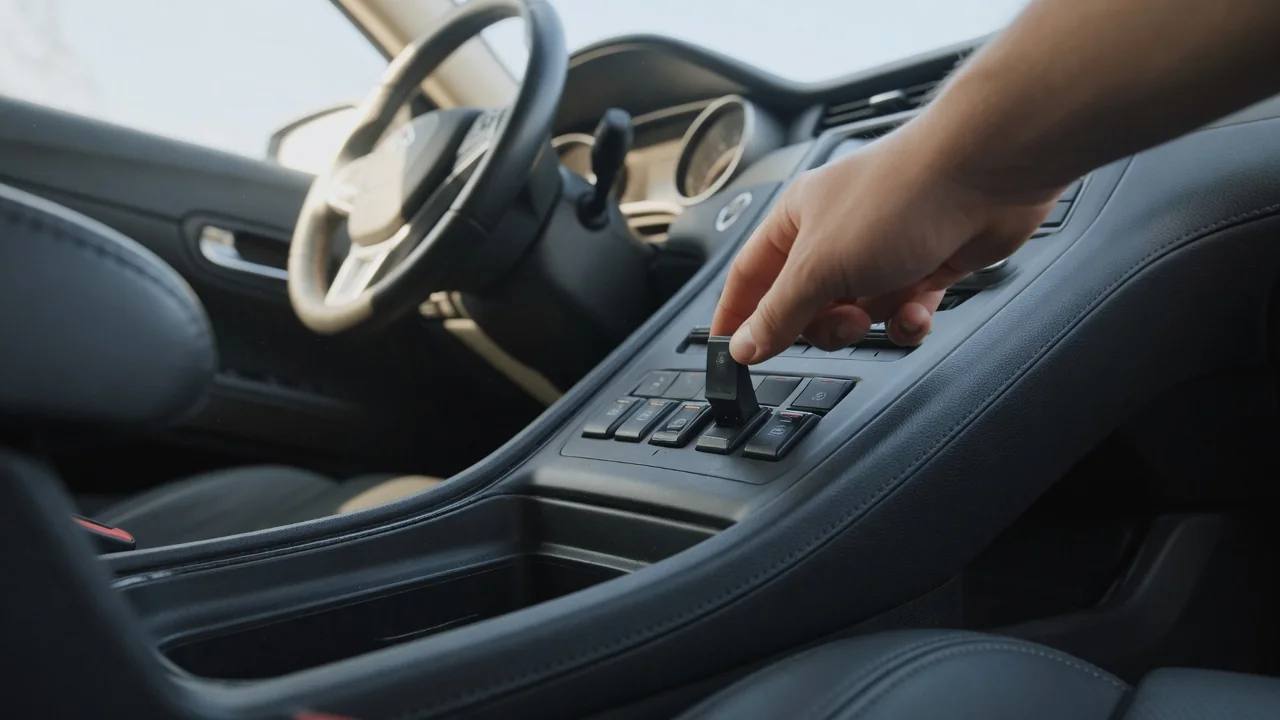
A tactile detent is a deliberate point of resistance built into a switch, knob, or stalk so you can feel when it reaches a defined position. In a car, detents tell your fingers that a turn signal has latched, a climate dial has moved one step, or a window switch has passed into a second stage. This guide explains what a tactile switch detent does in a car, how it supports eyes-free operation, and what affects how long that feel lasts.
Feedback: What a Detent Tells Your Fingers
Most detents are mechanical. A common arrangement uses a small spring-loaded ball or plunger that rides against a profiled surface with notches or ridges. As you turn or push the control, the spring compresses while the plunger climbs a ridge, then releases as it drops into the next notch. That rise and sudden fall in force is what you feel as a click or step. Push buttons often use a different element, such as a metal or rubber dome that collapses past a certain force, producing a similar snap without a separate notched track.
The feedback does two jobs. First, it confirms that the control has moved far enough to change state, so the driver does not have to wonder whether an input registered. Second, it holds the control in position: a rotary knob resting in a notch is less likely to drift, and a stalk that clicks into a latched position stays there until it is moved again or released by a return mechanism. The audible click many people associate with detents is usually a byproduct of the same mechanical event, although in many modern vehicles the familiar turn-signal ticking is produced electronically rather than by the switch itself.
It helps to separate true detents from simulated feedback. Some touch-sensitive panels and capacitive buttons use a small vibration actuator to imitate a click. That can confirm an input, but it does not physically guide the finger into a position or resist accidental movement the way a mechanical notch does. Whether a given control uses a physical detent, a collapsing dome, or simulated haptics is a design choice that varies between vehicles.
Eyes-Free Use: Operating Controls by Feel
Detents matter most when the driver's eyes should stay on the road. Because each notch is a discrete step, a driver can adjust a control by counting clicks rather than reading a display. Turning a temperature or fan knob two steps, or moving a wiper stalk one position, becomes a task performed by feel. End stops, where the control simply refuses to turn further, add another reference point: the driver knows the knob is at its minimum or maximum without looking.
Distinct detent shapes can also separate functions. A switch may have a light first stage and a firmer second stage, a pattern often used for power windows, where a partial press gives manual movement and a deeper press triggers an automatic function on vehicles that offer it. Stalks frequently combine a soft, momentary position for a brief signal with a firmer latched position. When those forces feel clearly different, the driver can select the intended function by pressure alone, which reduces the chance of overshooting.
Conditions in a moving car make this more valuable. Road vibration, gloves, and divided attention all make fine positioning harder. A control without clear steps may require a glance at a screen to confirm the setting, while a well-defined detent lets the hand confirm it directly. Detents only help fully once the driver has learned the layout, though; an unfamiliar car still calls for some looking until the positions become habit.
Durability: Why Detent Feel Changes Over Time
The feel of a detent depends on parts that wear. The plunger or ball rubs against the notched track every time the control moves, and the spring behind it is compressed and released through every cycle. Over long use, the notch edges can round off, the contact surfaces can polish or roughen, and the spring can lose some of its force. The result is a detent that feels softer, less defined, or uneven from one step to the next.
Lubrication and contamination play a large role. Many detent mechanisms rely on a small amount of grease for a smooth, consistent action. If that grease dries out, migrates, or picks up dust, the control may feel gritty or stiff. Spilled drinks and residue from cleaning products can reach center-console switches and leave a sticky film that changes both the feel and, in some cases, the electrical contacts. Temperature also affects plastics and lubricants, so a control may feel firmer on a cold morning than after the cabin warms.
The detent and the electrical function are related but separate. A worn detent can still switch correctly, and a crisp click does not guarantee that the contacts or the encoder behind it are working. Switches are designed to be operated many times over the life of a vehicle, but the actual durability rating and construction differ by part and cannot be inferred from the feel alone.
Practical Implications and Limits
For owners, changes in detent feel are useful clues. A rotary control that skips steps, jumps two settings at once, or no longer settles in a notch may have a worn detent or a sensing problem in the encoder. A stalk that will not stay latched may point to wear in its holding mechanism. These symptoms justify checking the owner's manual for how the control is supposed to behave and, if that behavior has changed, consulting a service manual or technician. Many switches are serviced as complete assemblies rather than repaired internally, so the practical fix is often replacing the unit.
Cleaning is another area where care pays off. Applying liquid directly to a switch can push it into the mechanism; a lightly dampened cloth used around the control is a more cautious approach. Adding lubricant without knowing what the original grease was or how the switch is built can attract dirt or harm plastics, so it is better left to documented service procedures.
There are also limits to what detent feel can tell you. Preferences for a firm or light action are subjective, and a softer detent is not automatically a defect if it was designed that way. Feel varies between vehicles, trim levels, and even similar-looking switches, so the behavior described here is general rather than a description of any specific car. When the question is how a particular control should behave, the vehicle's own documentation is the reliable reference.