What Is a Sunroof Water Tray?
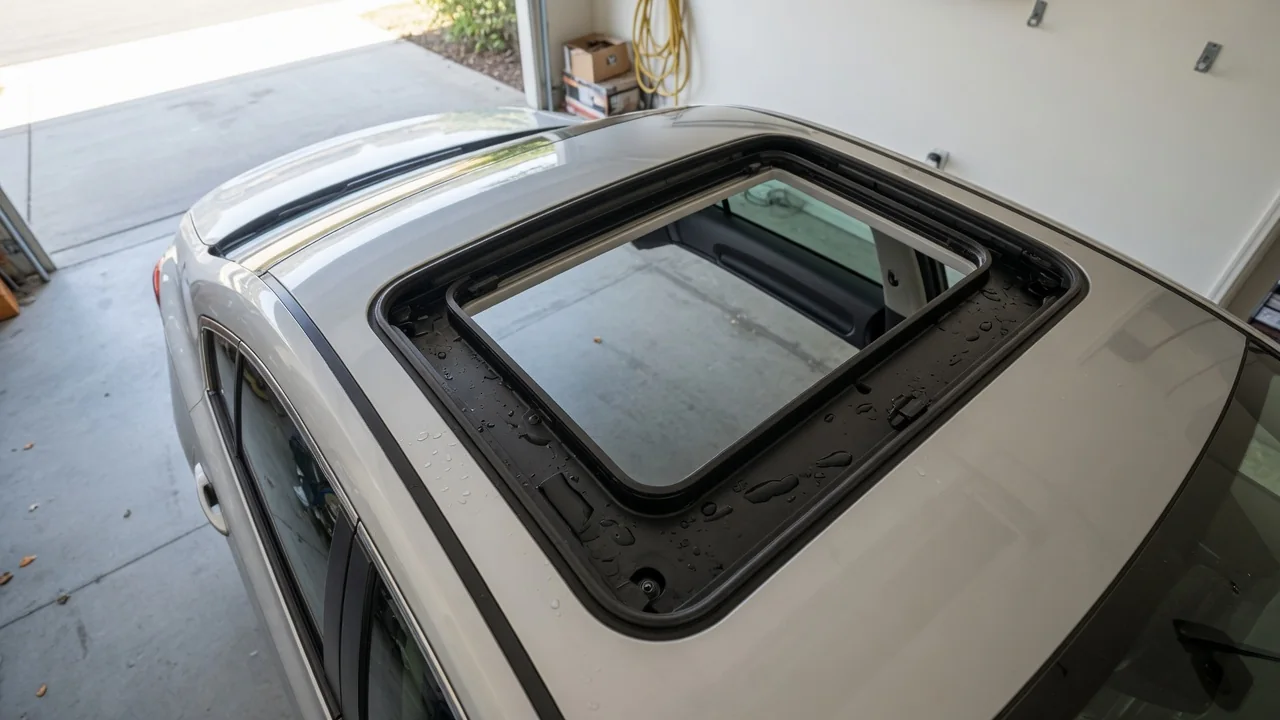
A sunroof water tray is the shallow channel, often molded into the frame or cassette, that surrounds the glass opening beneath the roof skin. If you have wondered what is a sunroof water tray and why it sometimes holds water, the short answer is that the glass seal is not designed to be fully watertight, so the tray catches what slips past and routes it away.
Tray and drains
The tray sits just below the edge of the glass panel and forms a gutter around the opening. Rain, car wash spray, and melting snow that get past the outer seal fall into this perimeter channel instead of onto the headliner. At the corners, the tray usually feeds small drain openings connected to flexible tubes. Those tubes commonly run down inside the roof pillars and exit near the wheel wells, rocker panels, or underbody, depending on how the vehicle was designed.
Water collects in these channels because the tray is nearly flat and depends on gravity and narrow outlets to empty. A thin film or shallow puddle shortly after a storm can be normal while the drains catch up, especially if the vehicle is parked on a slope that tilts water away from an outlet. With the panel open, you can usually see the trough and the front corner drains. Panoramic roofs, smaller tilt-only units, and different manufacturers vary in how many outlets they use and where they sit.
Overflow signs
When the tray cannot empty as fast as water arrives, the level rises until it spills over the inner lip. The first evidence is often a damp or stained headliner near the front corners, moisture around the overhead console, or drips from the grab handles and pillar trim. Some drivers notice water running out of the map light area during hard braking, which happens because pooled water in the channel surges forward and crests the edge of the tray.
Other clues appear lower in the cabin. A drain tube that has slipped off its fitting or split inside a pillar can send water down behind the trim, leaving wet carpet in a footwell, a musty odor, or fogged windows on humid mornings. Sloshing sounds from the roof when cornering suggest standing water in the channel. Because door seals, windshield bonding, and roof rack mounts can produce similar symptoms, where the moisture shows up is a hint about the source rather than a confirmed diagnosis.
Care
Most tray problems begin with debris. Leaves, pine needles, seed pods, pollen, and dust settle in the trough and wash toward the corner outlets, where they form a plug that slows drainage. Opening the roof occasionally and wiping the visible channel with a soft, damp cloth removes this material before it reaches the tubes. Vehicles parked under trees usually need this attention more often than garaged ones, and the weeks after heavy leaf fall or spring pollen are sensible times to look.
Gentle methods suit this system best. The drain tubes are thin and their connections at the tray are typically push-fit, so forceful air pressure or stiff wire can dislodge or puncture them and create a leak inside the pillar that is harder to reach than the original clog. Keeping the rubber seal clean helps it shed most water before it reaches the tray. The owner's manual or a service department can confirm what cleaning approach the manufacturer recommends for a specific roof design.
Everyday Use and Observations
In daily driving, the tray works unnoticed. After rain or a wash, you may see a trickle of water falling behind a front wheel or beneath the door sills a few moments after parking, which is often the drains doing their job. Opening the panel soon after a storm may reveal beads of water in the channel, and a few drops can fall inside as the glass moves. A small amount of residual moisture there is expected and does not by itself indicate a fault.
Patterns matter more than single events. Water that stays pooled in the trough for hours after the rain stops, or a channel that drains on one side but not the other, points to a restricted outlet. Parking angle changes what you see, since a nose-down driveway sends everything toward the front drains while a nose-up slope loads the rear ones if the vehicle has them. Noting where the car was parked, how hard it rained, and which corner stayed wet gives useful context later.
Limits and Next Steps
The tray has a finite capacity. It is meant to handle seepage past the seal, not a roof left tilted open in a downpour or a seal that has shrunk, torn, or pulled away from the glass. A cracked tray, a warped frame after body damage, or a misadjusted panel that sits too low can also let in more water than the drains can carry. In those cases cleaning the channel alone will not stop the leak, and the underlying cause needs to be identified.
Recurring dampness deserves prompt attention because water travels along wiring, into insulation, and toward airbag components and control modules housed in the roof and pillars on many vehicles. A shop can test each drain with a controlled amount of water, check that it exits where it should, and inspect the tube connections behind the trim. Since tube routing, access, and exit points differ by make and model, vehicle-specific service information is the reliable guide to what is normal for a particular roof.