What Is a Steering Rack?
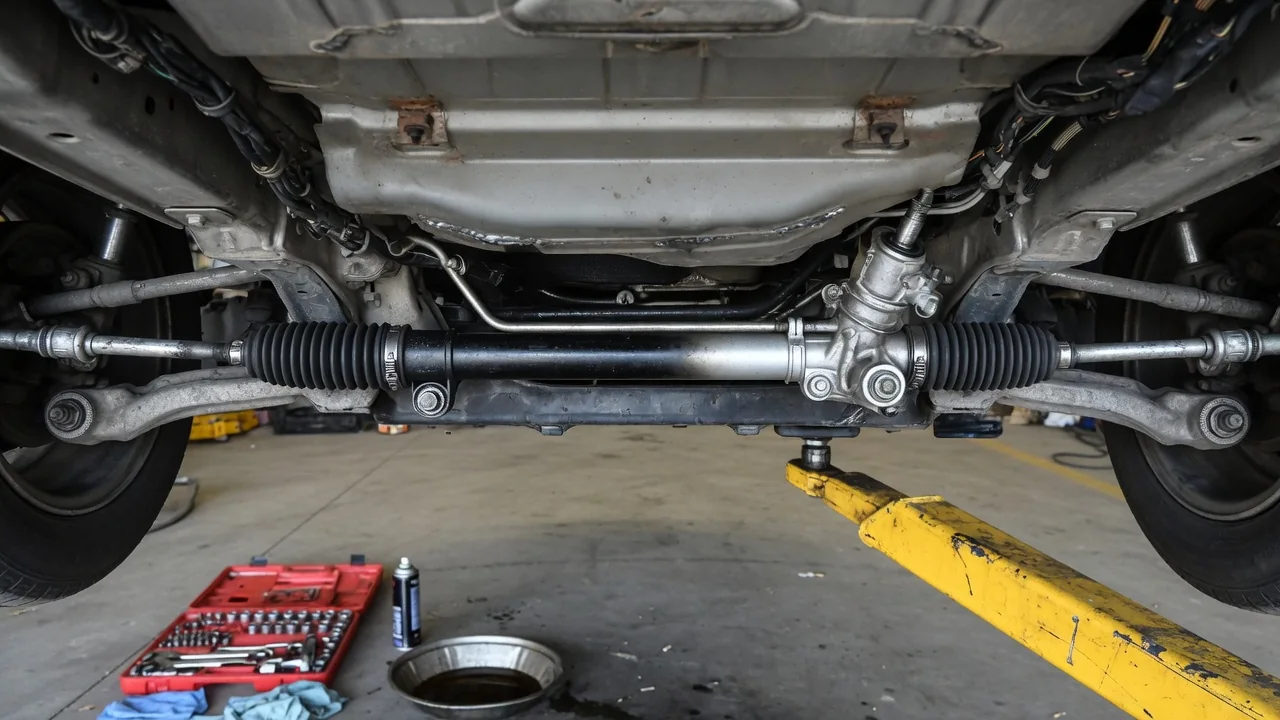
If you have ever wondered what is a steering rack, the short answer is that it is the assembly that converts the turning of the steering wheel into the side-to-side motion that points the front wheels. It sits low at the front of the vehicle, linked to the steering column above and the wheels at each end. Understanding how it works makes changes in steering feel easier to interpret.
Rack and pinion
A steering rack is a long metal bar with teeth cut along one section, housed inside a tube mounted across the front of the vehicle. A small round gear called the pinion sits at the bottom of the steering column and meshes with those teeth. When the driver turns the wheel, the column rotates the pinion, and the pinion pushes the rack left or right. That simple meshing is how rotation becomes straight-line movement, which is why the design is called rack and pinion steering.
Each end of the rack connects to an inner tie rod, which joins an outer tie rod and then the steering knuckle that carries the wheel. As the rack slides, the tie rods push one knuckle and pull the other, so both front wheels pivot together. Flexible rubber boots, often called bellows, cover the inner joints to keep out dirt and water. The gear ratio, the mounting position and the number of turns from lock to lock differ between vehicles, and some trucks use a steering box instead.
Assist methods
Moving the rack by muscle alone takes real effort, especially at parking speeds when the tires resist turning against the pavement. Most modern vehicles therefore add assistance. In a hydraulic system, an engine-driven pump sends pressurized fluid to a valve at the pinion. Turning the wheel opens that valve and directs fluid to one side of a piston built onto the rack, helping push it in the direction the driver has chosen. Hoses, a reservoir and fluid are all part of that arrangement.
Electric power steering replaces the pump and fluid with an electric motor. A torque sensor measures how hard the driver is turning, and a control module commands the motor to add force, either at the column or directly on the rack. Some vehicles use an electro-hydraulic layout, where an electric pump supplies the fluid pressure. Which method a particular car uses depends on the manufacturer, model and year, so the owner's manual or a look under the hood for a fluid reservoir helps confirm it.
Leak or play clues
On hydraulic racks, seals keep pressurized fluid inside the housing. As those seals wear, fluid can escape and collect inside the boots or drip onto the ground beneath the front of the vehicle. A falling reservoir level, damp or swollen boots, or a whining noise from the pump while turning can all point toward a leak. Fluid on the ground is not proof that the rack itself is at fault, though, because hoses, pump seals and fittings can leak in the same area.
Play describes free movement in the wheel before the tires respond. Wear between the pinion and rack teeth, loose inner tie rod joints or soft mounting bushings can all let the steering wheel turn slightly without moving the rack. Drivers may notice a vague spot near center, a clunk over bumps or a car that wanders on a straight road. Worn outer tie rod ends, ball joints or tires can produce similar sensations, so the source needs to be confirmed by inspection rather than assumed.
Everyday Use and Observations
In daily driving, a healthy rack is something you rarely think about. A small turn of the wheel produces a predictable change in direction, effort stays smooth from one lock to the other, and the wheel returns toward center on its own after a corner. Many vehicles vary assistance with speed, so steering feels light while parking and firmer on the highway. That behavior is a design choice rather than a fault, and it differs noticeably between a compact car and a heavy pickup.
Paying attention to how the steering normally feels makes changes easier to spot. Heaviness that appears only on cold mornings, a notchy feel at one point in the wheel's travel, or a steering wheel that sits off-center on a straight road are all worth noting. Vehicles with electric assist may also show a steering warning light on the dash and store a fault code. A code like that is evidence to interpret, not proof that the rack has failed, and its meaning depends on the manufacturer.
Limits and Next Steps
A rack does only one job, moving the tie rods in and out, so it cannot correct problems elsewhere. Pulling to one side is frequently related to alignment, tire pressure or brake drag, and vibration in the wheel usually traces back to tires, wheels or brake rotors. Uneven tire wear can come from worn suspension parts as easily as from steering components. Because these symptoms overlap, replacing a rack based on feel alone risks spending money without fixing the underlying cause.
When something seems off, start with the simple observations: check the fluid level if the vehicle has a reservoir, look for wet spots under the front end and note when the symptom occurs. Then have a qualified technician inspect the steering and suspension with the vehicle raised, since rack work involves safety-critical fasteners, alignment and sometimes electronic calibration. Sudden heavy steering, large amounts of free play or rapid fluid loss deserve prompt attention, and the car should not be driven far until it has been checked.