What Is a Series-Parallel Hybrid? Power Paths, Gearing and Driver Feel
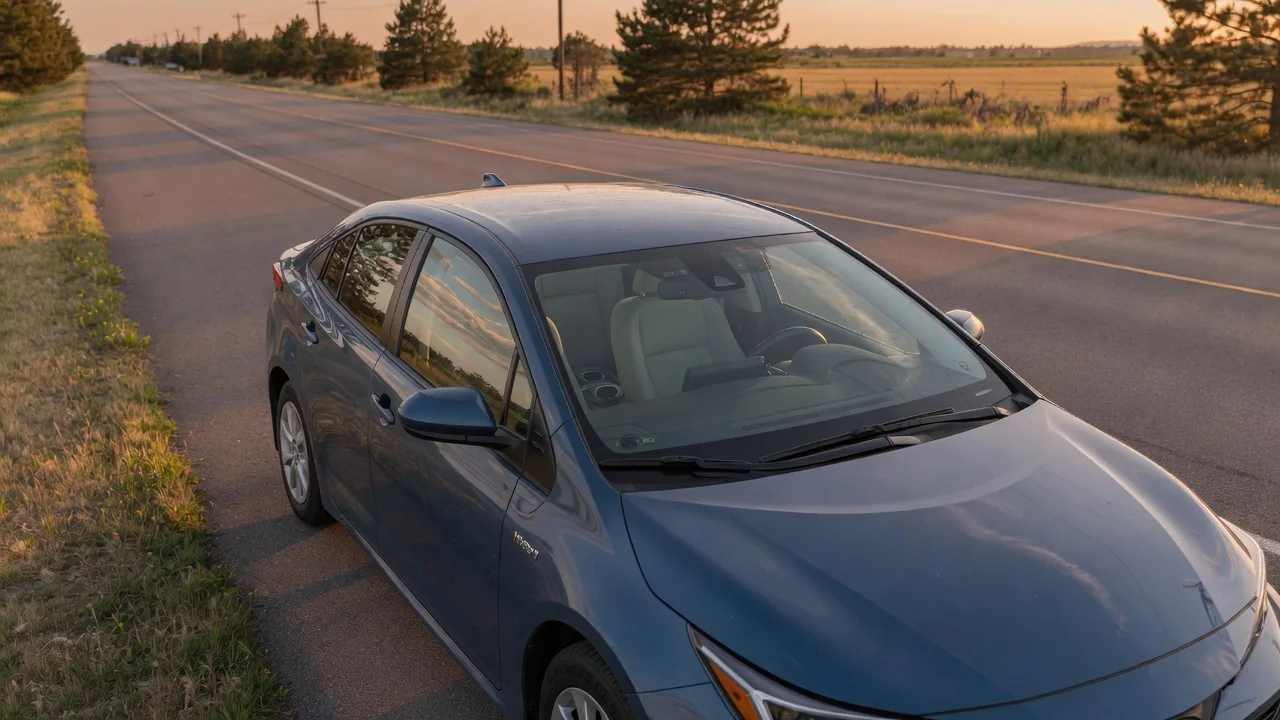
A series-parallel hybrid is a hybrid drivetrain that can send power to the wheels in more than one way. The gasoline engine can drive the wheels mechanically, it can turn a generator that feeds an electric motor, or the electric motor can move the car alone. Software decides which combination to use from moment to moment. Understanding series parallel hybrid operation explains why these cars behave differently from both conventional vehicles and simpler hybrids.
Multiple power paths
Hybrid drivetrains are usually described by how the engine's power reaches the wheels. In a series hybrid, the engine never drives the wheels directly. It only turns a generator, and an electric motor does all the propulsion. In a parallel hybrid, the engine and an electric motor are both mechanically connected to the wheels, often through a conventional transmission. A series-parallel hybrid combines the two ideas. Depending on conditions, the same vehicle can operate like a series hybrid, like a parallel hybrid, or as a blend of both.
The typical hardware includes a gasoline engine, two electric machines, a high-voltage battery, power electronics, and a mechanical link that ties them together. One electric machine works mainly as a generator and engine starter, and the other works mainly as the traction motor. A common arrangement is known as power split. In it, a planetary gearset divides engine output. Part of that output travels mechanically to the wheels, and part spins the generator, whose electricity can feed the traction motor or charge the battery. Other series-parallel designs do not split power continuously. They use a clutch to switch between series operation and direct engine drive.
With these parts, the control system can choose among several operating states. It can drive on electricity alone at low speed and light load when battery charge allows. It can run the engine while also charging the battery, or let the engine and motor push together for stronger acceleration. It can shut the engine off to coast. It can also use regenerative braking, in which the traction motor acts as a generator to recover energy. A hybrid control unit selects among these states using inputs such as accelerator position, vehicle speed, battery state of charge, and temperatures. The manufacturer calibrates the exact thresholds for each transition, and they differ from one vehicle to another.
Gear control
Many series-parallel hybrids do not use a stepped automatic transmission with a fixed set of ratios. In the power-split layout, the planetary gearset has three rotating members: a sun gear, a planet carrier, and a ring gear. In one widely used arrangement, the engine drives the carrier and the generator is attached to the sun gear. The ring gear connects to the traction motor and to the final drive that turns the wheels. The speeds of the three members are linked by a fixed mathematical relationship, so setting the speed of any two of them determines the speed of the third.
The control software exploits that relationship. Road speed sets the ring gear speed. By commanding the generator to spin faster, slower, or even backward, the controller sets engine speed independently of road speed. The result behaves like a continuously variable transmission. That is why this setup is often called an electronic CVT or eCVT, even though it contains no belts or variable pulleys. The controller holds the engine at a speed and load near an efficient operating region. It then uses the traction motor to add or absorb torque so that total output matches what the driver requests.
Clutch-based series-parallel systems handle gearing differently. At lower speeds they usually run in series mode: the engine drives only the generator, and the motor moves the car. When cruising conditions make direct drive more efficient, a clutch engages and the engine turns the wheels through a fixed ratio. This avoids the losses of converting mechanical energy to electricity and back. Some designs add more than one fixed ratio. In many hybrids of both types, reverse comes from running the traction motor backward rather than from a dedicated reverse gear.
Driver feel
The most noticeable trait is how often the car moves without the engine running. Pulling away gently from a stop can be nearly silent. The engine may start or stop on its own while driving, at a light, or even when parked, for example to recharge the battery or to supply cabin heat. In a well-calibrated system these transitions are smooth. A driver may still notice a faint vibration or a change in sound as the engine joins or leaves.
Under hard acceleration, the separation of engine speed from road speed becomes obvious. The engine may rise quickly to a high, steady speed and stay there while the vehicle gains speed. In a conventional car, engine speed would instead climb and drop through gear changes. Some drivers describe this as a rubber-band sensation or a drone. To make the experience more familiar, some systems are calibrated to imitate stepped shifts by changing engine speed in deliberate increments. The underlying mechanism remains continuously variable.
Braking also feels different. When the driver presses the brake pedal, the system uses regenerative braking first and blends in the friction brakes as needed. As a result, pedal feel can be less linear than in a conventional car. Deceleration after lifting off the accelerator can also vary with battery charge, because a nearly full battery has less room to accept recovered energy.
Practical implications and limits
The architecture tends to pay off most in driving with frequent speed changes, such as city traffic and suburban routes. There, the engine can shut off, the motor can handle low-speed work, and braking energy can be recaptured. At steady highway speeds the advantage narrows. The engine does most of the work, and any energy routed through the generator and motor carries conversion losses. Real-world efficiency depends heavily on route, speed, climate, and driving style, not on the drivetrain layout alone.
The design also has built-in limits. The battery's capacity and power output constrain electric-only driving, so the engine starts whenever demand or speed exceeds what the battery can supply. In cold weather the engine may run more often to warm the cabin and bring emissions equipment up to temperature. On long, steep climbs the battery can be drawn down, leaving more of the work to the engine and reducing the extra boost available. For towing ratings, drive modes, and warning indicators, the owner's manual for the specific vehicle is the authority.
A series-parallel hybrid still needs routine engine service, and its hybrid transaxle uses fluid with its own service requirements. The high-voltage battery, cables, and power electronics require specific safety procedures. Only trained technicians following the manufacturer's service manual should handle them. Some behavior, such as the engine running while the car is parked, can be a normal control decision rather than a fault. Diagnosis should therefore start with the vehicle's documented operating logic.