What Is a Seat Track on a Car? Movement, Locking and Wear
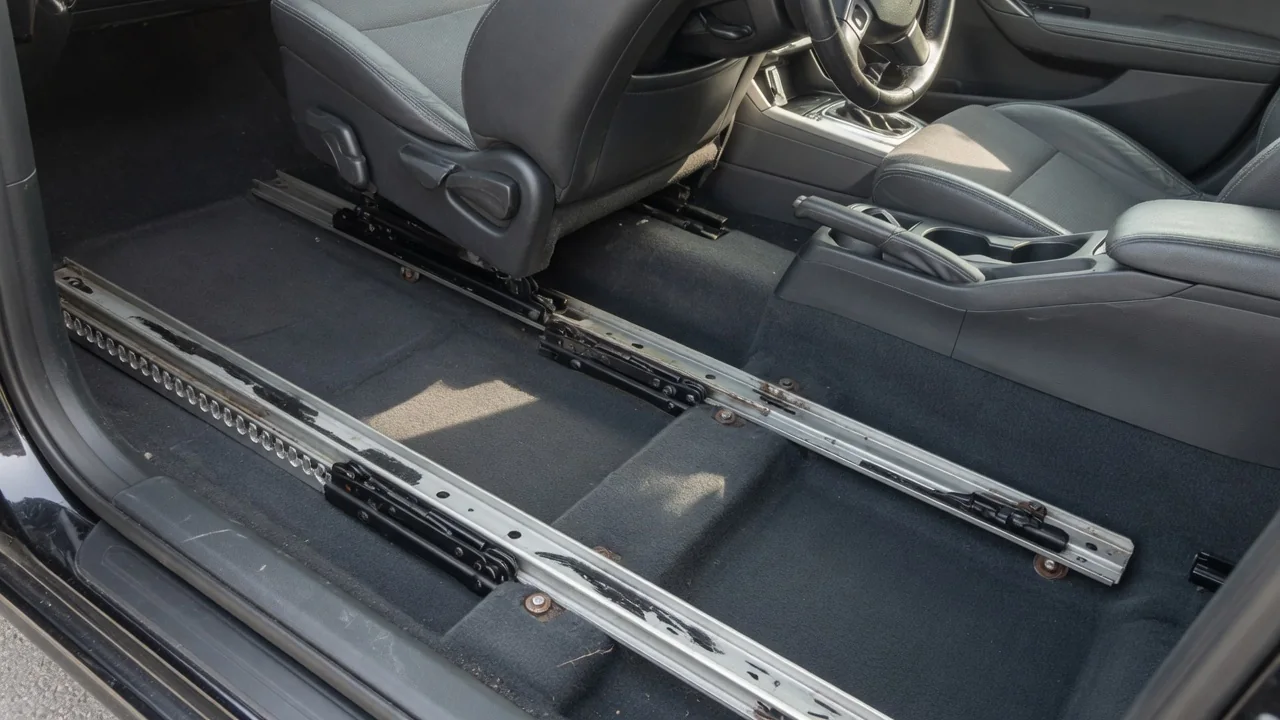
A seat track is the pair of rails underneath a car seat that lets it slide forward and backward and then hold firmly in place. The short answer to what is a seat track on a car is that it is both an adjustment mechanism and a structural link between the seat and the vehicle floor. Understanding how it moves, how it locks, and how it wears helps owners recognize normal behavior and spot problems early.
Fore-aft movement: how a seat track slides
Most seat tracks use two parallel assemblies, one on each side of the seat. Each assembly has a lower rail bolted to the floor pan or to a mounting bracket and an upper rail fastened to the seat frame. The upper rail rides inside or around the lower rail, guided by ball bearings, rollers, or low-friction plastic sliders that keep the motion smooth and limit sideways play. The two rails are shaped so they interlock, which means the seat can travel only along the length of the track and cannot lift away from it under normal loads. End stops at the front and rear limit how far the seat can move. The core car seat track function is this fore-aft travel, which allows drivers of different heights to reach the pedals and steering wheel comfortably and lets passengers adjust their legroom.
How the movement is controlled depends on the seat design. On a manual seat, a release bar or lever, usually under the front edge of the cushion or on its side, unlatches both tracks at once, and the occupant shifts body weight to slide the seat. Many manual tracks include a spring that tends to pull the seat forward when released, which makes forward adjustment easier and means an empty seat may move on its own. Power seats replace the lever with an electric motor. A common arrangement uses a motor mounted between the tracks, connected by flexible drive cables or shafts to a gearbox on each rail that turns a threaded screw. As the screw rotates, a nut attached to the other rail moves along it, carrying the seat. Exact layouts differ between manufacturers and seat types.
Locking: how the seat holds its position
On manual tracks, locking is handled by a spring-loaded latch. The lower rail usually has a row of slots, holes, or teeth along its length, and the latch on the upper rail carries one or more pins or a toothed plate that drops into them. Pulling the release lever lifts the latch against spring pressure; letting go allows the spring to push it back into engagement at the nearest available position. Because there are two tracks, the release mechanism is linked so both sides unlock and relock together. If one side engages and the other does not, the seat may feel solid at first but can twist or shift under load. That is why a seat sometimes needs a small nudge forward or back after the lever is released, so the pins can find their slots on both rails.
Power tracks typically lock differently. The threaded screw and nut arrangement resists being driven backward by force on the seat, so when the motor stops, the seat stays where it is without a separate latch. Whatever the mechanism, locking matters for more than comfort. The track is part of the load path that keeps the seat, and its occupant, attached to the vehicle during hard braking or a collision. In many designs, seat belt anchors or buckles are mounted to the seat frame or track, which adds to the forces the locking system must hold. Some vehicles also use a sensor on the track to report seat position to the airbag control system, although whether a given car has one depends on its design.
Wear: what changes as a seat track ages
Seat tracks operate in an exposed location near the floor, so they collect dirt, sand, crumbs, coins, and other small objects. Debris packed into the rails or latch slots can make sliding rough, stop the latch from seating fully, or jam a power drive. Over time, factory lubricant can dry out or collect grit, increasing friction and noise. Rollers, bearings, and plastic slides gradually wear, which shows up as fore-aft looseness, a rocking feel, or rattles over bumps. In damp climates or in vehicles where water reaches the floor, the rails and fasteners can corrode, adding stiffness and weakening parts.
Locking components wear as well. Latch springs can lose tension, and the edges of pins, teeth, or slots can round off after years of use, letting the seat creep or clunk when the car accelerates or brakes. Release linkages may stretch or bend, especially if heavy items are pushed under the seat. On power seats, the drive cables, plastic gears, or screw nuts can strip, often producing a motor that runs while the seat does not move, or a seat that moves on only one side. A track bent by a heavy impact, or by force applied to a stuck seat, may bind at certain points along its travel.
Practical implications and limits
For everyday use, a simple habit helps: after adjusting a manual seat, rock it gently forward and back to confirm it is locked before driving. Keeping the floor area around the rails clear, and avoiding storing hard objects that can slide into the tracks, reduces both jamming and accidental damage. When a problem appears, the symptoms help separate an inconvenience from a safety concern. Stiff sliding or noise is mainly a comfort issue, while a seat that shifts under braking, fails to latch on one side, or feels loose at its mounting points should be inspected before the vehicle is driven further.
There are limits to what general knowledge can tell an owner. Track design, fastener specifications, and repair procedures vary by vehicle, so the owner's manual and the manufacturer's service information are the reference for any specific car. Some roughness can be addressed by cleaning and appropriate lubrication, but worn latches, bent rails, or stripped power drives are often corrected by replacing the track assembly rather than individual parts. Seats also frequently have wiring underneath for power adjustment, heating, occupancy sensing, or side airbags, so removing a seat involves more than unbolting it and should follow the documented procedure for that vehicle.