What Is a Seat-Memory Position Sensor? How Power Seats Remember Settings
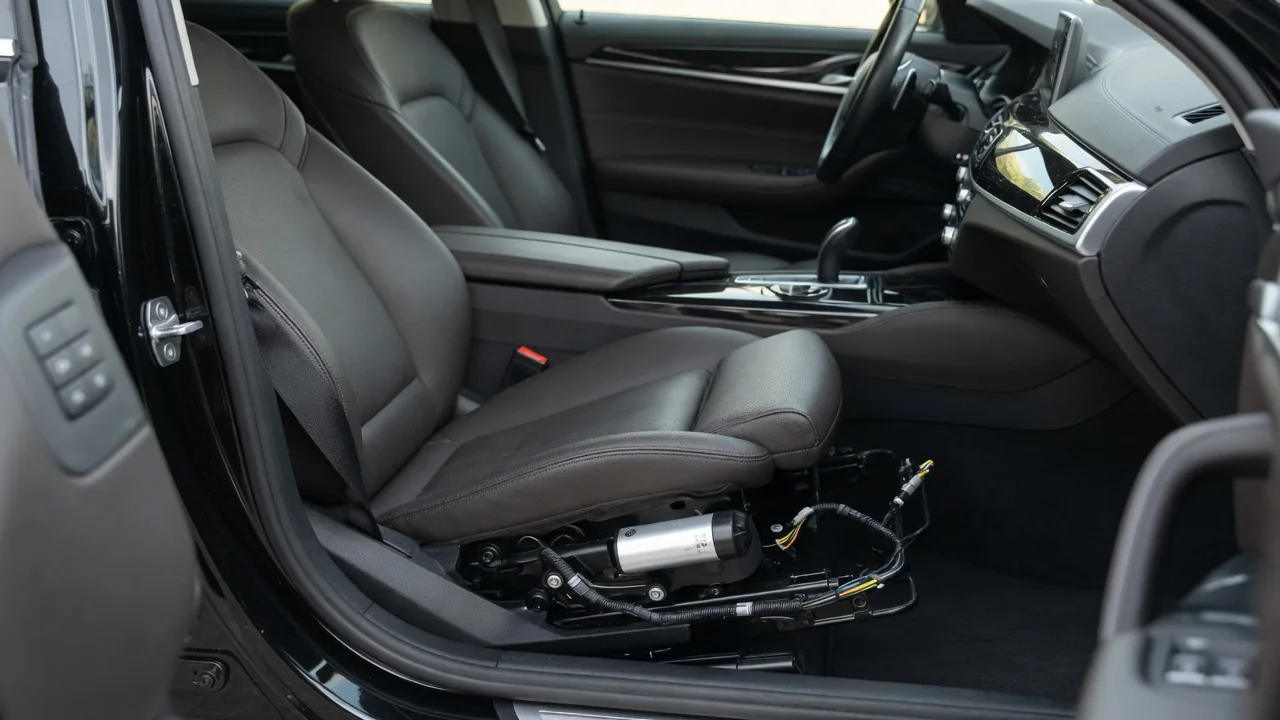
A seat-memory position sensor reports how far each power seat motor has moved, so a control module can return the seat to a saved setting at the press of a button. Without position feedback, a memory button would have nothing to compare against. This article explains what a power seat position sensor measures, how the stored location is kept, how the module uses that data to drive the motors, and what typically goes wrong.
Stored location: what the seat actually remembers
A memory seat does not store a position in inches or degrees. Each adjustable axis, such as fore-aft travel, cushion height, front tilt, backrest recline and sometimes lumbar or headrest height, has its own motor and its own form of position feedback. A common design places a Hall-effect sensor inside the motor housing. A magnet on the motor shaft passes the sensor as it turns and generates a stream of pulses, which the module counts up or down depending on the direction of travel. Other designs use a potentiometer, a variable resistor linked to the mechanism that produces a voltage proportional to position. Some systems use no dedicated sensor at all and instead count the small current ripples created as the motor brushes pass the commutator. Which method a seat uses depends on the manufacturer and the seat design.
When the driver presses the set button and a memory number, the module records the current value for each axis in nonvolatile memory, so the preset survives when the vehicle is switched off. On many vehicles the same memory slot also holds outside mirror and steering column positions, and some link it to a specific key fob or driver profile. The type of sensor matters here. A pulse count is relative, so the module needs a known reference point, which many systems establish by learning the ends of travel during an initialization routine. A potentiometer gives an absolute reading that does not depend on counting from a starting point.
Motor control: how the module drives the seat to a saved position
When a memory button is pressed, the module reads the current position of each axis, compares it with the stored target and energizes the appropriate motor in the needed direction. Seat motors are generally reversible DC motors, and the module reverses their direction by switching polarity through relays or solid-state drivers. As the motor turns, the sensor keeps reporting position. When the reading reaches the target within a small tolerance, the module cuts power to that motor. Many systems move the axes in a sequence or a few at a time rather than all at once, which limits current draw and can make the motion feel more controlled. The exact strategy is vehicle-specific.
Position data also protects the hardware. Many modules apply soft stops that halt the motor slightly before the mechanical end of travel, reducing strain on gears, cables and tracks. If the module keeps a motor powered but stops receiving position pulses, or the position stops changing, it can treat that as a stall or obstruction and shut the motor off. Some vehicles also use the same feedback for an easy-exit function that moves the seat rearward when the ignition is switched off and returns it afterward. The conditions under which recall is allowed, such as requiring the transmission to be in park, differ by manufacturer and are described in the owner's manual.
Faults: why memory recall drifts, stops or quits
The most common complaint is a seat that returns to the wrong spot or drifts further from the preset over time. In pulse-counting systems this happens when the module misses pulses or the mechanism moves while the module is not counting, so the stored count no longer matches the real position. Possible triggers include low system voltage, an intermittent connection, a battery disconnect, module replacement or the seat being moved by hand during service. Many systems then need to be reinitialized. The relearn procedure varies: some vehicles require running each axis to its end stops with the switch, while others require a scan tool.
Hardware faults produce more abrupt symptoms. A failed Hall-effect sensor stops reporting movement, and because the sensor is integrated into the motor in many designs, the repair may involve the motor assembly. A worn potentiometer track can give erratic or jumping readings. The wiring under a power seat flexes every time the seat moves and can be chafed or pinched by the tracks, while connectors can loosen or corrode. Mechanical problems such as stripped drive gears or worn drive cables can let a motor spin without moving the seat, which confuses the feedback. Typical symptoms include one axis that moves on the switch but not on recall, a seat that stops partway, or a memory function the module has disabled while storing a diagnostic trouble code.
Diagnosis comes down to separating the motor, the sensor, the wiring and the module. On vehicles that support it, a scan tool that shows live position values and stored codes is the most direct route, because it reveals whether the reading changes while the seat moves. Otherwise, checking power, ground and the sensor signal at the connector according to the service manual narrows the cause before any parts are replaced.
Practical implications and limits
For everyday owners, the safest habit is to re-save memory presets after battery work or any seat repair rather than assuming the old settings are still valid. Keeping the floor area under and around the seat clear also matters, since bottles, bags or loose cables can block travel, trip stall protection or damage the harness. If a recall repeatedly stops partway, cycling the button again and again is not a fix; repeated stalls put extra load on the motor and gearing.
Upholstery and seat service bring their own considerations. Removing a seat to replace a cover, foam pad or heater element means unplugging its harness, and the wiring should be routed and clipped back where it was so it cannot be caught in the tracks. Thicker aftermarket covers or added padding can change where the occupant ends up and may restrict travel, but the sensor reports the position of the mechanism, not how the seat feels, so presets may simply need to be saved again. If the mechanism was moved while unplugged, a relearn may be required.
The system has clear limits. It can only return the seat to positions it can measure; it does not sense who is sitting, and it cannot compensate for sagging foam or worn tracks. Feature sets, recall conditions and accuracy differ between makes, model years and trim levels. This is a general explanation of the mechanism, and details such as the sensor type in a given seat, the relearn steps and connector pinouts belong to that vehicle's manufacturer service information.