What Is a Seamless Car Air-Vent Design?
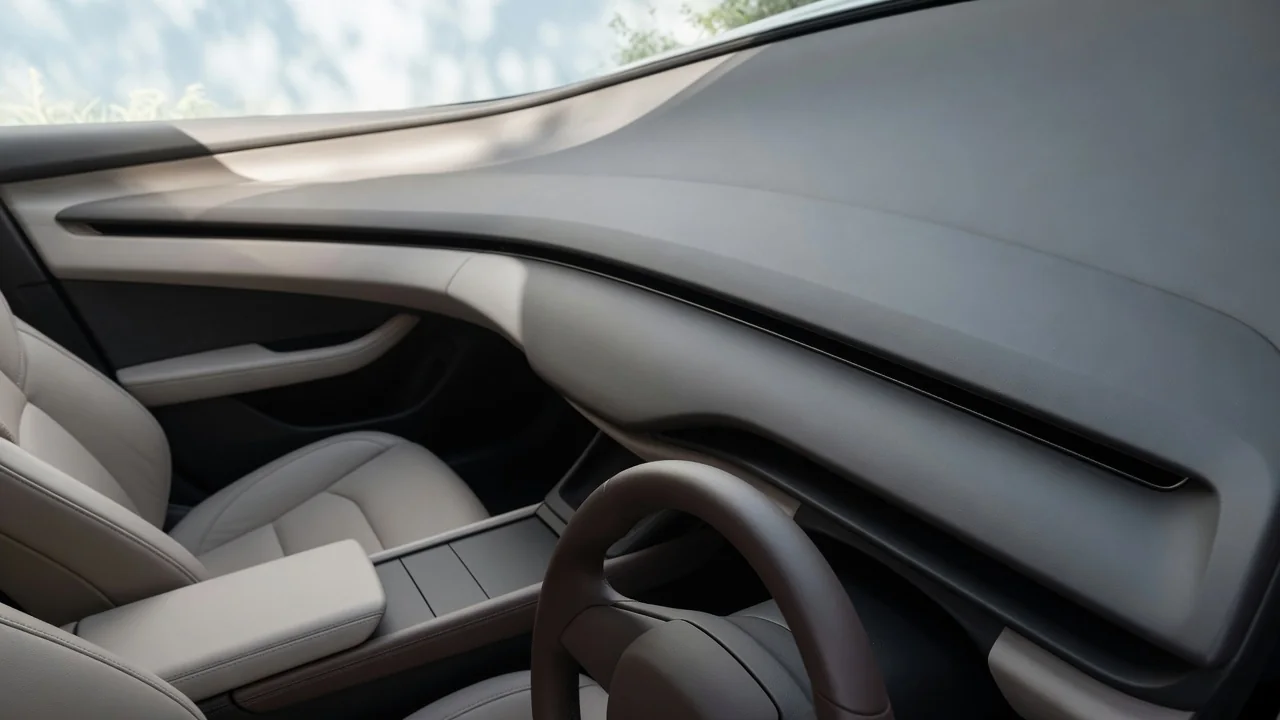
A seamless car air-vent design is a way of styling the dashboard and door panels so the air outlets blend into the surrounding trim instead of standing out as separate, framed grilles. It is sometimes called a hidden car air vent design. It usually relies on narrow slots, concealed vanes, or outlets tucked into gaps between panels. This article explains how these outlets are integrated, how airflow is directed, and what the design means for cleaning and everyday use.
Air outlet integration
In a conventional interior, each outlet is a visible module. It is typically a round or rectangular bezel holding adjustable louvers, often with a thumbwheel or tab. A seamless design removes or minimizes that visible hardware. The outlet may become a thin horizontal slot running across part or all of the dashboard. It may also be a gap between two trim layers or an opening hidden beneath a decorative strip, light bar, or perforated panel. The goal is visual continuity. The dashboard reads as one uninterrupted surface, which supports minimalist cabin styling and can leave more room for displays and controls.
Behind the visible surface, the basic hardware works like any other ventilation system. Air from the blower and the heating, ventilation, and air-conditioning (HVAC) unit travels through ducts to an outlet housing just behind the trim. The difference is the final section. That housing must shape the airflow so it exits efficiently through a narrower or less conspicuous opening. Designers balance slot size against the volume of air the system needs to deliver. A smaller opening can raise air velocity and potentially airflow noise if the duct is not shaped carefully. Integration also demands tight tolerances. Uneven gaps between the vent slot and nearby panels are more noticeable when the vent is meant to disappear.
Seamless outlets are not limited to the center of the dashboard. The same idea can be applied to outboard vents near the side windows, to rear-seat outlets in a center console, or to door panels. Exact placement depends on the cabin layout. A vehicle that hides its central vents does not necessarily do the same everywhere, and some interiors mix concealed and conventional outlets.
Flow control
A seamless outlet has little or no visible louver to grab, so flow direction is usually controlled in one of three general ways. Some designs keep small manual vanes recessed inside the slot, adjusted with a discreet tab or thin slider. Others use motorized vanes behind the opening. Small actuators move them in response to commands from a touchscreen, physical buttons, or voice controls. A third approach uses several air channels or fixed guide surfaces. The system changes the direction of the combined stream by varying how much air passes through each channel, rather than by visibly tilting a blade.
Some slot designs also use the tendency of a moving air stream to follow a nearby curved surface, a fluid-dynamics behavior known as the Coanda effect. By managing where the stream attaches to a surface and where it separates, a system can steer air up, down, or sideways without a large visible louver. Electronically controlled systems may add preset directions, a diffuse mode that spreads air to avoid blowing directly on occupants, or an oscillating sweep. Which of these features a vehicle offers, and how they behave, varies from model to model. The owner's manual is the reliable reference for a specific vehicle.
Flow volume and temperature are still generally governed by the main climate-control system. That means blower speed, temperature blend, and the selected distribution mode, such as face, floor, or defrost. The seamless outlet mainly changes how the face-level portion of that air is aimed and how the controls are presented to the occupants.
Cleaning
Narrow slots and recessed vanes can be harder to clean than large, open louvers. Dust, crumbs, and pet hair tend to collect at the lip of the opening and on surfaces just inside it. A thin slot also leaves little room for fingers or a cloth. Several tools work well here: • a soft detailing brush with fine bristles; • a microfiber cloth wrapped around a thin, non-scratching tool; • a vacuum with a soft brush attachment; Gentle passes along the slot usually work better than forceful scrubbing. Work the dust outward rather than pushing it deeper.
Motorized or delicate vanes need extra care. Forcing a brush or tool against an actuator-driven vane can stress its mechanism. Spraying liquid cleaner into the opening risks moisture reaching ducts or electrical components. A safer habit is to put a small amount of cleaner suited to the trim material on the cloth instead of spraying the vent directly. If you use low-pressure air to loosen debris, aim it so dirt comes out of the slot rather than being blown into the duct. Odors or recurring dust from the vents often point to the cabin air filter or the HVAC system rather than the outlet itself. Those are maintenance items covered by the vehicle's service schedule.
Practical implications and limits
In daily use, the main trade-off is clean styling versus direct, tactile control. When vane direction is set through a touchscreen menu, adjusting airflow can take more steps and more attention than nudging a physical louver. That matters while driving. Systems that remember settings or offer quick presets reduce the effort, and voice control can help where it is available. Owners who readjust vents often may want to learn the shortcuts in their vehicle's interface or set preferred positions while parked.
Hidden outlets also raise ownership considerations. Motorized vanes add actuators and wiring that can fail or become noisy over time. Diagnosing them may require removing trim panels, which is typically more involved than replacing a clip-in conventional vent. Wide slot outlets may also distribute air differently from what occupants expect, so a passenger used to a focused stream might find the airflow more spread out. None of this means the design performs worse in general. Comfort, noise, and reliability depend on the specific execution, so check model-level details in official documentation rather than assuming them from the design concept.