What Is a Rubber CV Boot? Purpose, Function and Damage Signs
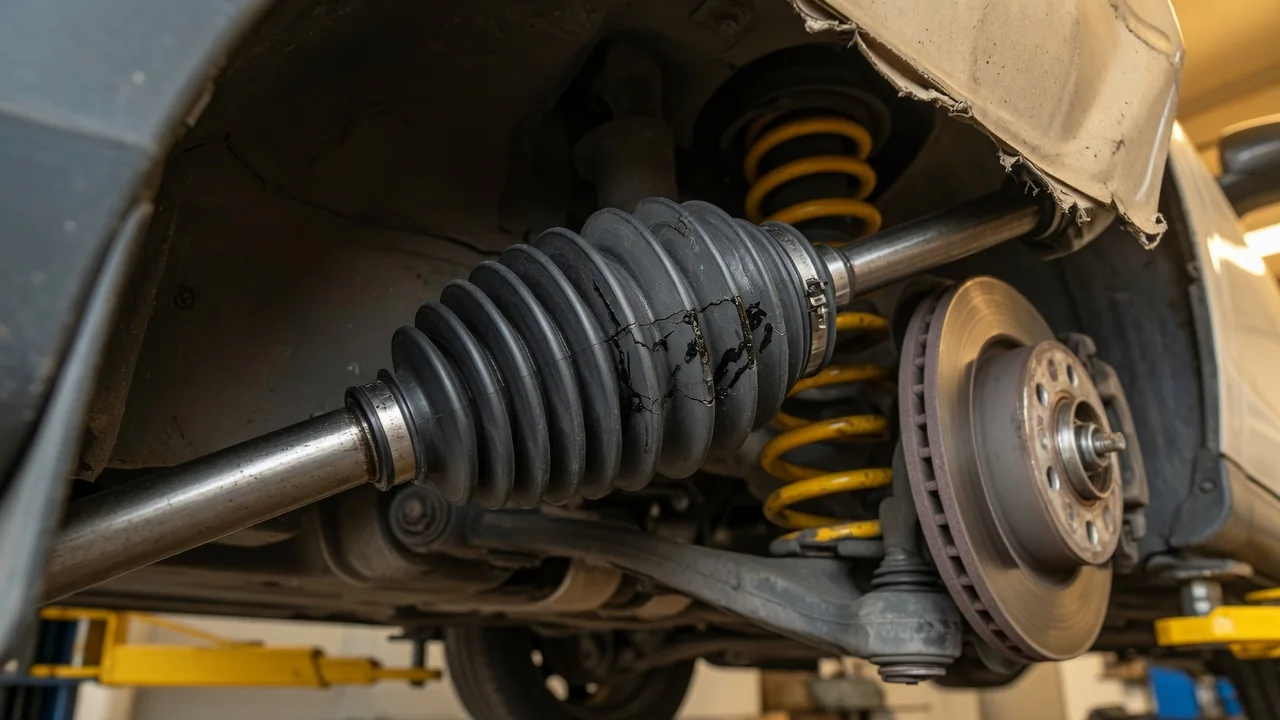
A rubber CV boot is the flexible, accordion-shaped cover that wraps around a constant velocity (CV) joint on a drive axle. Front-wheel-drive, all-wheel-drive and many rear-wheel-drive vehicles with independent suspension use CV joints to deliver power to wheels that move up and down and, at the front, also steer. The boot looks like a simple piece of rubber, but it plays a central role in joint life: it keeps lubricant in and contamination out.
Grease retention
Every CV joint contains precision-machined parts that slide and roll against each other under load. A typical outer joint uses balls running in grooved races, held in position by a cage. Many inner joints use rollers on a tripod that move inside a housing. These surfaces need a continuous film of grease to limit friction, heat and wear. At assembly, the joint is packed with grease formulated for this work. The boot keeps that lubricant where it belongs for years of driving.
Holding grease in place is harder than it sounds. The axle spins at wheel speed, so centrifugal force constantly pushes grease outward against the inside of the boot. At the same time, the joint flexes as the suspension travels and, on front axles, as the wheels steer. The bellows shape lets the boot stretch on one side and compress on the other without tearing. Metal clamps at each end seal it to the joint housing and to the axle shaft. Together, a tight seal at both ends and an intact boot wall form a closed reservoir. If any part of that enclosure opens, rotation gradually throws grease out through the gap.
Dirt exclusion
The other half of a CV joint rubber boot's purpose is keeping the outside world out. Drive axles sit low under the vehicle, close to the road surface. There they are exposed to water, mud, sand, road salt and fine grit thrown up by the tires. Without a barrier, all of this would mix directly with the joint grease.
Contaminated grease does more damage than a simple lack of grease. Sand and grit suspended in lubricant act like a grinding paste. They wear the balls, races and cage, or the tripod rollers and housing, far faster than normal use would. Water displaces lubricant and promotes corrosion on hardened surfaces, and road salt speeds up that corrosion. Once the precision surfaces are pitted or worn, the joint develops play that fresh grease cannot reverse. This is why a small split in a boot matters. The same opening that lets grease escape also lets abrasives and moisture in, and the two problems make each other worse.
Damage signs
The most common visible sign of a failed boot is grease where it should not be. A torn boot flings grease outward as the axle spins. This leaves dark, sticky streaks on the inside of the wheel, the brake components, suspension arms, steering parts or nearby underbody panels. The boot itself may show cracks, often starting in the folds of the bellows where flexing is concentrated, or an obvious tear or hole. Other warning signs include a clamp that is loose, shifted or missing; a boot that has slipped off its seat; and rubber that looks hardened, brittle or heavily crazed on the surface.
Noises usually mean the damage has spread from the boot to the joint. On many vehicles, a worn outer joint makes a clicking or popping sound during tight, slow turns under power, such as pulling out of a parking space. A worn inner joint is more often linked to vibration or shudder during acceleration. These symptoms suggest the joint has already lost lubrication or taken in contamination. However, other components can produce similar noises and vibrations, so treat these symptoms as reasons to investigate rather than as a definitive diagnosis.
Outer boots tend to fail more often than inner boots. The outer joint works through larger angles when the wheels steer, so its rubber flexes more severely. Heat from nearby exhaust parts, exposure to ozone and sunlight, age and impacts from road debris also contribute to cracking.
Practical implications and limits
In practice, what matters most with a CV boot is timing. Replacing a boot is usually a smaller job than replacing a complete joint or axle assembly, but that advantage only holds while the joint inside is still healthy. If a split boot is caught early, before the joint has run dry or taken in much grit, it can often be replaced along with a thorough cleaning and a fresh charge of the correct grease. Once a joint clicks or vibrates, replacing only the boot generally will not restore it. In that case, many owners and shops replace the whole axle shaft assembly instead.
Boots fail gradually and quietly, so a brief visual check during routine service, such as an oil change or tire rotation, is a reasonable habit. Turning the steering to full lock makes the outer front boots easier to see. Squeezing or flexing the folds can reveal cracks that stay hidden when the rubber is relaxed. Boot material, shape and fit differ between vehicles, and some boots are made from thermoplastic rather than conventional rubber. Replacement parts, clamp types and installation steps should therefore follow the vehicle's service information. Split-style boots that install without removing the axle are available, but their seam adds a potential leak point, and they do nothing for wear already present in the joint.
A boot inspection also has limits. A boot can look intact while a clamp leaks slightly. A joint can also be worn under a boot that looks new if the boot was replaced too late. Visual signs point to a likely problem, but they do not measure joint wear. When symptoms are unclear, have a qualified technician physically inspect the axle and the surrounding suspension and steering parts. That is the reliable way to tell a boot problem from other driveline faults.