What Is a Rubber Brake Hose Liner? Layers, Fluids and Aging
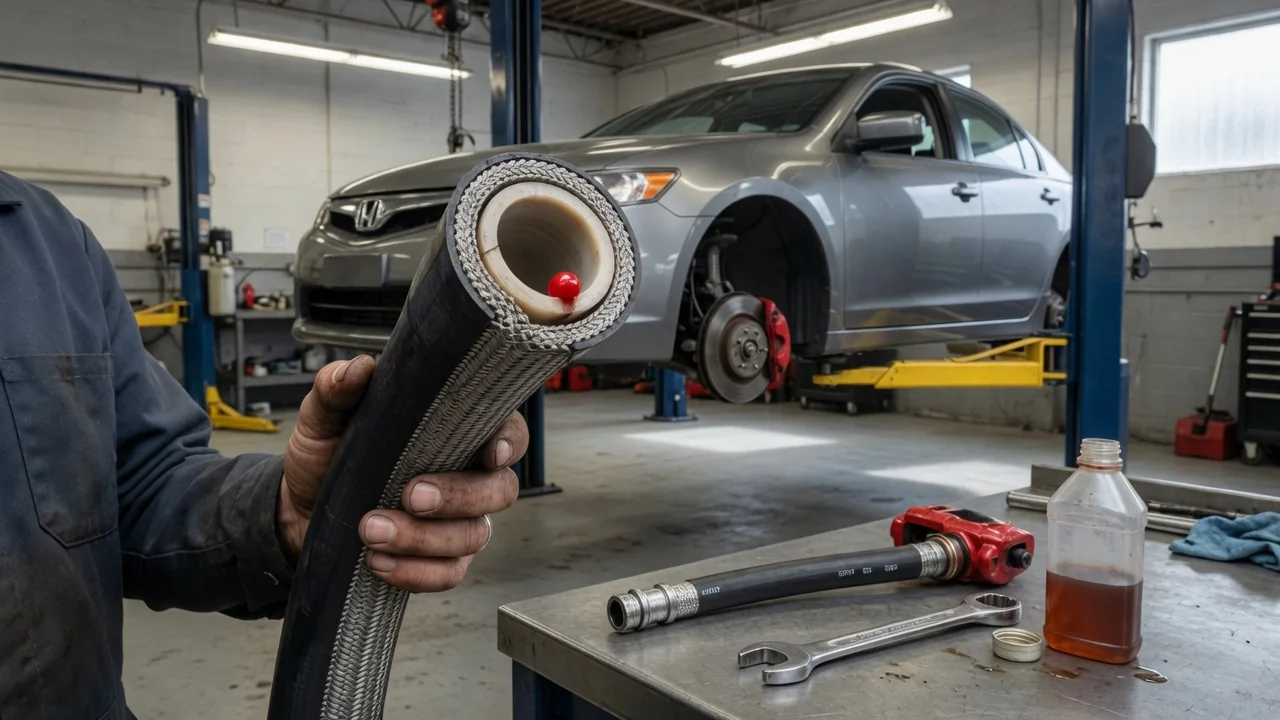
A flexible brake hose looks like a single rubber tube, but it is built from several bonded layers. The innermost one, the liner or inner tube, is the only part that touches brake fluid. It has to seal pressurized fluid, resist chemical attack and keep its shape for years. Knowing how the liner relates to the other brake hose layers explains why hoses are matched to specific fluids and why they wear out even when they look fine.
Fluid compatibility
The liner is the chemical barrier of the hose, so its rubber compound is chosen for the fluid the brake system was designed to use. Most passenger vehicles use glycol-ether brake fluids, the family sold as DOT 3, DOT 4 and DOT 5.1. Liners for these systems are commonly made from EPDM (ethylene propylene diene monomer) rubber, which tolerates glycol-based fluids well and holds up to the heat that builds near the brakes. EPDM is also why brake hoses are sensitive to petroleum products: oil, gasoline, mineral-based lubricants and many parts-cleaning solvents can make this type of rubber swell, soften and lose strength.
Not every hydraulic brake system uses glycol fluid. Some designs use silicone-based DOT 5 fluid, and certain vehicles and systems have historically used mineral oil hydraulic fluid. Mineral oil systems require seals and hose liners made from oil-resistant elastomers rather than EPDM, and the two families are not interchangeable. Putting the wrong fluid into a system can attack the liner and every other rubber seal it contacts, including caliper and master cylinder seals. That is why the fluid specification printed on the reservoir cap or in the owner's manual matters as much as the hose part number.
Compatibility is also about what passes through the liner wall. Glycol-based brake fluid is hygroscopic, meaning it absorbs water over time. Some of that moisture enters through the reservoir vent, and some can migrate slowly through rubber components, including flexible hoses. A liner compound with low permeability reduces this effect, but no rubber stops it completely. This is one reason fluid replacement intervals exist even in sealed-looking systems.
Reinforcement
On its own, a rubber liner would balloon under braking pressure, which can be very high during a hard stop. Any expansion of the hose absorbs fluid volume that should be moving caliper or wheel cylinder pistons, and the driver feels that as a soft or long pedal. To prevent this, the liner is wrapped in reinforcement. In a conventional rubber brake hose this is usually two layers of braided textile yarn, often separated by a thin rubber layer that bonds them together and keeps the strands from abrading each other. An outer rubber cover then protects the whole assembly from weather, road debris and chemicals.
The liner and reinforcement work as a team. The braid carries the pressure load and limits expansion, while the liner provides a smooth, sealed bore that keeps fluid from reaching the textile. If fluid did wick into the braid, the yarn could weaken and the hose could eventually bulge or leak. Crimped metal end fittings clamp all of these layers together at each end, so the integrity of the liner at the fitting is just as important as along the hose body.
Braided stainless steel brake lines use a different construction. They typically have a PTFE inner tube instead of a rubber liner, with a woven steel jacket for reinforcement and sometimes a plastic outer cover. They solve the same problem of containing pressure with minimal expansion, but their liner material behaves differently, so the aging and compatibility points in this article apply mainly to conventional rubber hoses.
Aging
Rubber brake hoses age from both the outside and the inside. The outer cover is exposed to ozone, sunlight, road salt, heat from nearby brakes and constant flexing as the suspension moves and the wheels steer. Over time this produces surface cracking, hardening and sometimes swelling or blistering. Cover cracks are visible and are a common reason hoses get replaced, but they are only part of the picture, because the cover is not what contains the fluid.
The liner ages out of sight. Heat cycling, moisture and contaminants in old fluid, and simple time all affect the rubber compound. A liner can harden and lose some elasticity, or it can soften and swell if contaminated fluid has been in the system. In some cases, a deteriorated liner separates from the reinforcement or develops a loose internal flap. That flap can let fluid pass toward the brake under pedal pressure but restrict its return, so the brake stays partly applied. The result can be a pull to one side, a dragging brake or a hot wheel, even though the hose looks normal from the outside.
Liner aging can also contribute to a gradual change in pedal feel. If the rubber and reinforcement lose some of their resistance to expansion, the hose may swell slightly more under load than it did when new. This tends to develop slowly, so drivers often do not notice it until the hose is replaced and the pedal feels firmer.
Practical implications and limits
Because the liner cannot be inspected without cutting the hose apart, a visual check only tells part of the story. Inspecting hoses for cracks, bulges, chafing, wetness at the fittings and correct routing is still worthwhile, but a clean exterior does not guarantee a healthy interior. Symptoms such as one wheel staying hot after a drive, a pull that changes with braking, or a brake that releases slowly can point toward an internal hose problem, although calipers, slide pins and other components can cause similar behavior. Diagnosis should confirm the cause rather than assume it.
Several common service habits protect the liner. Use only the brake fluid type specified for the vehicle, and do not top up with a different family of fluid. Keep petroleum-based cleaners, greases and oils away from hoses and seals; brake-specific cleaners and lubricants exist for this reason. Avoid letting a caliper hang by its hose during repairs, since that strains the layers at the fitting. Clamping a rubber hose shut with pliers during service is widely discouraged because it can damage the liner and reinforcement internally without leaving obvious outside marks.
There are also limits to what general knowledge can tell you about a particular car. Hose construction, liner compound, routing and replacement recommendations vary by manufacturer and model, and there is no universal age or mileage at which every hose fails. Climate, driving style and fluid maintenance history all influence how quickly a hose deteriorates. The vehicle's service manual and the hose manufacturer's specifications are the reliable references for fluid type, inspection intervals and replacement parts. Flexible brake hoses are generally replaced as complete assemblies rather than repaired, and the system must be bled correctly afterward to remove air before the vehicle is driven.