What Is a Rocker Panel?
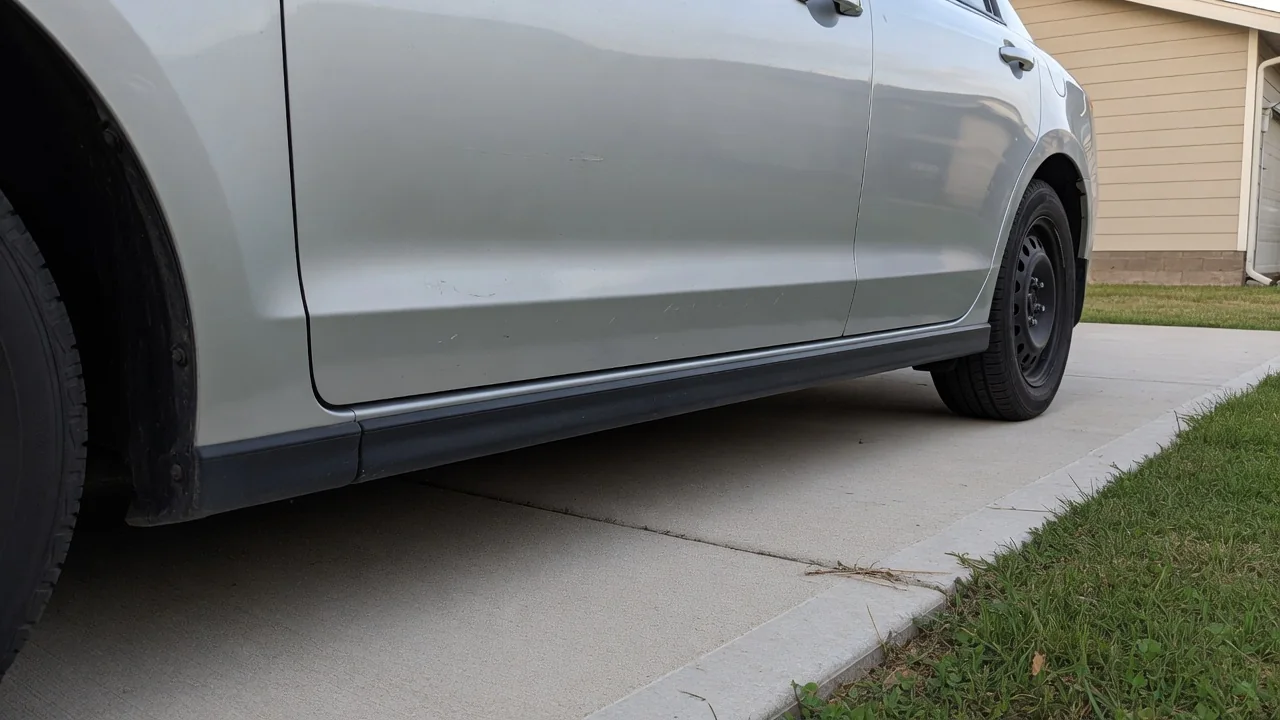
If you have ever wondered what is a rocker panel, the answer sits right beneath your doors. It is the long section of body metal running along each side of the vehicle between the front and rear wheel openings. This lower sill does structural work, takes constant abuse from the road, and often shows rust earlier than other body areas.
Location
The rocker panel runs along the bottom edge of the body on each side, spanning the gap between the front wheel well and the rear wheel well. Open a door and look down: the painted sill you step over is the top of the rocker, and the surface visible from outside below the door is its outer face. On most unibody cars, this outer skin covers inner reinforcements that tie the floor pan to the door pillars, forming a closed box section.
What you see depends on the vehicle. Many sedans leave the painted rocker exposed, while crossovers and trucks frequently hide it behind plastic cladding, side skirts, or running boards. Body-on-frame pickups still have rockers beneath the cab doors, though the separate frame carries much of the load. Two-door cars have a longer uninterrupted span, and extended or crew cabs have longer rockers than regular cabs. Jacking points are often marked along the pinch weld underneath, with locations specified in the owner's manual.
Road spray
Few body areas sit closer to the pavement, and the rocker is positioned directly in the path of whatever the front tires throw rearward. Water, mud, sand, gravel, and winter road salt are flung against the lower body every time the vehicle moves on a wet or dirty surface. The area just behind the front wheel and the section ahead of the rear wheel typically take the heaviest blasting, which is why stone chips and grime concentrate there.
Spray does more than dirty the outside. Moisture and fine grit can work into seams, behind trim clips, and through drain openings along the lower edge, then stay trapped inside the hollow section where air circulation is limited. Mud flaps, fender liners, and factory cladding reduce the direct impact, but their effectiveness varies by design, and cladding can also hold wet debris against the paint. Vehicles driven on salted or gravel roads generally see harsher exposure than those kept in dry climates.
Corrosion inspection
Rocker rust often starts from the inside, so the outer paint can look sound while the metal behind it thins. Early visible signs include bubbling or blistered paint along the lower edge, brown staining weeping from seams, and flaking near the pinch weld. Check the ends near each wheel opening, the bottom surface, and the area beneath the door sill plates. A flashlight and a look from a low angle reveal far more than a glance from standing height.
Drain holes along the underside deserve attention, because clogged drains let water sit inside the cavity. Gentle pressure with a gloved hand can reveal soft or crunchy metal, but avoid prodding hard with tools, which can break through weakened steel and leave sharp edges. Plastic covers complicate the picture, since they may conceal damage entirely; fresh undercoating or mismatched paint on a used vehicle can also hide earlier repairs. On vehicles with cladding, a look from underneath on a lift tells the more complete story.
Everyday Use and Observations
Daily habits affect this part more than most owners realize. Feet scuff the sill on entry and exit, scraping paint and grinding in grit carried on shoes. Curbs, steep driveway aprons, speed bumps, and parking blocks can dent or scrape the lower edge, particularly on low cars. Off-road, rocks contact rockers often enough that some trucks are fitted with protective sliders. Each scrape that breaks the paint creates a place for corrosion to begin if left bare.
Simple observation goes a long way. During washing, rinsing the lower body, wheel wells, and underside removes salt and packed mud before they sit for weeks. Notice whether the doors still close with even gaps, whether sill trim sits flush, and whether water drips from the drain points after rain. Damp carpet near the door opening, a rattle of loose debris inside the sill, or a door that begins to sag can each hint that something along the rocker deserves a closer look.
Limits and Next Steps
A visual check has real limits. Surface appearance cannot confirm the condition of inner reinforcements, and the extent of hidden rust is frequently greater than the visible blemish suggests. Because rockers contribute to body stiffness and side-impact protection on many vehicles, significant perforation is more than a cosmetic concern, and it may affect whether the factory jacking points can safely support the vehicle. How much strength a given rocker contributes varies with the vehicle's construction, so general rules only go so far.
When you find bubbling, holes, or soft spots, a body shop or qualified technician can assess the damage on a lift and explain realistic options. Those may range from treating minor surface rust and refinishing to cutting out and welding in new metal, work that calls for proper equipment and skill. Repair approaches and parts availability differ by make and model, so ask for an inspection specific to your vehicle. Until then, avoid lifting from any section that looks compromised and keep the area clean and dry.